📚 Table of Contents
- Introduction: Veterinary Care That No Longer Stops at Borders
- What Remote Veterinary Consulting Really Looks Like in Practice
- Why Remote Veterinary Consulting Is Growing So Fast Worldwide
- Getting Help Without Location Limits
- Faster Answers When Pets Feel Unwell
- Easier Follow-Up Care
- Comfort With Digital Healthcare
- New Opportunities for Veterinarians
- Skills That Actually Matter in Remote Veterinary Consulting
- Explaining Things Without Complexity
- Reading Between the Lines
- Staying Comfortable With Technology
- Keeping a Calm, Grounded Tone
- Knowing When to Say “This Needs a Clinic Visit”
- How Online Veterinary Consultations Usually Flow
- Step 1: Booking the Session
- Step 2: Sharing Background Information
- Step 3: The Live Conversation
- Step 4: Understanding the Situation
- Step 5: Follow-Up When Needed
- Tools That Make Veterinary Telehealth Work Smoothly
- Video Consultation Platforms
- Practice Management Systems
- Chat and Messaging Tools
- Photo and Video Sharing
- Smart Assistance Features
- Real Benefits of Working in Remote Veterinary Consulting
- Freedom in Work Location
- Wider Reach Than Ever Before
- Better Control Over Schedule
- Exposure to Different Cases
- Extra Income Possibilities
- Challenges You Can’t Ignore in Remote Veterinary Consulting
- No Hands-On Examination
- Dependence on Owner Communication
- Technical Interruptions
- Legal Boundaries Differ Everywhere
- Emergencies Still Need Clinics
- Best Practices That Actually Improve Remote Consultations
- Keep Questions Simple and Focused
- Ask for Visual Proof Early
- Document Everything Clearly
- Be Honest About Limits
- Always Prioritize Pet Safety
- A Real-Life Situation That Shows How It Works
- Where Veterinary Telehealth Is Headed Next
- FAQs: Remote Veterinary Consulting
- Is remote veterinary consulting suitable for all cases?
- What types of problems are commonly handled online?
- Do vets need special approval for telemedicine?
- How do pet owners share information during sessions?
- Can online vet consulting fully replace clinic visits?
- Conclusion: A More Connected Way to Care for Animals
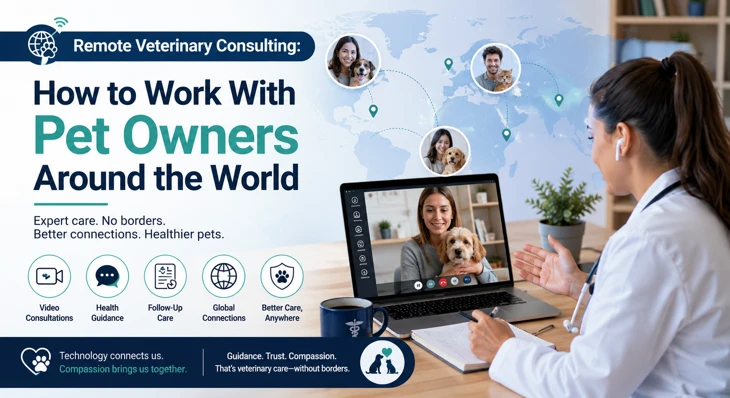
Remote Veterinary Consulting: How to Work With Pet Owners Around the World
Introduction: Veterinary Care That No Longer Stops at Borders
Veterinary work used to be straightforward in one sense—you saw a patient in a clinic, examined them, treated them, and that was it. But things don’t look like that anymore. With the rise of remote veterinary consulting, the way veterinarians connect with pet owners has quietly shifted into something far more flexible, global, and surprisingly personal. Today, a vet in one country can guide a worried pet parent on the other side of the world without either of them stepping into a clinic. It’s not futuristic anymore—it’s already happening every day through online vet consulting and veterinary telehealth platforms. And honestly, what makes this shift interesting isn’t just the technology. It’s how naturally it fits into real-life situations where pet owners simply need quick, reliable guidance without delay.What Remote Veterinary Consulting Really Looks Like in Practice
At its core, remote veterinary consulting is exactly what it sounds like—veterinary guidance delivered through digital channels. Instead of physical appointments, communication happens through video calls, chat platforms, and telemedicine tools designed for veterinarians. But this isn’t about replacing traditional care. It’s more about extending it. In most cases, veterinarians rely on:- What pet owners observe and describe in their own words
- Photos and short videos of the animal
- Past medical history shared digitally
- Real-time conversation during virtual sessions
Why Remote Veterinary Consulting Is Growing So Fast Worldwide
If you’ve noticed how common telemedicine for humans has become, it’s no surprise that veterinary telehealth is following the same path. But there are a few very real reasons behind this global rise.Getting Help Without Location Limits
Many pet owners simply don’t have access to specialist vets nearby. Remote consulting bridges that gap in minutes.Faster Answers When Pets Feel Unwell
Not every situation needs an emergency clinic visit. Sometimes, owners just need quick reassurance or direction.Easier Follow-Up Care
After surgery or treatment, pets often need regular check-ins. Doing that online saves time and stress for both sides.Comfort With Digital Healthcare
People are already used to online doctors, so extending that comfort to pets feels natural.New Opportunities for Veterinarians
A vet’s expertise is no longer tied to a single clinic or city. With online vet consulting, the reach becomes global.Skills That Actually Matter in Remote Veterinary Consulting
Being good at remote veterinary consulting isn’t just about medical knowledge. In fact, the real challenge often lies in communication and interpretation.Explaining Things Without Complexity
Pet owners are often anxious. Clear, simple explanations matter more than technical language.Reading Between the Lines
Since there’s no physical exam, vets rely heavily on subtle clues in videos, photos, and descriptions.Staying Comfortable With Technology
From telehealth platforms to digital records, everything runs online, so ease with tools is important.Keeping a Calm, Grounded Tone
When pet owners are worried, your tone can make a big difference in how they process information.Knowing When to Say “This Needs a Clinic Visit”
Not everything can be solved remotely—and recognizing that boundary is part of being responsible.How Online Veterinary Consultations Usually Flow
While every platform has its own setup, most online vet consulting sessions follow a familiar rhythm.Step 1: Booking the Session
Pet owners choose a time and briefly describe what’s going on.Step 2: Sharing Background Information
Before the consultation, they usually upload medical history or describe symptoms in more detail.Step 3: The Live Conversation
The vet connects via video or chat, asking questions and, when possible, observing the pet.Step 4: Understanding the Situation
Based on everything shared, the vet gives guidance, possible causes, and next steps.Step 5: Follow-Up When Needed
Some cases don’t end in one call. A few require ongoing support or check-ins. It’s structured, but still flexible enough to feel natural.Tools That Make Veterinary Telehealth Work Smoothly
Behind every remote veterinary consulting session, there’s usually a set of tools quietly doing the heavy lifting.Video Consultation Platforms
These enable real-time interaction, especially for visual assessment.Practice Management Systems
They help keep everything organized—from appointments to case records.Chat and Messaging Tools
Useful for quick updates, clarifications, and follow-ups after the session.Photo and Video Sharing
In many cases, this becomes the most important part of the diagnosis.Smart Assistance Features
Some systems now include AI-supported tools that help vets interpret symptoms more efficiently.Real Benefits of Working in Remote Veterinary Consulting
For veterinarians, this isn’t just a trend—it’s becoming a practical career option with real advantages.Freedom in Work Location
You can consult from home, a clinic, or even while traveling, as long as you’re connected.Wider Reach Than Ever Before
Instead of being limited to local clients, you can support pet owners across regions and countries.Better Control Over Schedule
Online consultations often offer more flexibility than clinic hours.Exposure to Different Cases
Global clients mean diverse pet breeds, conditions, and situations.Extra Income Possibilities
Many vets use online vet consulting as an additional or even primary income stream.Challenges You Can’t Ignore in Remote Veterinary Consulting
Of course, it’s not all smooth. There are real limitations to working this way.No Hands-On Examination
You can’t physically touch or examine the pet, which can limit accuracy in some cases.Dependence on Owner Communication
The quality of diagnosis depends heavily on how clearly the pet owner explains things.Technical Interruptions
Internet issues or platform glitches can disrupt consultations.Legal Boundaries Differ Everywhere
Telemedicine for veterinarians is regulated differently depending on location.Emergencies Still Need Clinics
Serious conditions always require immediate in-person attention.Best Practices That Actually Improve Remote Consultations
Over time, experienced vets develop a certain rhythm that makes online consultations more effective.Keep Questions Simple and Focused
Avoid overwhelming pet owners with too many technical questions at once.Ask for Visual Proof Early
Photos and videos often clarify things faster than long explanations.Document Everything Clearly
Good records help track progress and avoid confusion later.Be Honest About Limits
If something can’t be diagnosed remotely, say it clearly.Always Prioritize Pet Safety
When in doubt, recommending a clinic visit is the safest move.A Real-Life Situation That Shows How It Works
Imagine a pet owner traveling abroad when their dog suddenly starts scratching nonstop and developing red patches on the skin. They can’t find a trusted local vet immediately, so they book an online veterinary consultation. During the call, the vet carefully reviews the uploaded images, asks about recent changes in diet, and observes the dog’s behavior via video. It turns out to be a likely allergic reaction, and the vet suggests a temporary diet change along with a safe topical treatment available locally. Within a few days, things start improving. That’s the real value of remote veterinary consulting—it steps in exactly when access is limited.Where Veterinary Telehealth Is Headed Next
This space is still growing, and honestly, it’s evolving faster than most people expected. In the coming years, we’re likely to see:- More advanced AI tools supporting diagnosis
- Wearables tracking pet health in real time
- Smarter veterinary telehealth platforms
- Better global collaboration among vets
- Clearer regulations are making online care more structured