📚 Table of Contents
- Introduction
- What is Remote Epidemiology Analysis?
- Why Remote Epidemiology Careers Are Growing So Fast
- Career Opportunities in Remote Epidemiology Analysis
- Remote Epidemiologist
- Disease Surveillance Analyst
- Public Health Data Analyst
- Remote Research Scientist
- Global Health Consultant
- Skills You Need for Remote Epidemiology Jobs
- Strong Data and Technical Skills
- Analytical Thinking That Goes Beyond Numbers
- Clear Communication Skills
- Problem-Solving Under Pressure
- Tools Used in Remote Epidemiology Analysis
- How to Start a Career in Remote Epidemiology Analysis
- Global Remote Epidemiology Opportunities
- Challenges You Should Know About
- Future of Remote Epidemiology Analysis
- FAQs
- 1. Is remote epidemiology a real career option?
- 2. What background do I need for remote epidemiology jobs?
- 3. Do I need coding skills?
- 4. Can beginners enter this field?
- 5. Where do remote epidemiologists work?
- Conclusion
Remote Epidemiology Analysis: Global Career Opportunities and Skills You Need
Introduction
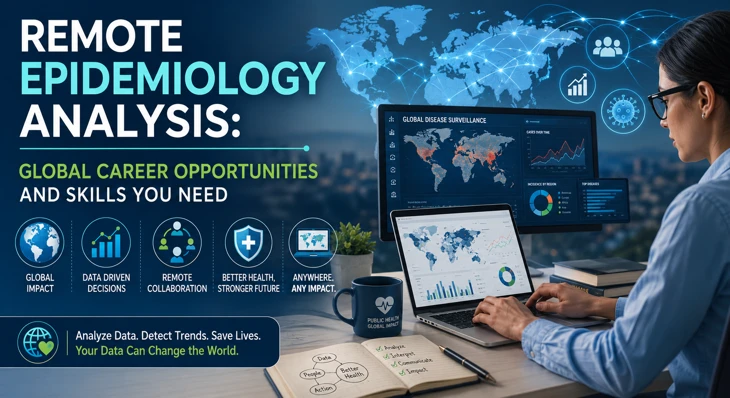
Remote epidemiology analysis is no longer a niche idea confined to academic journals. It has become a real, working part of how global health systems function today. From tracking flu outbreaks to studying long-term disease trends, professionals now rely heavily on digital tools rather than being physically present at every location they study. What makes this shift interesting is not just the technology—it’s the flexibility it creates. A public health expert in one country can now collaborate with teams across continents without ever boarding a flight. That’s changing how healthcare decisions are made and how quickly responses happen during health emergencies. This guide takes a practical look at remote epidemiology jobs, the skills that matter, and what a real career in this space actually looks like when you move beyond theory.What is Remote Epidemiology Analysis?
Remote epidemiology analysis refers to the study of health-related data from a distance using digital systems. Instead of working only in hospitals, labs, or field surveys, professionals analyze disease patterns through cloud platforms, dashboards, and statistical tools. At its core, it’s still epidemiology—the study of how diseases spread, who they affect, and why. The difference is the workspace. Everything happens through data. For example, during a sudden outbreak, data from hospitals, labs, and public health departments is streamed into centralized systems. A remote epidemiologist might sit thousands of miles away, analyzing that data to identify infection spikes or predict future spread patterns. Their insights can directly influence policy decisions, travel restrictions, or vaccination strategies.Why Remote Epidemiology Careers Are Growing So Fast
There’s a reason more professionals are exploring remote epidemiology analysis roles—it fits the world we live in now. First, healthcare data has exploded. Wearables, mobile apps, hospital systems, and even social media trends generate constant streams of health-related information. Someone has to make sense of it all. Second, global health threats don’t respect borders. Whether it’s infectious diseases, climate-related illnesses, or chronic conditions linked to lifestyle changes, everything is interconnected. That requires collaboration across countries, often in real time. And third, organizations are embracing remote work more seriously than ever. Institutions such as international health agencies, NGOs, and research organizations are increasingly hiring remote epidemiology professionals to reduce costs while expanding their global reach.Career Opportunities in Remote Epidemiology Analysis
One of the most attractive parts of this field is how many different paths you can take. You don’t have to fit into one strict role.Remote Epidemiologist
A remote epidemiologist focuses on studying disease trends and patterns using digital datasets. They often work with global teams and contribute to outbreak response strategies.Disease Surveillance Analyst
This role is all about monitoring health data in real time. Think of it as early-warning detection work—spotting unusual spikes or trends before they become larger problems.Public Health Data Analyst
A public health data analyst works deeply with numbers. They clean, interpret, and visualize health data to help organizations make smarter decisions. Many remote epidemiology jobs fall into this category.Remote Research Scientist
Research scientists often work with universities or health organizations, running studies on disease behavior, vaccines, or long-term health outcomes—all from remote setups.Global Health Consultant
Consultants step in when organizations need expert advice. They might help design health programs, evaluate outbreak responses, or guide policy planning remotely.Skills You Need for Remote Epidemiology Jobs
This is not a field where one skill alone is enough. You need a combination of technical knowledge and real-world thinking.Strong Data and Technical Skills
You’ll regularly work with:- Biostatistics and probability concepts
- Python or R for analysis
- SQL for database handling
- GIS tools for mapping disease spread
- Data visualization tools like Power BI or Tableau