📚 Table of Contents
- What Is Remote Epidemiology Analysis?
- Why Remote Epidemiology Careers Are Growing Worldwide
- Expansion of Digital Healthcare Systems
- Increased Focus on Global Health Preparedness
- Flexible Work Models in Healthcare
- Growth of Health Data Analytics
- Top Global Career Opportunities in Remote Epidemiology Analysis
- Public Health Epidemiologist
- Clinical Data Analyst
- Infectious Disease Research Analyst
- Biostatistician
- Healthcare Data Scientist
- Global Health Consultant
- Industries Hiring Remote Epidemiology Professionals
- Pharmaceutical Companies
- Healthcare Technology Companies
- International Health Organizations
- Universities and Research Institutions
- Insurance and Healthcare Consulting Firms
- Essential Skills You Need for Remote Epidemiology Analysis
- Strong Data Analysis Skills
- Knowledge of Statistical Software
- Public Health Knowledge
- Research and Critical Thinking Skills
- Communication Skills
- Time Management and Remote Collaboration
- Educational Requirements for Remote Epidemiology Careers
- Common Degree Paths
- Valuable Certifications
- Average Salary for Remote Epidemiology Analysts
- How to Start a Career in Remote Epidemiology Analysis
- Build a Strong Foundation in Public Health
- Learn Data Analytics Tools
- Create a Professional Portfolio
- Gain Remote Work Experience
- Network With Healthcare Professionals
- Challenges of Working in Remote Epidemiology Analysis
- Managing Large and Complex Data Sets
- Adapting to Constantly Changing Health Trends
- Maintaining Collaboration Across Time Zones
- The Future of Remote Epidemiology Analysis
- FAQs About Remote Epidemiology Analysis Careers
- What does a remote epidemiology analyst do?
- Can epidemiologists work fully remotely?
- Which industries hire remote epidemiology professionals?
- What skills are most important for remote epidemiology jobs?
- Is remote epidemiology analysis a good career?
- How can beginners start a career in epidemiology analysis?
- Conclusion
Remote Epidemiology Analysis: Global Career Opportunities and Skills You Need
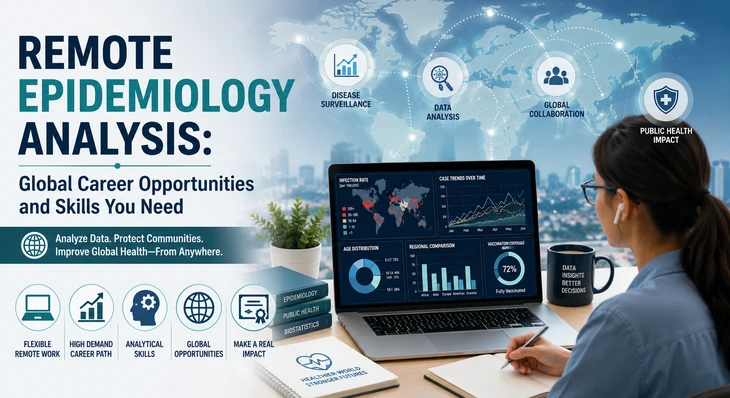
Healthcare careers look very different today than they did even a few years ago. Public health organizations, hospitals, and research teams now depend heavily on digital systems to study disease patterns, manage healthcare data, and improve community health outcomes. That shift has opened the door to a growing number of remote epidemiology analysis jobs worldwide. Because healthcare systems are now more globally connected, epidemiologists no longer need to spend every day in government offices or research facilities. Many professionals collaborate remotely on outbreak monitoring, healthcare analytics, disease prevention strategies, and international public health projects from their own homes. Remote epidemiology analysis has become an attractive career path for professionals who want flexibility while working on meaningful healthcare challenges. Hospitals, pharmaceutical companies, global health organizations, and research institutions are all looking for specialists who can interpret public health data remotely and turn it into useful insights. In this guide, you will explore what remote epidemiology analysis involves, the growing global career opportunities, the essential skills employers look for, salary expectations, and practical ways to build a successful career in this evolving field.What Is Remote Epidemiology Analysis?
Remote epidemiology analysis involves examining disease trends, healthcare statistics, and public health information through digital platforms while working outside a traditional office environment. Epidemiologists study data to identify health risks, understand how diseases spread, and support healthcare planning decisions. Rather than relying entirely on field offices or laboratory spaces, remote epidemiology professionals use cloud-based systems, online databases, and virtual communication tools to handle their daily responsibilities. Their responsibilities often include:- Analyzing disease surveillance data
- Monitoring public health trends
- Creating statistical reports
- Supporting outbreak investigations
- Developing healthcare recommendations
- Collaborating with healthcare teams virtually
- Conducting research on infectious and chronic diseases
Why Remote Epidemiology Careers Are Growing Worldwide
Healthcare employers are searching for more remote data professionals than ever before. As digital healthcare systems become more advanced, organizations need people who can interpret health data quickly and accurately.Expansion of Digital Healthcare Systems
Hospitals and public health organizations collect enormous amounts of digital health information every day. Without trained epidemiologists to review that data, many important trends and warning signs could easily be missed. Electronic health records, health-tracking systems, and artificial intelligence tools have created new opportunities for remote data-analysis roles.Increased Focus on Global Health Preparedness
Public health agencies are investing more money and attention in disease-tracking systems and emergency preparedness programs. The COVID-19 pandemic highlighted the importance of real-time epidemiological analysis. As a result, international organizations continue hiring remote epidemiology experts to support monitoring systems and research initiatives.Flexible Work Models in Healthcare
Remote work is no longer viewed as something exclusive to the tech industry. Healthcare employers now understand that many research and analytical responsibilities can be handled successfully in remote environments. Remote epidemiology jobs allow employers to access global talent while reducing operational costs.Growth of Health Data Analytics
Healthcare data analytics is now one of the fastest-growing areas within public health. Organizations use epidemiological analysis to:- Predict disease trends
- Improve healthcare planning
- Allocate medical resources
- Evaluate treatment effectiveness
- Support vaccine development
- Monitor population health outcomes
Top Global Career Opportunities in Remote Epidemiology Analysis
One reason many professionals are drawn to remote epidemiology careers is the variety of industries involved. Some work with hospitals, while others support international research teams, pharmaceutical companies, or nonprofit health organizations.Public Health Epidemiologist
Public health epidemiologists study disease patterns within communities and populations. They help government agencies and health organizations create strategies to prevent disease outbreaks and improve public health. Remote responsibilities may include:- Collecting and analyzing public health data
- Tracking infectious disease trends
- Preparing outbreak reports
- Supporting policy recommendations
- Coordinating with healthcare agencies virtually
Clinical Data Analyst
Clinical data analysts focus on healthcare and medical research data. They analyze patient outcomes, treatment effectiveness, and healthcare performance metrics. Since most of the work happens through digital reporting systems and databases, this position adapts naturally to remote environments. Professionals in this field may work for:- Hospitals
- Pharmaceutical companies
- Clinical research organizations
- Healthcare consulting firms
Infectious Disease Research Analyst
Infectious disease analysts monitor outbreaks and study how diseases spread across populations. They often support international health organizations by analyzing disease surveillance data and identifying potential risks. A remote analyst may contribute to projects involving:- Virus tracking
- Vaccine research
- Pandemic preparedness
- Global health monitoring
- Travel health risk analysis
Biostatistician
Biostatisticians apply statistical methods to healthcare and medical research data. This role involves interpreting large datasets, designing studies, and supporting scientific research. Pharmaceutical companies and healthcare research teams frequently hire remote biostatisticians to support clinical studies and large-scale health research projects.Healthcare Data Scientist
Healthcare data scientists combine epidemiology, data analytics, and machine learning to solve healthcare challenges. These professionals work with large healthcare datasets to identify trends and improve decision-making. For example, a healthcare data scientist may build predictive models to forecast disease outbreaks or hospital admission rates.Global Health Consultant
Global health consultants advise healthcare organizations, NGOs, and international agencies on public health strategies. Many consultants work remotely while supporting projects in different countries. Their work may involve:- Evaluating healthcare programs
- Conducting population health research
- Supporting disease prevention campaigns
- Advising on healthcare policies
Industries Hiring Remote Epidemiology Professionals
Government agencies are not the only employers hiring epidemiology professionals anymore. Private healthcare companies, research organizations, and technology firms also rely heavily on healthcare data analysis.Pharmaceutical Companies
Pharmaceutical companies hire epidemiologists to support drug development, vaccine research, and post-market safety monitoring. Remote professionals often analyze clinical trial data and monitor medication outcomes.Healthcare Technology Companies
Health tech companies develop digital healthcare platforms, disease tracking tools, and healthcare analytics systems. Epidemiologists help improve these systems by providing public health expertise and analyzing healthcare data.International Health Organizations
Organizations focused on global health regularly recruit remote epidemiology analysts. Projects may involve:- Disease surveillance
- Vaccination campaigns
- Emergency response planning
- Population health research
Universities and Research Institutions
Academic institutions hire remote research analysts for public health studies, data interpretation, and scientific reporting. Many universities now collaborate internationally, making remote research roles more common.Insurance and Healthcare Consulting Firms
Insurance companies and healthcare consultants use epidemiological analysis to assess healthcare risks and predict healthcare costs. Professionals in these industries help organizations make informed business and healthcare decisions.Essential Skills You Need for Remote Epidemiology Analysis
Professionals in remote epidemiology analysis need a balanced mix of technical knowledge, analytical ability, and communication skills to succeed in the field.Strong Data Analysis Skills
Epidemiologists work with large healthcare datasets, so analytical thinking is critical. Professionals should understand:- Statistical analysis
- Data interpretation
- Trend forecasting
- Research methodologies
- Population health metrics
Knowledge of Statistical Software
Remote epidemiology roles often require experience with specialized analytical tools. Commonly used platforms include:- R
- SAS
- SPSS
- Python
- Stata
- SQL
- Tableau
- Power BI
Public Health Knowledge
A strong understanding of epidemiology principles and public health systems is essential. Professionals should understand:- Disease transmission
- Public health policies
- Infection prevention
- Health surveillance systems
- Healthcare regulations
Research and Critical Thinking Skills
Epidemiology involves investigating patterns and identifying the causes of health issues. Remote analysts must think critically, evaluate evidence carefully, and draw accurate conclusions from data.Communication Skills
Even in remote roles, communication is extremely important. Epidemiologists often present findings to healthcare leaders, policymakers, and research teams. Strong written communication helps professionals create:- Research reports
- Public health recommendations
- Data summaries
- Scientific publications
Time Management and Remote Collaboration
Remote work requires discipline and organization. Because teams are often spread across different locations, professionals also need to feel comfortable using digital collaboration tools such as:- Zoom
- Microsoft Teams
- Slack
- Google Workspace
- Project management platforms
Educational Requirements for Remote Epidemiology Careers
Most remote epidemiology analysis jobs require formal education in public health, epidemiology, or related healthcare fields.Common Degree Paths
Popular educational backgrounds include:- Bachelor’s degree in public health, biology, statistics, or healthcare science
- Master of Public Health (MPH)
- Master’s degree in epidemiology or biostatistics
- PhD in epidemiology or public health research
Valuable Certifications
Certifications can strengthen your resume and improve career opportunities. Helpful certifications include:- Certified in Public Health (CPH)
- SAS Certified Specialist
- Google Data Analytics Certificate
- Clinical research certifications
- Biostatistics training programs
Average Salary for Remote Epidemiology Analysts
Pay can vary widely depending on experience level, technical expertise, employer type, and geographic region. Entry-level remote epidemiology analysts may earn moderate salaries, while experienced professionals working in pharmaceutical research or healthcare analytics can earn significantly higher compensation. Typical salary ranges globally include:- Entry-level roles: $55,000–$75,000 annually
- Mid-level professionals: $75,000–$110,000 annually
- Senior analysts and consultants: $110,000–$160,000+ annually
How to Start a Career in Remote Epidemiology Analysis
Starting a successful career in remote epidemiology analysis usually involves building the right educational background, gaining practical experience, and strengthening technical skills over time.Build a Strong Foundation in Public Health
Start by gaining knowledge in epidemiology, healthcare systems, and statistical analysis. Many professionals begin with internships, research assistant roles, or public health projects.Learn Data Analytics Tools
Many employers now give preference to candidates who understand both public health concepts and technical data analysis tools. Practical experience with statistical software and data visualization platforms can significantly improve job opportunities. A good starting point is learning:- Data cleaning
- Statistical modeling
- Healthcare dashboards
- Data visualization
- Predictive analytics
Create a Professional Portfolio
A portfolio can help demonstrate your analytical skills to employers. You can include:- Research projects
- Public health case studies
- Data visualizations
- Statistical analysis reports
- Healthcare dashboards
Gain Remote Work Experience
Remote collaboration skills are increasingly important. Freelance healthcare analytics projects, virtual internships, and online research collaborations can help you gain practical experience.Network With Healthcare Professionals
Building professional connections can make a huge difference when searching for international or remote healthcare opportunities. Join:- Public health associations
- Epidemiology forums
- LinkedIn groups
- Virtual healthcare conferences
- Research communities
Challenges of Working in Remote Epidemiology Analysis
Although remote epidemiology careers offer flexibility and global opportunities, they also come with challenges.Managing Large and Complex Data Sets
Healthcare data can be highly detailed and difficult to organize. Professionals must ensure data accuracy while handling sensitive healthcare information.Adapting to Constantly Changing Health Trends
Public health conditions can change rapidly during outbreaks or emergencies. Remote analysts must stay informed and respond quickly to new developments.Maintaining Collaboration Across Time Zones
Global healthcare projects often involve teams working in multiple countries. Effective communication and scheduling become essential for smooth collaboration. Despite these challenges, many professionals find remote epidemiology work highly rewarding because of its meaningful impact on public health.The Future of Remote Epidemiology Analysis
Career prospects in remote epidemiology analysis continue to look strong as healthcare systems become more data-focused. Advancements in artificial intelligence, predictive analytics, and global healthcare technology will continue expanding career opportunities. Healthcare organizations are expected to rely even more on remote data professionals for:- Disease prediction
- Population health management
- Pandemic preparedness
- Digital health monitoring
- Healthcare resource planning