📚 Table of Contents
- Why Remote Data Science Teaching Is Expanding Worldwide
- Essential Skills for Remote Data Science Instruction
- Technical Expertise
- Clear Communication
- Video and Presentation Quality
- Patience With Learners
- Best Global Platforms for Remote Data Science Instruction
- Udemy
- Coursera
- Skillshare
- LinkedIn Learning
- DataCamp
- MentorCruise and Coaching Platforms
- How to Create a Successful Online Data Science Course
- Start With a Clear Learning Outcome
- Focus on Practical Projects
- Keep Lessons Short and Focused
- Use Real Datasets
- SEO Strategies to Attract More Students Online
- Use Long-Tail Keywords Naturally
- Publish Helpful Supporting Content
- Build a Recognizable Personal Brand
- Income Opportunities for Online Data Science Instructors
- Recorded Online Courses
- Live Training Sessions
- One-on-One Mentorship
- Membership Communities
- Consulting and Corporate Opportunities
- Common Challenges in Remote Data Science Teaching
- Standing Out in a Competitive Market
- Keeping Content Updated
- Managing Student Expectations
- Handling Global Audiences
- Real-Life Example of Growing Through Online Teaching
- How Beginners Can Start Teaching Data Science Online
- Start Small
- Choose One Specialty
- Gather Student Feedback
- The Future of Remote Data Science Education
- FAQs
- How much can remote data science instructors earn?
- Do I need a degree to teach data science online?
- Which platform is best for beginner instructors?
- What tools do I need for online teaching?
- Can I teach data science part-time?
- Is remote data science teaching still profitable?
- Conclusion
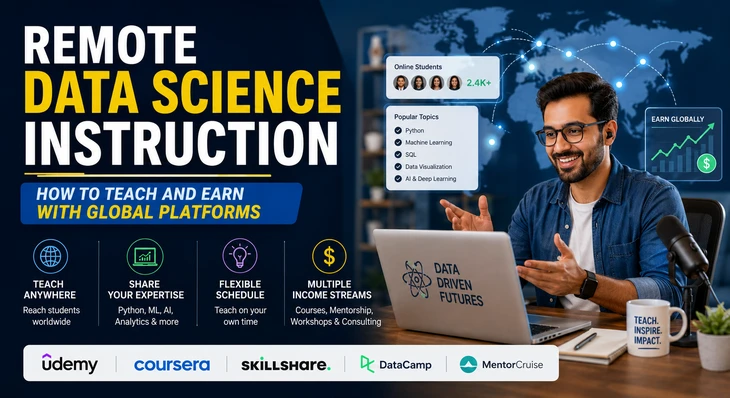
Remote Data Science Instruction: How to Teach and Earn With Global Platforms
A few years ago, teaching data science online was mostly limited to university professors and large educational companies. That has changed completely. Today, professionals with practical industry experience are building audiences, launching online courses, and earning income from students across the world. The rise of remote learning has created strong demand for skilled instructors who can explain analytics, machine learning, Python, and AI in a practical way. Businesses want employees with data skills, career changers want flexible learning options, and students prefer instructors who teach real-world applications instead of textbook theory. This shift has opened the door for remote data science instruction as a serious income opportunity. Many instructors now teach part-time alongside their regular jobs, while others have turned online education into a full-time career. The biggest advantage is accessibility. You no longer need a classroom, office, or training institute to start teaching. Global platforms already provide the audience, payment systems, and course infrastructure. Your role is to deliver valuable learning experiences that help people build useful skills. In this article, you will learn how to start teaching data science remotely, where to find global teaching opportunities, how to attract students organically, and how experienced instructors build multiple income streams online.Why Remote Data Science Teaching Is Expanding Worldwide
Data is now part of almost every industry. Retail brands track customer behavior, hospitals analyze patient information, banks use predictive models, and logistics companies depend on analytics to improve operations. Because businesses rely heavily on data-driven decisions, employers are actively searching for professionals with technical skills in:- Python programming
- Data analysis
- SQL databases
- Machine learning
- Artificial intelligence
- Business intelligence
- Data visualization
- Predictive analytics
Essential Skills for Remote Data Science Instruction
Strong technical knowledge matters, but successful online instructors usually combine technical expertise with communication and teaching ability.Technical Expertise
You should feel comfortable working with the tools and concepts students expect to learn. Popular teaching areas include:- Python for data analysis
- Pandas and NumPy
- SQL queries
- Data cleaning
- Machine learning models
- Tableau and Power BI
- Statistics for analytics
- AI and automation workflows
- Deep learning fundamentals
Clear Communication
One of the biggest mistakes new instructors make is teaching at an advanced level too quickly. Students learn better when complex topics are explained in simple language. A beginner does not need academic jargon during the first lesson. They need clarity. Instead of overwhelming students with formulas immediately, experienced instructors connect concepts to familiar situations. For example, predictive analytics can be introduced as a method businesses use to estimate future outcomes based on historical patterns. This approach keeps learners engaged and improves course completion rates.Video and Presentation Quality
Remote teaching depends heavily on presentation. You do not need expensive production equipment to create professional content. A clean microphone, readable screen recordings, and organized slides are usually enough. Students care far more about understandable explanations than cinematic visuals.Patience With Learners
Not every student learns at the same pace. Some people grasp SQL quickly but struggle with statistics. Others understand visualization tools faster than programming. Good instructors adapt their explanations and guide learners step by step instead of rushing through lessons.Best Global Platforms for Remote Data Science Instruction
Choosing the right platform can significantly impact your income and visibility. Some platforms focus on self-paced courses, while others specialize in live teaching or mentorship.Udemy
Udemy is one of the most popular platforms for online instructors. It allows educators to upload pre-recorded courses on topics like:- Python for beginners
- Machine learning projects
- Data analysis with Excel
- SQL bootcamps
- AI applications
Coursera
Coursera partners with universities and organizations. While it can be harder for independent instructors to join directly, experienced educators often collaborate with institutions or companies to develop specialized programs. Courses on Coursera usually attract learners looking for professional certifications.Skillshare
Skillshare works well for shorter, project-based lessons. Instructors earn based on watch time rather than individual course purchases. This platform is ideal for teaching practical topics such as:- Data visualization dashboards
- Introductory Python tutorials
- Quick analytics projects
- Productivity tools for analysts
LinkedIn Learning
Professionals often use LinkedIn Learning for career development. Courses focusing on business analytics, AI tools, and workplace applications perform especially well. Having industry experience increases your chances of being accepted as an instructor.DataCamp
DataCamp specializes in data science education. It focuses heavily on hands-on coding exercises and interactive learning. Instructors with strong programming and analytical backgrounds can build highly targeted content for aspiring data professionals.MentorCruise and Coaching Platforms
Some professionals prefer live mentorship instead of recorded courses. Platforms like MentorCruise allow instructors to:- Offer career guidance
- Conduct one-on-one coaching
- Review portfolios
- Help with interview preparation
- Support learners during real projects
How to Create a Successful Online Data Science Course
Creating a course is not just about sharing information. The structure and learning experience matter just as much.Start With a Clear Learning Outcome
Students enroll because they want a specific result. A vague title like “Learn Data Science” is less effective than:- “Python for Data Analysis for Beginners”
- “Build Machine Learning Projects From Scratch”
- “SQL for Business Intelligence Professionals”
Focus on Practical Projects
Theory alone is rarely enough. Students value hands-on experience because employers look for practical skills. Examples of strong project ideas include:- Sales forecasting dashboards
- Customer segmentation analysis
- Fraud detection models
- Recommendation systems
- Stock market prediction experiments
- Marketing analytics reports
Keep Lessons Short and Focused
Long, overloaded lectures reduce engagement. Short lessons of 5-15 minutes usually perform better online. Each lesson should solve one specific problem or explain one concept clearly.Use Real Datasets
Real-world datasets make lessons more meaningful. Students enjoy working with realistic information from industries like:- E-commerce
- Healthcare
- Finance
- Sports analytics
- Social media
- Transportation
SEO Strategies to Attract More Students Online
Creating a great course is only part of the process. Students also need to discover your content. Search engine optimization helps remote data science instructors reach learners actively searching for online education.Use Long-Tail Keywords Naturally
Broad keywords are usually competitive and difficult to rank for. Instead, focus on targeted search phrases that match learner intent. Examples include:- Remote data science teaching jobs
- Best online data science instructor
- Learn machine learning online
- Python course for beginners
- Data analytics training online
- Teach AI online and earn money
Publish Helpful Supporting Content
Many successful instructors grow by sharing free educational content before selling paid programs. This may include:- Blog tutorials
- LinkedIn educational posts
- YouTube walkthroughs
- GitHub projects
- Technical newsletters
- Case study breakdowns
Build a Recognizable Personal Brand
Students often choose instructors they trust. You can build credibility by consistently sharing:- Practical insights
- Project examples
- Career advice
- Analytics trends
- AI workflow tips
- Real business case studies
Income Opportunities for Online Data Science Instructors
One reason many professionals enter remote teaching is the flexibility of the earning potential. Experienced instructors rarely rely on a single revenue source.Recorded Online Courses
Pre-recorded courses remain one of the most scalable income models. Once a course is uploaded to a platform, students can continue to purchase it without requiring ongoing live teaching. Courses focused on practical skills such as Python automation, machine learning projects, or SQL training often perform especially well.Live Training Sessions
Some instructors prefer interactive teaching. Live workshops allow real-time engagement and often support higher pricing. Popular workshop topics include:- Data visualization masterclasses
- AI implementation training
- Machine learning bootcamps
- Analytics reporting workshops
- SQL crash courses
One-on-One Mentorship
Career-focused mentorship has become increasingly popular. Students preparing for analytics roles frequently seek help with:- Portfolio building
- Resume reviews
- Technical interview preparation
- Project guidance
- Career transition planning
Membership Communities
Some instructors create paid communities where learners receive ongoing support. Members may gain access to:- Weekly tutorials
- Live Q&A sessions
- Coding exercises
- Career discussions
- Industry updates
- Networking opportunities
Consulting and Corporate Opportunities
Teaching visibility can also attract freelance and consulting work. Businesses frequently hire instructors to help with:- Internal analytics training
- Workflow automation
- AI adoption strategies
- Dashboard implementation
- Data literacy programs
Common Challenges in Remote Data Science Teaching
Online instruction offers flexibility, but it also comes with challenges.Standing Out in a Competitive Market
Thousands of courses already exist online. New instructors must focus on differentiation. You can stand out by:- Teaching niche topics
- Offering practical business examples
- Simplifying difficult concepts
- Providing excellent student support
- Updating content regularly
Keeping Content Updated
Data science evolves quickly. New libraries, AI tools, and frameworks appear constantly. Courses that become outdated often lose rankings and student trust. Successful instructors continuously refresh lessons and examples.Managing Student Expectations
Some students expect instant career success after finishing a course. Clear communication about learning goals and required practice helps avoid disappointment.Handling Global Audiences
Remote instructors teach students from different countries and time zones. Clear pronunciation, structured lessons, and simple language improve accessibility for international learners.Real-Life Example of Growing Through Online Teaching
Consider a mid-level data analyst working a standard office job. Initially, they begin uploading short Python tutorials on weekends. After gaining a small audience, they create a beginner-friendly machine learning course. The first few months generate only modest income. However, consistent updates, positive reviews, and social media sharing gradually increase visibility. Eventually, the instructor expands into:- One-on-one mentorship
- Corporate workshops
- Paid newsletters
- Advanced certification programs
How Beginners Can Start Teaching Data Science Online
Many professionals hesitate because they believe they are not “expert enough.” In reality, beginners often connect best with instructors who clearly remember the learning journey. You do not need 15 years of experience to start. If you can confidently teach a skill that helps others, you already have value.Start Small
Instead of building a massive course immediately, begin with:- Short tutorials
- Live webinars
- Beginner workshops
- LinkedIn educational posts
- YouTube walkthroughs
Choose One Specialty
Trying to teach everything at once can dilute your expertise. Focus on one clear area first, such as:- SQL for beginners
- Python automation
- Excel analytics
- Tableau dashboards
- Introductory machine learning
Gather Student Feedback
Early feedback helps improve course quality. Ask students:- Which lessons felt confusing?
- Which examples were most helpful?
- What topics should be added?
The Future of Remote Data Science Education
The online education industry continues to evolve rapidly. Artificial intelligence tools are changing how people learn, but human instructors remain highly valuable. Students still want:- Guidance
- Context
- Real-world experience
- Mentorship
- Career advice
- Personalized explanations
- AI-assisted learning platforms
- Interactive coding environments
- Personalized learning paths
- Virtual classroom experiences
- Industry-specific analytics training