📚 Table of Contents
- What Is Remote Genetic Counseling?
- Why Remote Genetic Counseling Careers Are Growing
- Genetic Testing Is Becoming More Common
- Telehealth Has Become Mainstream
- There Is a Shortage of Qualified Genetic Counselors
- Flexible Healthcare Careers Are More Attractive Than Ever
- What Does a Remote Genetic Counselor Do?
- Conducting Virtual Patient Appointments
- Explaining Genetic Testing Clearly
- Reviewing and Interpreting Results
- Providing Emotional Guidance
- Collaborating With Healthcare Teams
- Essential Skills for Remote Genetic Counseling Careers
- Communication Skills
- Emotional Intelligence
- Strong Genetics Knowledge
- Comfort With Technology
- Time Management and Organization
- Education Requirements for Genetic Counselors
- Earn a Bachelor’s Degree
- Complete a Master’s Degree in Genetic Counseling
- Certification and Licensing
- Types of Remote Genetic Counseling Careers
- Clinical Genetic Counselor
- Laboratory Genetic Counselor
- Research Genetic Counselor
- Telehealth Consultant
- Academic and Education Roles
- Salary Expectations and Career Outlook
- Benefits of Remote Genetic Counseling Careers
- Greater Flexibility
- Access to More Job Opportunities
- Meaningful Patient Impact
- Continuous Learning Opportunities
- Challenges of Working Remotely in Genetic Counseling
- Building Patient Trust Online
- Handling Emotional Conversations Remotely
- Keeping Up With Industry Changes
- Licensing Across Multiple States
- How to Get Started in Remote Genetic Counseling
- Build a Strong Academic Background
- Choose an Accredited Genetic Counseling Program
- Gain Real-World Clinical Experience
- Improve Virtual Communication Skills
- Network With Industry Professionals
- Apply for Remote and Telehealth Positions
- A Real-Life Example of Remote Genetic Counseling
- Future Trends in Remote Genetic Counseling
- Personalized Medicine Will Continue Expanding
- Telehealth Will Remain a Major Part of Healthcare
- AI Tools May Improve Workflow Efficiency
- Flexible Healthcare Employment Models Will Increase
- FAQs About Remote Genetic Counseling Careers
- Is remote genetic counseling a good career?
- What qualifications are needed to become a genetic counselor?
- Can genetic counselors work from home full-time?
- Are remote genetic counseling jobs in demand?
- What skills are important for remote genetic counseling careers?
- How much do remote genetic counselors earn?
- Conclusion
Remote Genetic Counseling Careers: Skills, Opportunities, and How to Get Started
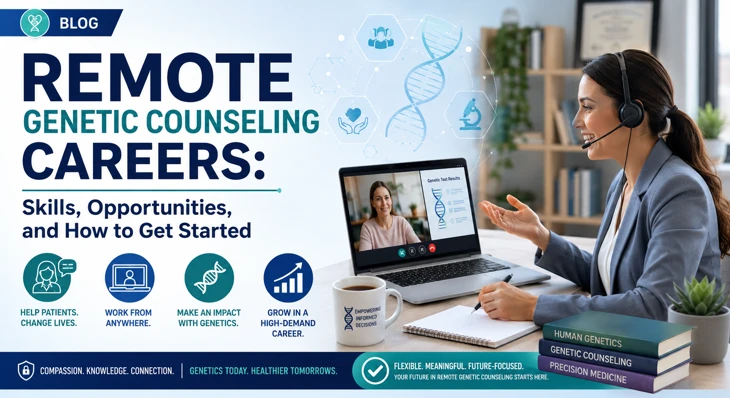
The healthcare industry is evolving fast, and few careers reflect that shift more clearly than genetic counseling. What once required in-person hospital visits can now happen through secure virtual consultations, opening the door to a growing number of remote genetic counseling careers. For healthcare professionals who want flexibility without stepping away from meaningful patient work, this field offers a strong balance of purpose and long-term opportunity. Genetic counselors help people understand inherited conditions, interpret genetic test results, and make informed medical decisions. Thanks to telehealth, many of these services can now be delivered entirely online. The rise of virtual healthcare has also created new demand for specialists who can communicate complex medical information in a calm, supportive, and understandable way. From cancer genetics to prenatal counseling, remote professionals are helping patients across cities, states, and even countries. If you are exploring healthcare careers that combine science, technology, and patient communication, remote genetic counseling may be worth serious consideration. This guide explains what the role involves, what skills employers look for, salary expectations, career growth opportunities, and how to get started in the field.What Is Remote Genetic Counseling?
Remote genetic counseling is the process of providing genetic counseling services via digital healthcare platforms rather than traditional face-to-face appointments. Counselors connect with patients using secure video calls, phone consultations, and online medical systems. The core responsibilities remain the same as in-person counseling. Genetic counselors evaluate family medical history, explain genetic testing options, interpret test results, and support patients as they make healthcare decisions. The major difference is the delivery method. Instead of sitting in a clinic office, a counselor may spend the day meeting patients virtually from a home office or remote healthcare workspace. This approach has become increasingly common as telemedicine expands across the healthcare industry. Patients living in rural communities or underserved areas can now access specialists they might otherwise never reach. Today, remote genetic counseling jobs are commonly available in:- Hospitals and medical centers
- Telehealth companies
- Fertility clinics
- Cancer treatment organizations
- Genetic testing laboratories
- Research institutions
- Healthcare education companies
Why Remote Genetic Counseling Careers Are Growing
The demand for remote genetic counseling careers has increased significantly over the past several years. Several industry trends are driving that growth.Genetic Testing Is Becoming More Common
More patients are using genetic testing to understand inherited risks tied to conditions such as breast cancer, cardiovascular disease, neurological disorders, and reproductive health concerns. At the same time, direct-to-consumer DNA testing has increased public awareness about genetics. As interest grows, healthcare providers need trained professionals who can explain results accurately and responsibly.Telehealth Has Become Mainstream
Telemedicine is no longer viewed as a temporary solution. Many healthcare systems now treat virtual appointments as a standard part of patient care. That shift has created strong demand for remote healthcare specialists, including genetic counselors. Healthcare organizations also recognize that virtual counseling improves access for patients who may live far from specialized clinics.There Is a Shortage of Qualified Genetic Counselors
In many regions, the number of licensed genetic counselors is still limited. Remote work models help healthcare organizations hire professionals across broader geographic areas, improving patient access while reducing staffing limitations.Flexible Healthcare Careers Are More Attractive Than Ever
Healthcare professionals increasingly value flexibility and work-life balance. Remote genetic counseling allows counselors to continue patient-centered work without the stress of daily commuting or relocation. For many professionals, that flexibility is one of the biggest advantages of the career path.What Does a Remote Genetic Counselor Do?
Even though the work happens online, the day-to-day responsibilities remain highly focused on patient care.Conducting Virtual Patient Appointments
A large portion of the job involves meeting patients through video consultations. During these sessions, counselors review:- Family medical history
- Personal health concerns
- Inherited condition risks
- Genetic testing options
Explaining Genetic Testing Clearly
Most patients are unfamiliar with medical genetics terminology. One of the counselor’s most important responsibilities is to simplify complex information. Counselors explain:- What a genetic test looks for
- How testing works
- Possible outcomes
- Limitations of testing
- Emotional and medical implications
Reviewing and Interpreting Results
Once testing is complete, counselors help patients understand the results. Some findings may indicate increased health risks, while others may show no inherited concerns. This stage often requires a careful balance between medical accuracy and emotional support.Providing Emotional Guidance
Genetic information can feel overwhelming. Patients may experience anxiety, fear, confusion, or uncertainty after learning about inherited risks. Strong counselors know how to create supportive conversations while helping patients process difficult information.Collaborating With Healthcare Teams
Remote genetic counselors regularly work alongside:- Physicians
- Oncologists
- Fertility specialists
- Laboratory teams
- Researchers
Essential Skills for Remote Genetic Counseling Careers
Success in remote genetic counseling depends on more than scientific knowledge alone. Professionals need a combination of communication ability, technical understanding, empathy, and organization.Communication Skills
This is one of the most important skills in the profession. Patients rely on counselors to explain complicated healthcare information in a way that feels understandable and approachable. Remote communication requires even stronger listening skills because virtual conversations sometimes lack the natural cues present during in-person appointments.Emotional Intelligence
Patients discussing inherited conditions may feel emotionally vulnerable. A good counselor knows how to respond with empathy while maintaining professionalism. Building trust through a screen is a skill that becomes stronger with experience.Strong Genetics Knowledge
Remote genetic counselors need deep knowledge of:- Human genetics
- Biology
- Medical terminology
- Genetic testing technologies
- Ethical healthcare standards
Comfort With Technology
Because the role is fully digital, professionals must feel comfortable using healthcare software and communication tools. Common systems include:- Electronic medical records
- Telehealth platforms
- Scheduling software
- Secure messaging systems
Time Management and Organization
Remote healthcare professionals often manage multiple appointments and documentation tasks independently. Strong organizational skills help counselors stay efficient without sacrificing patient care quality.Education Requirements for Genetic Counselors
Becoming a genetic counselor requires specialized education and training.Earn a Bachelor’s Degree
Most future counselors begin with a bachelor’s degree in a science-related subject. Popular choices include:- Biology
- Genetics
- Psychology
- Biochemistry
- Public health
Complete a Master’s Degree in Genetic Counseling
A master’s degree from an accredited genetic counseling program is typically required. These programs combine academic learning with clinical experience. Students study:- Medical genetics
- Counseling techniques
- Research methods
- Clinical ethics
- Patient communication
Certification and Licensing
Many employers prefer candidates certified through professional organizations such as the American Board of Genetic Counseling. Licensing requirements vary depending on location. Anyone pursuing remote genetic counseling jobs should verify state or regional licensing requirements before applying.Types of Remote Genetic Counseling Careers
One reason this profession appeals to many people is the variety of career paths available.Clinical Genetic Counselor
Clinical counselors work directly with patients through hospitals, telehealth platforms, and healthcare systems. Many specialize in areas such as:- Prenatal genetics
- Pediatric genetics
- Cancer genetics
- Neurological disorders
- Cardiovascular genetics
Laboratory Genetic Counselor
Some professionals work primarily with laboratories rather than patients. Their responsibilities may include:- Reviewing test reports
- Assisting healthcare providers
- Explaining testing procedures
- Supporting result interpretation
Research Genetic Counselor
Research-focused roles involve supporting clinical studies and genetic research initiatives. Counselors may help recruit participants, explain studies, and communicate findings.Telehealth Consultant
Experienced professionals sometimes move into healthcare consulting roles. These positions may involve improving virtual healthcare systems, developing patient education programs, or advising telemedicine companies.Academic and Education Roles
Remote education opportunities have expanded quickly. Some counselors teach students, lead virtual training sessions, or create healthcare education materials.Salary Expectations and Career Outlook
Remote genetic counseling salaries vary depending on experience, specialization, employer type, and geographic location. Entry-level professionals may start with moderate salaries, while experienced counselors in high-demand specialties often earn significantly more. Many remote healthcare employers also provide:- Flexible schedules
- Continuing education support
- Healthcare benefits
- Remote work stipends
- Career development programs
Benefits of Remote Genetic Counseling Careers
There are several reasons why healthcare professionals are drawn to remote genetic counseling.Greater Flexibility
Working remotely allows professionals to create schedules that better support their personal lives. For many people, avoiding long daily commutes improves both productivity and overall quality of life.Access to More Job Opportunities
Remote work removes geographic limitations. Instead of applying only to nearby hospitals or clinics, counselors can pursue opportunities across multiple regions.Meaningful Patient Impact
Genetic counselors often support patients during deeply personal healthcare moments. Helping someone understand important medical information can make a lasting difference for individuals and families.Continuous Learning Opportunities
Genetics is constantly evolving. Professionals regularly learn about new research, technologies, and testing advancements, which keeps their careers intellectually engaging.Challenges of Working Remotely in Genetic Counseling
While the profession offers many benefits, there are also challenges to consider.Building Patient Trust Online
Some counselors initially find virtual communication more difficult than face-to-face interaction. Developing strong online communication habits becomes essential.Handling Emotional Conversations Remotely
Discussions involving inherited disease risks or difficult diagnoses can become emotionally intense. Counselors must stay compassionate while guiding conversations professionally.Keeping Up With Industry Changes
Genetics is one of the fastest-changing healthcare fields. Professionals need ongoing education to stay current with research, regulations, and testing standards.Licensing Across Multiple States
Some remote employers require counselors to hold licenses in multiple states. Managing these requirements can sometimes become time-consuming.How to Get Started in Remote Genetic Counseling
Starting a career in remote genetic counseling requires preparation, education, and hands-on experience.Build a Strong Academic Background
Science-focused coursework is important during undergraduate education. Volunteer experience in healthcare environments can also strengthen graduate program applications.Choose an Accredited Genetic Counseling Program
Research accredited master’s programs carefully. Programs with strong clinical placements and telehealth exposure may provide valuable advantages.Gain Real-World Clinical Experience
Internships, supervised counseling sessions, and shadowing opportunities help students develop patient communication skills. Practical experience is highly valued by employers.Improve Virtual Communication Skills
Since remote interaction is central to the profession, future counselors should become comfortable communicating through digital platforms. Clear speaking, active listening, and professional online communication all matter.Network With Industry Professionals
Professional organizations, conferences, and online healthcare communities can help aspiring counselors build industry connections. Networking often leads to mentorship and career opportunities.Apply for Remote and Telehealth Positions
When applying for remote genetic counseling jobs, candidates should emphasize:- Communication strengths
- Telehealth experience
- Technical skills
- Patient-centered care experience
- Adaptability