📚 Table of Contents
- What Is Health Informatics?
- Why Remote Healthcare Analytics Careers Are Growing
- Increased Adoption of Digital Healthcare Systems
- Growing Demand for Healthcare Data Analysts
- Flexibility for Employers and Employees
- Top Remote Health Informatics Careers
- Healthcare Data Analyst
- Clinical Informatics Specialist
- Health Information Manager
- Healthcare Business Intelligence Analyst
- Medical Coding and Informatics Specialist
- Skills Needed for a Successful Health Informatics Career
- Technical Skills
- Healthcare Knowledge
- Communication and Problem-Solving Skills
- Educational Pathways for Health Informatics Careers
- Degree Programs
- Certifications
- Online Learning Platforms
- How to Build a Remote Career in Healthcare Analytics
- Build a Strong Technical Foundation
- Create a Professional Portfolio
- Gain Healthcare Industry Exposure
- Develop Remote Work Skills
- Network With Industry Professionals
- Real-World Example of a Remote Health Informatics Career
- Salary Expectations in Health Informatics
- Challenges to Expect in Remote Healthcare Analytics
- Learning Complex Healthcare Systems
- Managing Sensitive Data
- Keeping Up With Technology Changes
- The Future of Health Informatics Careers
- FAQs About Health Informatics Careers
- Is health informatics a good remote career?
- Do I need a medical degree for healthcare analytics jobs?
- Which skills are most important for remote health informatics jobs?
- Are health informatics careers in demand?
- Can beginners start a career in health informatics?
- Conclusion
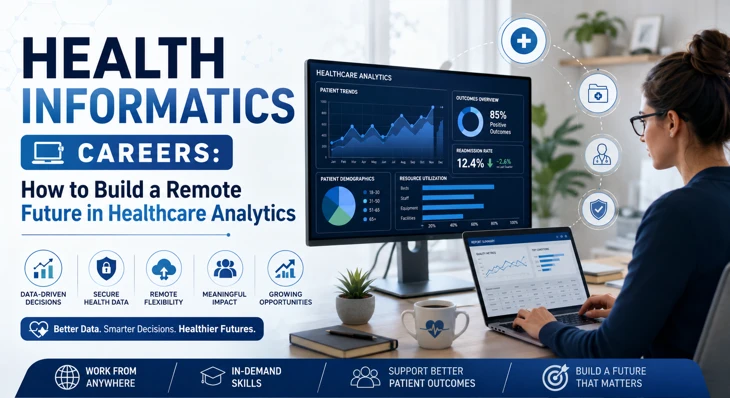
Health Informatics Careers: How to Build a Remote Future in Healthcare Analytics
Healthcare is no longer limited to hospitals, clinics, and in-person patient care. Over the last decade, the industry has experienced a major digital transformation. From electronic health records to predictive analytics and telehealth systems, technology now plays a central role in modern healthcare. As healthcare organizations continue to rely on data-driven decision-making, the demand for skilled professionals in health informatics is growing rapidly. Even more exciting, many of these opportunities now support remote work, giving professionals the flexibility to build rewarding careers from virtually anywhere. For people who enjoy technology, data analysis, healthcare systems, and problem-solving, health informatics offers a future-focused career path with strong earning potential and long-term stability. Whether you are transitioning from healthcare, IT, or analytics, there are several ways to enter this field and build a successful remote career. In this guide, you will learn what health informatics involves, which remote healthcare analytics jobs are in demand, what skills employers look for, and how to position yourself for long-term success in this fast-growing industry.What Is Health Informatics?
Health informatics is the intersection of healthcare, information technology, and data management. It focuses on collecting, organizing, analyzing, and protecting healthcare information to improve patient outcomes and operational efficiency. Professionals in this field help healthcare organizations use data more effectively. Their work can involve:- Managing electronic health records (EHR)
- Analyzing patient data and healthcare trends
- Improving hospital workflows
- Supporting clinical decision-making systems
- Ensuring healthcare data security and compliance
- Developing reports and dashboards for healthcare teams
Why Remote Healthcare Analytics Careers Are Growing
The rise of remote work has transformed industries worldwide, and healthcare analytics is no exception. Healthcare organizations now depend heavily on cloud-based systems, digital collaboration tools, and online patient platforms. As a result, many healthcare data and informatics roles can be performed remotely without affecting productivity. Several factors are driving this trend.Increased Adoption of Digital Healthcare Systems
Hospitals, insurance companies, pharmaceutical organizations, and healthcare startups all rely on digital systems to manage operations. These systems generate enormous amounts of data every day. Organizations need professionals who can analyze that information, identify insights, and improve performance remotely.Growing Demand for Healthcare Data Analysts
Healthcare providers are under pressure to reduce costs while improving patient outcomes. Data analytics helps organizations make smarter decisions based on real evidence. This has created strong demand for healthcare data analysts, informatics specialists, clinical analysts, and healthcare business intelligence professionals.Flexibility for Employers and Employees
Remote healthcare analytics teams allow organizations to hire talent from different regions while reducing office costs. Employees also benefit from improved work-life balance and flexible schedules. For many professionals, this flexibility makes health informatics one of the most attractive healthcare career paths today.Top Remote Health Informatics Careers
The field of health informatics includes a wide range of remote-friendly career opportunities. Some roles focus more on technical systems, while others emphasize analytics, compliance, or operational improvement. Here are some of the most in-demand remote healthcare analytics careers.Healthcare Data Analyst
Healthcare data analysts collect and interpret healthcare data to identify trends, measure outcomes, and support business decisions. Their responsibilities may include:- Creating reports and dashboards
- Analyzing patient data
- Tracking healthcare performance metrics
- Supporting quality improvement initiatives
- Using tools like SQL, Excel, Tableau, or Power BI
Clinical Informatics Specialist
Clinical informatics specialists help healthcare providers improve the way they use technology in patient care. They often collaborate with doctors, nurses, and IT teams to optimize healthcare systems. Responsibilities can include:- Managing electronic health record systems
- Improving clinical workflows
- Training staff on healthcare software
- Monitoring system performance
- Supporting healthcare compliance requirements
Health Information Manager
Health information managers oversee the organization, security, and accuracy of healthcare data. Their work focuses on maintaining proper documentation standards and ensuring compliance with healthcare regulations. This role often requires strong knowledge of:- Healthcare data governance
- HIPAA compliance
- Medical coding systems
- Electronic medical records
- Healthcare privacy regulations
Healthcare Business Intelligence Analyst
Business intelligence analysts help healthcare organizations make strategic decisions using data visualization and reporting tools. They build dashboards that track operational efficiency, patient outcomes, financial performance, and resource allocation. This role combines technical analytics skills with business strategy.Medical Coding and Informatics Specialist
Medical coding specialists with informatics expertise help organizations organize and classify healthcare information accurately. With many healthcare systems operating digitally, remote coding and informatics roles continue to expand. Professionals in this area often work with:- ICD-10 coding systems
- Insurance billing processes
- Electronic health records
- Healthcare compliance standards
Skills Needed for a Successful Health Informatics Career
Breaking into healthcare analytics requires a mix of technical knowledge, healthcare understanding, and communication skills. The good news is that you do not always need a medical degree to succeed in this field.Technical Skills
Strong technical skills are essential for remote health informatics jobs. Some of the most valuable skills include:- SQL and database management
- Data visualization tools like Tableau or Power BI
- Microsoft Excel
- Electronic health record systems
- Data analysis and reporting
- Healthcare software platforms
- Basic programming knowledge
Healthcare Knowledge
Understanding healthcare terminology, workflows, and regulations is equally important. Employers often look for professionals familiar with:- Healthcare operations
- Medical terminology
- HIPAA regulations
- Patient privacy standards
- Clinical documentation
Communication and Problem-Solving Skills
Health informatics professionals frequently work with both technical teams and healthcare staff. You must be able to explain complex data clearly and collaborate with different departments. Strong communication skills become even more important in remote work environments where virtual collaboration is part of daily operations.Educational Pathways for Health Informatics Careers
There is no single path into health informatics. People enter the field from healthcare, IT, business analytics, and even administrative backgrounds. However, certain educational credentials can improve your opportunities.Degree Programs
Many professionals pursue degrees in:- Health informatics
- Healthcare administration
- Information technology
- Data analytics
- Computer science
- Public health
Certifications
Certifications can help strengthen your resume, especially if you are transitioning from another industry. Popular options include:- Certified Health Data Analyst (CHDA)
- Registered Health Information Administrator (RHIA)
- Certified Professional in Healthcare Information and Management Systems (CPHIMS)
- Google Data Analytics Certificate
- Tableau certifications
Online Learning Platforms
Today, it is easier than ever to develop healthcare analytics skills from home. Platforms offering courses in data analysis, healthcare systems, SQL, and business intelligence allow learners to build practical experience at their own pace. Some professionals begin by learning basic analytics tools and gradually specialize in healthcare-focused applications.How to Build a Remote Career in Healthcare Analytics
Building a successful remote health informatics career requires more than technical knowledge. Employers want professionals who can work independently, communicate effectively, and adapt to digital work environments. Here are practical steps that can help you stand out.Build a Strong Technical Foundation
Start by mastering core analytics tools and healthcare systems. Even entry-level healthcare analytics positions often require experience with:- SQL
- Excel
- Data visualization platforms
- Reporting tools
- Healthcare databases
Create a Professional Portfolio
A portfolio can help showcase your technical abilities to employers. Include examples such as:- Healthcare data dashboards
- Reporting projects
- Data visualization samples
- Case studies
- Workflow improvement examples
Gain Healthcare Industry Exposure
Employers value candidates who understand healthcare operations. If possible, gain experience through:- Healthcare internships
- Volunteer projects
- Administrative healthcare roles
- Medical office experience
- Freelance healthcare analytics work
Develop Remote Work Skills
Remote healthcare analytics professionals must be organized, self-motivated, and comfortable with virtual communication tools. Important remote work skills include:- Time management
- Digital collaboration
- Virtual presentation skills
- Project management
- Independent problem-solving
Network With Industry Professionals
Networking can open doors to remote healthcare informatics opportunities. Join professional groups, attend virtual healthcare conferences, and connect with healthcare analytics professionals online. Industry communities often share job opportunities, career advice, and emerging trends that may not appear on traditional job boards.Real-World Example of a Remote Health Informatics Career
Consider the example of Sarah, a former hospital administrator who wanted more flexibility in her career. After learning SQL and data visualization through online courses, she completed a healthcare analytics certification and began building small reporting projects. Within a year, she transitioned into a remote healthcare data analyst role for a telehealth company. Today, she works from home creating dashboards that help healthcare providers monitor patient engagement and treatment outcomes. Her experience highlights an important reality about health informatics careers: many professionals successfully transition into this field without starting from a purely technical background.Salary Expectations in Health Informatics
Health informatics salaries can vary depending on experience, education, specialization, and location. However, many remote healthcare analytics roles offer competitive compensation due to strong industry demand. Common salary ranges include:- Entry-level healthcare data analyst: moderate starting salary with strong growth potential
- Clinical informatics specialist: higher earning potential with healthcare experience
- Healthcare business intelligence analyst: competitive mid-to-senior-level salaries
- Health information manager: strong long-term career stability