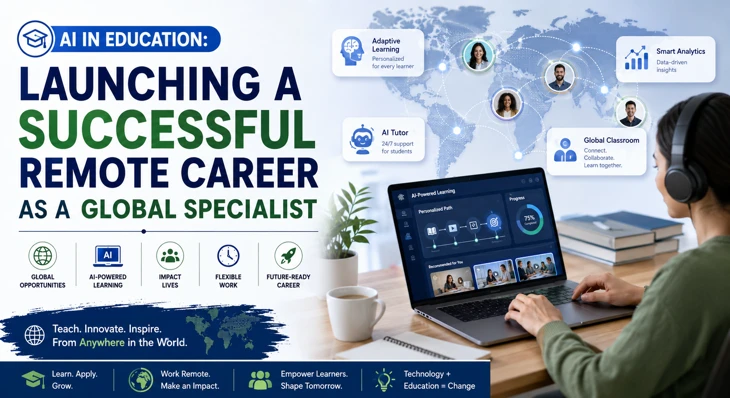
AI in Education: Launching a Successful Remote Career as a Global Specialist
Introduction: A New Kind of Career Is Quietly Taking Shape
Education has changed more in the last decade than it did in the previous fifty years. Classrooms are no longer confined to four walls, and learning is no longer limited to a fixed schedule. Behind this shift, artificial intelligence is playing a surprisingly practical role—reshaping how lessons are delivered, how progress is measured, and how educators connect with learners across the world.
What’s even more interesting is the career path emerging alongside it. Professionals are no longer restricted to traditional teaching roles or on-site academic jobs. Instead, a growing number of people are building remote careers in AI-driven education, working with global teams while supporting learners from around the world.
This space is still evolving, which makes it exciting. It rewards curiosity more than credentials, and adaptability more than rigid experience. Whether someone comes from teaching, content creation, analytics, or an entirely unrelated field, there is room to grow here.
Let’s explore what this shift really means and how to build a remote career in AI-powered education step by step.
How AI Quietly Became the Backbone of Modern Learning
Artificial intelligence isn’t replacing education—it’s reshaping how it functions behind the scenes. Most learners don’t even realize how many systems are adjusting in real time to improve their experience.
Instead of treating every learner the same way, AI tools observe patterns. They notice where students struggle, how quickly they respond, and which formats help them understand better. Over time, learning becomes less generic and more responsive.
Learning That Adjusts Instead of Repeats
In traditional classrooms, if a student doesn’t understand something, the teacher often repeats the explanation in the same way. AI-based systems take a different approach. They try alternative explanations, adjust difficulty levels, or even change the format entirely—from text to video to interactive exercises.
This quiet adaptability is what makes AI so powerful in education.
The Invisible Work That Saves Educators Time
Teachers and instructors often spend a large part of their time on repetitive tasks—grading assignments, tracking attendance, and preparing reports. AI tools now handle much of this work in the background.
The result isn’t just efficiency. It’s space. Educators finally have more time to focus on mentoring, guiding, and understanding students more deeply.
Learning Without Borders
Perhaps the most important change is accessibility. A student in a remote village can now access the same structured learning experience as someone in a major city. AI-powered platforms help bridge gaps that were once considered permanent.
Why Remote AI Education Careers Are Growing Faster Than Expected
A few years ago, most education jobs required physical presence. Today, that expectation is fading quickly. Companies and institutions are becoming more comfortable with remote collaboration, especially in digital learning systems.
The Shift Toward Digital-First Education
Schools and universities are increasingly adopting hybrid or fully online models. This shift has created demand for professionals who understand both education and technology—not just one or the other.
EdTech Growth Is Creating Global Opportunities
Education technology companies are expanding across continents. They need people who can design learning content, test AI-driven systems, and improve user experiences for diverse audiences.
The interesting part is that these roles are rarely location-dependent. A well-designed learning system can be built from anywhere and used everywhere.
Work That Feels More Flexible, Not More Chaotic
Remote roles in this space often come with flexibility, but also structure. Teams are distributed globally, so communication becomes more intentional. Deadlines matter, but so does independence. For many professionals, this balance is a major advantage.
Career Paths That Exist Inside AI-Driven Education
This field isn’t limited to a single job title. In fact, it’s more like an ecosystem of roles that work together to build learning experiences.
AI Education Specialist
These professionals help design and manage AI-powered learning systems. They ensure that the platform doesn’t just function technically, but actually supports how people learn in real life.
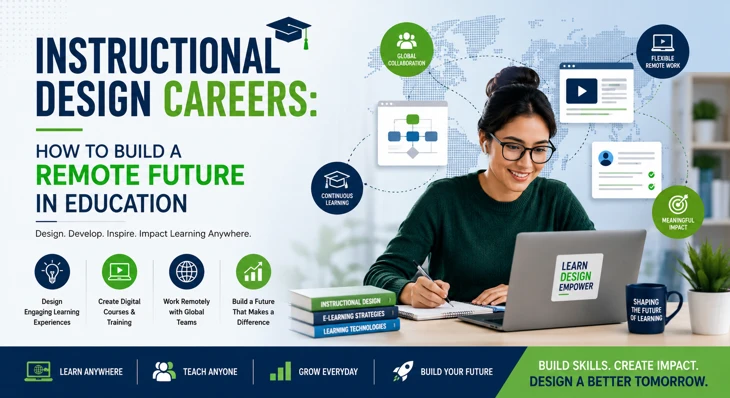
Instructional Designer for Digital Learning
Instructional designers think deeply about structure. They take complex topics and turn them into step-by-step learning journeys that feel natural and easy to follow.
EdTech Content Creator
This role focuses on building high-quality learning materials—videos, assessments, simulations, and interactive modules — that keep learners engaged rather than overwhelmed.
Learning Experience Analyst
Instead of guessing what works, analysts look at real data. They study how users interact with content and suggest improvements based on behavior rather than assumptions.
Remote Academic Consultant
These professionals often work with institutions to integrate AI tools into existing education systems. Their work bridges traditional teaching methods with modern technology.
Skills That Actually Matter in This Field
One of the most common misconceptions is that you need to be highly technical to enter AI education. In reality, the field values balance more than specialization.
Understanding How AI Works at a Basic Level
You don’t need to build algorithms, but you should understand what AI can and cannot do. This helps in designing realistic and effective learning systems.
Knowing How People Learn
Education is still about human behavior. Instructional thinking—how people absorb and retain information—remains at the core of every role in this field.
Clear Communication Across Borders
Since most teams are remote, communication becomes a skill in its own right. Writing clearly, explaining ideas simply, and collaborating across time zones are essential.
Working Comfortably With Data
AI education is driven by feedback loops. Understanding basic data—such as engagement rates or learning progress—can significantly improve outcomes.
Staying Comfortable With Change
This space evolves quickly. Tools change, platforms update, and methods improve. Those who stay curious tend to grow faster here.
A Practical Way to Begin a Remote Career in AI Education
Starting out doesn’t require a perfect plan. Most professionals enter this field step by step rather than through a single leap.
It often begins with curiosity—exploring how digital learning platforms work or experimenting with small content projects.
From there, people usually build basic knowledge in AI tools and instructional design. Online learning platforms make this easier than ever.
The next step is practice. Even small projects—like designing a mini online lesson or testing an AI learning tool—help build confidence.
Over time, a portfolio begins to form. That portfolio becomes the bridge to freelance projects or full-time remote roles.
A Real-World Transition Story
Consider someone who started as a school teacher. At first, their work was completely traditional—lesson planning, classroom teaching, student assessments.
Over time, they became curious about online learning tools. They started experimenting with digital platforms, then slowly moved into instructional design.
Eventually, they began working with international EdTech companies, helping design adaptive learning systems used across multiple countries.
What changed wasn’t just their job title—it was their environment. They went from local classrooms to a global digital workspace without relocating.
Challenges You’ll Likely Face (And What Helps)
Every growing field has friction points, and AI education is no different.
One common challenge is the pace of change. Tools evolve quickly, and what works today might feel outdated in a year.
Another is skill overlap. Many roles require a mix of education, tech awareness, and communication—so learning becomes continuous.
Remote work itself can also feel isolating at times, especially when teams are spread across different time zones.
The most effective way to handle these challenges is not specialization but consistency—staying up to date, practicing regularly, and improving gradually.
What the Future Looks Like
The direction is fairly clear. Education will continue becoming more adaptive, more personalized, and more technology-driven.
AI will not replace educators, but it will change how they work. Instead of delivering content in a fixed way, they will guide systems that adjust to each learner.
Remote professionals will play a central role in this shift—designing experiences, analyzing learning patterns, and improving digital education systems globally.
This is not a short-term trend. It is a long-term transformation in how learning is created and delivered.
FAQs
What does a remote AI education career involve?
It involves working with digital learning platforms, AI-based tools, or EdTech companies to design and improve learning experiences from anywhere in the world.
Do I need a technical background to enter this field?
Not necessarily. Many roles focus on content design, teaching, and learning experience rather than coding or deep technical development.
Which companies hire professionals in this space?
EdTech companies, online learning platforms, universities, and corporate training organizations regularly hire for AI-related education roles.
Is this field suitable for long-term growth?
Yes. As education becomes more digital, demand for skilled professionals in this space continues to grow steadily.
How do I begin if I have no experience?
Start with basic learning about AI tools and instructional design, then build small projects and gradually create a portfolio.
Conclusion: A Career Built for the Future
AI in education is not just changing how students learn—it is quietly reshaping how careers are built around learning itself.
A remote career in this field offers something rare: flexibility, global exposure, and meaningful work that directly impacts how people understand the world.
It doesn’t require perfection to start, only consistency and curiosity. Those who begin early and keep learning will naturally find their place in this evolving global space.