📚 Table of Contents
- What Is Remote Bioinformatics Analysis?
- Common Tasks in Bioinformatics Analysis
- Why Remote Bioinformatics Careers Are Growing
- Expansion of Genomic Research
- Rise of Digital Healthcare
- Increased Demand for Personalized Medicine
- Global Collaboration Opportunities
- Skills Required for Remote Bioinformatics Jobs
- Programming and Coding Skills
- Understanding of Biology and Genetics
- Data Analysis and Statistics
- Cloud Computing Knowledge
- Communication and Collaboration
- Educational Pathways for Bioinformatics Careers
- Bachelor’s Degree Options
- Master’s and Specialized Certifications
- Self-Learning and Portfolio Building
- Top Career Opportunities in Remote Bioinformatics Analysis
- Bioinformatics Analyst
- Genomics Data Scientist
- Computational Biologist
- Clinical Data Analyst
- Healthcare Machine Learning Engineer
- Bioinformatics Software Developer
- Industries Hiring Remote Bioinformatics Professionals
- Pharmaceutical Companies
- Biotechnology Firms
- Research Institutions
- Hospitals and Healthcare Systems
- Government and Public Health Organizations
- Benefits of Working in Remote Bioinformatics Analysis
- Flexible Work Environment
- Global Career Opportunities
- Competitive Salaries
- Continuous Learning
- Purpose-Driven Work
- Challenges in Remote Bioinformatics Careers
- Managing Large Datasets
- Keeping Up With Technology
- Communication Across Teams
- Data Privacy and Security
- How to Start a Career in Remote Bioinformatics Analysis
- Build Core Technical Skills
- Practice With Real Projects
- Learn Remote Collaboration Tools
- Create a Professional Online Presence
- Apply for Internships and Entry-Level Roles
- Real-World Example of Bioinformatics Impact
- Future Trends in Remote Bioinformatics Careers
- Artificial Intelligence Integration
- Expansion of Precision Medicine
- Increased Remote Hiring
- Growth of Wearable Health Data
- FAQs About Remote Bioinformatics Analysis Careers
- Is bioinformatics a good remote career option?
- What programming language is best for bioinformatics?
- Can I start a bioinformatics career without a biology degree?
- Are remote bioinformatics jobs in demand?
- What industries hire bioinformatics analysts?
- How long does it take to learn bioinformatics?
- Conclusion
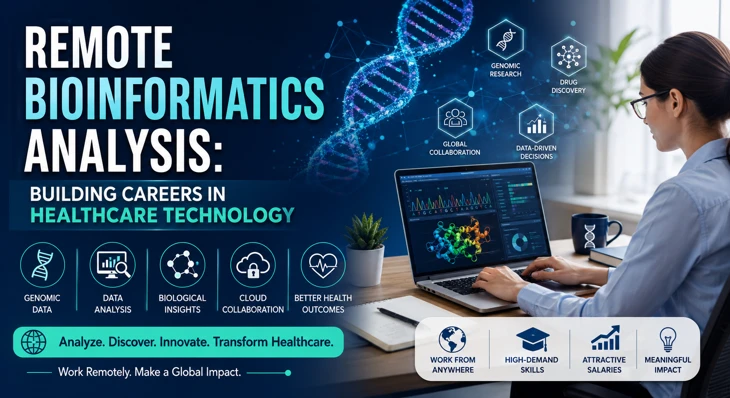
Remote Bioinformatics Analysis: Building Careers in Healthcare Technology
The healthcare industry is changing faster than ever, and technology is driving much of that transformation. From personalized medicine to genetic research, healthcare organizations now rely heavily on data to improve patient care and scientific discovery. This shift has created a growing demand for professionals who can analyze complex biological information from anywhere in the world. Remote bioinformatics analysis has emerged as one of the most promising career paths in healthcare technology. It combines biology, computer science, and data analytics to solve real-world medical and scientific challenges. What makes this field even more attractive is the flexibility it offers. Professionals can work remotely while contributing to groundbreaking research, pharmaceutical innovation, and disease prevention. For students, healthcare professionals, and tech enthusiasts seeking a future-focused career, bioinformatics offers exciting opportunities. Companies are actively hiring skilled analysts who can manage genomic data, interpret biological patterns, and support healthcare innovation without needing to work on-site. This article explores how remote bioinformatics analysis is shaping careers in healthcare technology, the skills required to succeed, career opportunities, salary expectations, and practical ways to enter this rapidly growing field.What Is Remote Bioinformatics Analysis?
Bioinformatics analysis involves the use of technology, software tools, and computational methods to study biological data. This often includes DNA sequences, genetic information, protein structures, and clinical research data. Remote bioinformatics analysis allows professionals to perform these tasks online without being physically present in a laboratory or healthcare facility. Analysts use cloud-based systems, research platforms, and specialized software to collaborate with healthcare organizations, biotech companies, and research institutions from different locations. In simple terms, bioinformatics professionals turn massive amounts of biological data into meaningful insights that support medical advancements.Common Tasks in Bioinformatics Analysis
Remote bioinformatics analysts may work on:- Genomic data interpretation
- DNA and RNA sequence analysis
- Drug discovery research
- Clinical data analysis
- Disease prediction modeling
- Protein structure analysis
- Machine learning for healthcare data
- Research reporting and visualization
Why Remote Bioinformatics Careers Are Growing
The demand for remote healthcare technology jobs has increased significantly in recent years. Several factors are driving the growth of remote bioinformatics careers.Expansion of Genomic Research
Advancements in genetic testing and genome sequencing have generated enormous volumes of biological data. Healthcare companies need skilled analysts who can efficiently process and interpret this information. As precision medicine becomes more common, bioinformatics experts are essential for understanding genetic patterns linked to diseases.Rise of Digital Healthcare
Hospitals, biotech firms, and pharmaceutical companies are investing heavily in digital healthcare technologies. Cloud computing and remote collaboration tools now allow bioinformatics teams to work from different locations while maintaining productivity. This flexibility has opened the door for fully remote healthcare data analysis roles.Increased Demand for Personalized Medicine
Personalized medicine focuses on tailoring treatments based on a patient’s genetic profile. Bioinformatics professionals help analyze genetic data to identify the most effective treatment strategies. This approach is becoming increasingly important in cancer treatment, rare disease research, and preventive healthcare.Global Collaboration Opportunities
Research teams are no longer limited by geography. Scientists and analysts from different countries collaborate on projects remotely, creating more opportunities for skilled bioinformatics professionals worldwide. A remote analyst in India, for example, can contribute to research projects for organizations in the United States, Europe, or Australia.Skills Required for Remote Bioinformatics Jobs
Building a successful career in bioinformatics requires a combination of technical knowledge, analytical thinking, and communication skills.Programming and Coding Skills
Most bioinformatics roles require familiarity with programming languages such as:- Python
- R
- Perl
- Java
- SQL
Understanding of Biology and Genetics
Professionals must understand molecular biology, genetics, and genomics to interpret biological data accurately. Even remote analysts need a strong foundation in biological sciences to communicate effectively with researchers and healthcare professionals.Data Analysis and Statistics
Bioinformatics involves working with large datasets. Knowledge of statistics, data visualization, and analytical methods is essential. Professionals often use tools like:- Bioconductor
- BLAST
- Galaxy
- TensorFlow
- MATLAB
Cloud Computing Knowledge
Many healthcare organizations store biological data on cloud platforms. Familiarity with AWS, Google Cloud, or Microsoft Azure can improve career opportunities. Cloud-based workflows are especially important for remote healthcare technology jobs.Communication and Collaboration
Remote work requires clear communication and time management skills. Bioinformatics professionals often collaborate with scientists, software engineers, and medical researchers across multiple time zones. Strong written communication is important when creating reports and presenting research findings.Educational Pathways for Bioinformatics Careers
There are multiple ways to enter the bioinformatics field.Bachelor’s Degree Options
Students often begin with degrees in:- Bioinformatics
- Biotechnology
- Computer Science
- Data Science
- Molecular Biology
- Biomedical Engineering
Master’s and Specialized Certifications
Many employers prefer candidates with advanced degrees or specialized certifications in bioinformatics or computational biology. Online certifications in genomic data science, healthcare analytics, and machine learning can strengthen a candidate’s profile. Popular learning platforms offer courses focused on:- Genomic sequencing
- AI in healthcare
- Python for bioinformatics
- Clinical data analytics
Self-Learning and Portfolio Building
Practical experience matters greatly in this field. Many professionals build skills through:- Open-source research projects
- Kaggle competitions
- GitHub portfolios
- Online bioinformatics communities
- Freelance healthcare data projects
Top Career Opportunities in Remote Bioinformatics Analysis
The bioinformatics industry offers diverse career paths across healthcare technology sectors.Bioinformatics Analyst
Bioinformatics analysts examine biological datasets and generate insights for healthcare organizations, research labs, and pharmaceutical companies. This is one of the most common entry-level remote roles.Genomics Data Scientist
Genomics data scientists work with genetic sequencing data to identify disease patterns and support personalized medicine initiatives. These professionals often collaborate with medical researchers and AI teams.Computational Biologist
Computational biologists develop algorithms and models to study biological systems. Their work contributes to drug development, disease modeling, and medical innovation.Clinical Data Analyst
Clinical data analysts focus on healthcare records, clinical trials, and patient outcomes. They help organizations improve treatment strategies and operational efficiency.Healthcare Machine Learning Engineer
Machine learning engineers apply artificial intelligence techniques to healthcare data. This role is becoming increasingly important in predictive diagnostics and medical imaging.Bioinformatics Software Developer
Software developers in bioinformatics create tools and applications for analyzing biological data. These professionals combine software engineering with healthcare technology expertise.Industries Hiring Remote Bioinformatics Professionals
Bioinformatics skills are valuable across several industries.Pharmaceutical Companies
Drug development companies rely on bioinformatics teams to analyze clinical and genetic data. Remote analysts contribute to vaccine development, cancer research, and precision medicine initiatives.Biotechnology Firms
Biotech companies use bioinformatics for genetic engineering, agricultural research, and healthcare innovation. Many startups now offer fully remote healthcare technology jobs.Research Institutions
Universities and scientific organizations hire remote analysts to support genomic research and large-scale data studies.Hospitals and Healthcare Systems
Hospitals increasingly use healthcare analytics to improve patient outcomes and disease prediction. Bioinformatics professionals support these initiatives by interpreting patient and clinical data.Government and Public Health Organizations
Public health agencies use bioinformatics to monitor disease outbreaks, study population health trends, and support medical research.Benefits of Working in Remote Bioinformatics Analysis
Remote bioinformatics careers offer several advantages.Flexible Work Environment
Professionals can work from home or choose flexible schedules while collaborating with global teams. This flexibility often improves work-life balance and productivity.Global Career Opportunities
Remote work removes geographic barriers. Skilled analysts can apply for positions with international companies and research organizations.Competitive Salaries
Healthcare technology roles often offer strong compensation packages. Experienced bioinformatics professionals can earn attractive salaries due to the field's specialized nature.Continuous Learning
The field evolves rapidly with advancements in AI, genomics, and healthcare analytics. Professionals constantly learn new technologies and contribute to meaningful scientific discoveries.Purpose-Driven Work
Many people find bioinformatics rewarding because their work directly supports medical breakthroughs and improvements in patient care. For example, analysts working on cancer genomics may help researchers identify better treatment options for patients.Challenges in Remote Bioinformatics Careers
Like any career path, remote bioinformatics analysis also comes with challenges.Managing Large Datasets
Biological data can be extremely complex and resource-intensive. Professionals must learn efficient data management techniques and computational workflows.Keeping Up With Technology
The healthcare technology industry changes quickly. Continuous learning is necessary to stay competitive.Communication Across Teams
Remote collaboration sometimes creates communication gaps, especially when teams operate across different time zones. Strong project management and communication habits help reduce these issues.Data Privacy and Security
Healthcare data is highly sensitive. Bioinformatics professionals must follow strict security protocols and compliance standards to protect patient information.How to Start a Career in Remote Bioinformatics Analysis
Entering the bioinformatics industry may seem challenging at first, but a step-by-step approach can make the process manageable.Build Core Technical Skills
Start by learning programming, the fundamentals of biology, and data analysis techniques. Focus on practical learning rather than only theoretical concepts.Practice With Real Projects
Hands-on experience helps you stand out. You can analyze public genomic datasets, contribute to open-source healthcare projects, or create your own data analysis portfolio.Learn Remote Collaboration Tools
Familiarity with tools like GitHub, Slack, Zoom, and cloud platforms improves your readiness for remote roles.Create a Professional Online Presence
A strong LinkedIn profile and GitHub portfolio can attract recruiters and showcase your expertise. Include:- Research projects
- Coding samples
- Data analysis case studies
- Certifications
- Technical skills