Higher Education Advising: Building a Remote Career With International Students
Introduction
Higher education advising has quietly shifted from being a campus-based profession into something far more flexible and globally connected. A few years ago, most advisors worked inside universities or local consultancies. Today, many are building fully remote careers, guiding international students from different countries without ever meeting them in person.
What makes this shift interesting is not just technology, but behavior. Students now explore education options globally, compare universities online, and expect real-time guidance no matter where they live. That expectation has created a steady demand for professionals who can offer clear, honest, and structured academic advice remotely.
For many people, this career feels like a balance between meaningful work and modern flexibility. You’re not just filling out applications—you’re helping someone shape a life decision that often defines their future.
How Higher Education Advising Works in a Remote Setup
At its core, higher education advising is about helping students understand their academic direction. That might sound simple, but in reality, every student brings a different story, goal, and level of clarity.
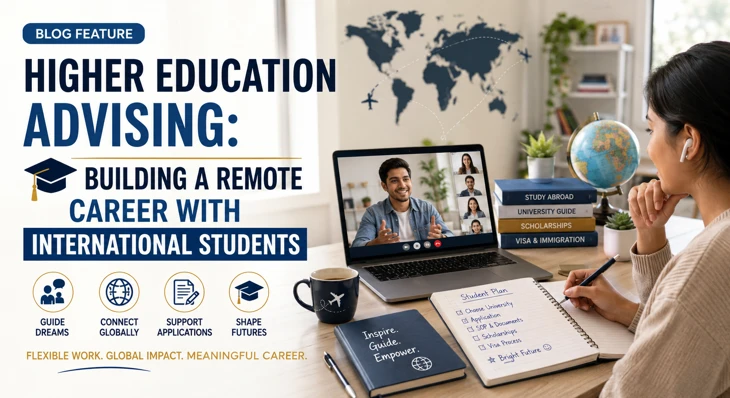
In a remote environment, everything happens through digital communication. Instead of sitting across a desk, you might be speaking to a student on a video call from another continent, reviewing documents through shared drives, and guiding them step by step through admission requirements.
And surprisingly, this format often makes conversations more comfortable. Students tend to open up more when they are in familiar surroundings.
A typical remote advisor may support students with:
- Choosing universities based on academic background and budget
- Understanding course structures across different countries
- Preparing application documents and personal statements
- Navigating scholarship opportunities
- Clarifying visa processes in simple terms
- Offering reassurance during stressful application stages
It’s a mix of counseling, research, and problem-solving—no two days feel exactly the same.
Why This Career Is Growing So Quickly
The rise of remote higher-education advising didn’t happen by chance. It’s the result of several global shifts occurring simultaneously.
First, more students are seeking education outside their home countries. A degree abroad is often seen as a pathway to better exposure, career opportunities, and global experience. Naturally, this increases the need for reliable guidance.
Second, almost everything in the admissions process has moved online. Applications, interviews, document verification—everything can now be done digitally. This alone removes the need for physical presence.
Third, universities are actively expanding their international reach. Instead of opening offices in every country, many institutions collaborate with remote advisors who already understand local student expectations.
And finally, remote work has become the norm. People now value flexibility as much as stability, and this career offers both in a practical way.
Skills That Actually Matter in This Field
You don’t need to be overly technical to succeed in higher education advising. What matters more is how you communicate, listen, and guide.
Being able to explain things simply
Students often feel overwhelmed by admission requirements. A good advisor doesn’t add complexity—they remove it. Explaining something clearly is often more valuable than knowing every rule in detail.
Understanding how global education systems differ
Each country has its own structure. The US focuses on flexible credit systems; the UK is more course-specific; and countries like Canada and Australia balance both academic and practical exposure. Knowing these differences helps you guide students more accurately.
Listening without rushing
Some students are very clear about their goals, while others are completely unsure. Listening properly helps you understand what they actually need—not just what they say.
Staying organized digitally
Since everything is remote, keeping track of documents, deadlines, and student progress is essential. Tools like shared drives and CRM systems quietly become your daily workspace.
Staying calm under pressure
Students often panic in response to rejections, delays, or visa uncertainties. Your ability to stay calm directly affects how confident they feel.
How People Usually Start This Career
One of the most interesting things about this field is that there’s no single entry path. People come from teaching, HR, counseling, customer support, and even corporate backgrounds.
What they usually share is an interest in working with students and a willingness to learn how global education systems work.
A common starting path looks like this:
You begin by learning how international admissions work—what universities expect, what tests are required, and how timelines differ across countries. Then you observe real counseling sessions or assist experienced advisors.
Over time, you start handling small cases yourself. At first, it might be just reviewing documents or helping with shortlisting universities. Eventually, you manage full student journeys independently.
It’s very much a learn-by-doing profession.
A Realistic Look at Remote Advising Work
Imagine someone who used to work in a traditional university admissions office. Their work was structured, predictable, and limited to a specific region.
When they moved into remote advising, everything changed.
They started working with students from India, Africa, and Southeast Asia—all aiming for universities in Canada, the UK, or Australia. Instead of face-to-face meetings, everything moved online.
At first, it felt unfamiliar. But soon, they realized something important: the core of the job didn’t change. Students still needed clarity, guidance, and reassurance. Only the medium changed.
Over time, they built a steady workflow—video consultations in the morning, application reviews in the afternoon, and follow-ups in the evening. The work became structured, but flexible.
That’s what makes this career unique. It adapts to your life instead of forcing you into a fixed system.
Behind every smooth advising process is a set of simple tools that keep everything connected.
Video platforms like Zoom or Google Meet handle conversations. Shared drives store documents safely. Notion or similar tools help track student progress. Messaging apps keep communication quick and accessible.
Nothing here is overly complex, but together, these tools create a system that replaces the traditional office environment.
Once you get comfortable with them, managing multiple students becomes far more manageable than it initially seems.
Challenges You Should Be Aware Of
Like any meaningful career, this one comes with its own set of difficulties.
Time zones can be tricky. You might be speaking to one student early in the morning and another late at night. It requires some flexibility.
Policies also change often. Visa rules, admission requirements, and scholarship deadlines are not fixed. Staying updated becomes part of the job.
There’s also an emotional side. Students may feel stressed when things don’t go as planned. Sometimes, you’re not just an advisor—you’re also someone they rely on for reassurance.
And as your workload increases, staying organized becomes essential. Without structure, things can quickly feel overwhelming.
Where This Career Can Lead
What starts as a remote advising role can grow in many directions.
Some professionals move into senior advisory positions, handling more complex or high-value applications. Others work directly with universities as recruitment partners.
A growing number choose independence and start their own consulting practice, working with students across multiple countries.
There are also opportunities in training, where experienced advisors mentor newcomers entering the field.
The path isn’t fixed, which is part of its appeal.
What Helps You Succeed Long-Term
Over time, certain habits make a noticeable difference.
Being consistent matters more than being perfect. Students trust advisors who are reliable, not just knowledgeable.
Personalizing guidance also goes a long way. No two students should feel like they are getting the same advice.
Staying updated helps you stay relevant, especially as global education trends evolve quickly.
And perhaps most importantly, building trust takes time. It comes from honest conversations, not overly polished answers.
FAQs
Is prior experience required to become a remote education advisor?
Not necessarily. Many professionals enter this field from unrelated backgrounds. What matters most is the ability to communicate and the willingness to learn.
Can this become a full-time, long-term career?
Yes. With growing demand for international education, this field continues to expand steadily.
Do advisors work independently or with organizations?
Both. Some work with universities or agencies, while others operate independently as freelancers or consultants.
What is the most challenging part of the job?
Managing expectations while dealing with changing admission rules and emotional pressure from students is often the hardest part.
How do advisors usually stay in touch with international students?
Most communication happens through video calls, email, and messaging platforms.
Conclusion
Higher education advising has evolved into a flexible, global, and deeply human career. It allows professionals to work remotely while supporting students through some of the most important decisions of their lives.
What makes this path meaningful is not just the flexibility, but the impact. Every conversation can shape a student’s direction, confidence, and future opportunities.
As international education continues to grow, so does the need for thoughtful and reliable advisors. For those who enjoy guiding others and working in a globally connected environment, this career offers both purpose and long-term potential.