📚 Table of Contents
- Introduction
- What Are Instructional Design Careers?
- Why Instructional Design Is Driving Remote Education Growth
- Essential Skills for Instructional Design Careers
- Understanding How People Learn
- Clear Content Development
- Working With Digital Tools
- Communication in Real Projects
- Analytical Thinking
- Career Paths in Instructional Design
- Instructional Designer
- E-Learning Developer
- Learning Experience Designer (LXD)
- Training and Development Specialist
- Freelance Instructional Designer
- Starting a Career in Instructional Design
- Tools Used in Instructional Design Careers
- Salary and Growth Opportunities
- Challenges in Instructional Design Careers
- Tips for Building a Strong Instructional Design Career
- FAQs
- What is instructional design in simple words?
- Do I need a teaching background for instructional design careers?
- Can instructional designers work remotely?
- What tools should beginners learn first?
- Is instructional design a good long-term career?
- Conclusion
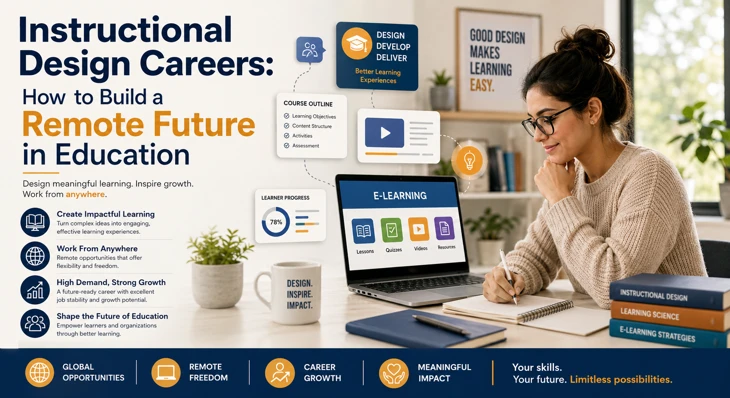
Instructional Design Careers: How to Build a Remote Future in Education
Introduction
Instructional design careers are quietly becoming one of the most dependable paths in today’s education and digital learning world. As more companies move training online and schools adopt blended learning, the need for people who can design clear, useful learning experiences is rising quickly. At its heart, instructional design is not just about creating content. It is about shaping how people understand something new. That could be an employee learning a software tool, or a student trying to grasp a complex topic online. The goal stays the same—make learning easier, more engaging, and actually effective. What makes this career even more attractive today is flexibility. A large number of professionals now work as remote instructional designers, building e-learning courses, training materials, and interactive modules from anywhere. For many, it is not just a job shift—it is a lifestyle shift toward remote education careers that offer both freedom and stability.What Are Instructional Design Careers?
Instructional design careers focus on creating structured learning experiences that help people learn more effectively and faster. Instead of simply putting information together, instructional designers consider how the learner experiences that information. They ask simple but important questions: Is this easy to follow? Does it make sense step by step? Will the learner actually remember this after a week? Their work usually includes planning learning outcomes, organizing content, designing the training flow, and ensuring the final experience actually works in real life. You will often find instructional designers working in:- Corporate training and HR learning teams
- EdTech companies and digital learning platforms
- Universities and online education programs
- Freelance and independent consulting roles
Why Instructional Design Is Driving Remote Education Growth
Learning is no longer tied to classrooms or physical training rooms. Today, companies want flexible, scalable learning systems that work across locations and time zones. That shift has pushed demand for remote instructional designers who can create meaningful digital learning experiences without being in the same room—or even the same country—as their clients. A few clear reasons behind this growth include:- Rapid expansion of online learning platforms
- Continuous skill upgrades required in workplaces
- Widespread use of Learning Management Systems (LMS)
- Need for cost-effective training solutions that scale globally
Essential Skills for Instructional Design Careers
Success in instructional design comes from a mix of creativity, communication, and structured thinking. It is not just about writing content—it is about designing how learning actually happens.Understanding How People Learn
A strong foundation in learning behavior is important. Instructional designers often rely on learning theories and real-world psychology to decide how content should be structured and delivered.Clear Content Development
Good instructional design simplifies complex ideas. It turns heavy topics into clear learning materials, such as modules, guides, scripts, and assessments, that are easy to follow.Working With Digital Tools
Modern instructional design depends heavily on tools for building and delivering learning content. Some commonly used ones include:- LMS platforms such as Moodle or Canvas
- Authoring tools like Articulate Storyline and Adobe Captivate
- Video and design tools used for interactive content creation
Communication in Real Projects
Instructional designers rarely work alone. They collaborate with subject experts, trainers, and developers. Clear communication helps keep everyone aligned on learning goals.Analytical Thinking
A big part of the job is improving learning outcomes. That means reviewing feedback, checking performance data, and refining content to make it more effective over time.Career Paths in Instructional Design
One of the strengths of instructional design careers is flexibility. There is more than one direction you can grow into depending on your interests.Instructional Designer
This is the core role in which professionals design comprehensive learning experiences—from planning content to shaping delivery methods that actually work.E-Learning Developer
These professionals focus more on the technical side, building interactive courses and digital training modules using specialized tools.Learning Experience Designer (LXD)
A more modern version of instructional design that focuses heavily on engagement, usability, and how learners feel while going through content.Training and Development Specialist
These roles focus on corporate learning programs that help employees grow skills and improve performance inside organizations.Freelance Instructional Designer
Many professionals choose independent work, offering services to global clients in EdTech, corporate learning, and online education projects.Starting a Career in Instructional Design
Getting into instructional design is less about rushing and more about building confidence through practice. It starts with understanding how learning actually works and why structure matters. From there, working with e-learning tools helps you see how ideas turn into real courses. At first, it may feel technical, but it becomes easier with hands-on practice. Building a portfolio is also a big turning point. Even simple sample projects, like mini-courses or training modules, can show how you think and design learning experiences. Real exposure matters just as much. Freelance work, internships, or small collaborative projects help you understand real expectations in instructional design careers. Over time, this combination of learning and practice opens doors to entry-level roles where you can grow further in the industry.Tools Used in Instructional Design Careers
Instructional designers rely on a mix of creative and technical tools to bring learning content to life. Some widely used tools include:- Articulate Storyline for interactive e-learning
- Adobe Captivate for course creation
- Camtasia for video-based learning content
- Canva for visual design support
- LMS platforms like Moodle and Canvas for delivery
Salary and Growth Opportunities
Instructional design careers offer strong long-term potential. While entry-level salaries vary, the field becomes more rewarding with experience and specialization. Professionals working in global companies or EdTech platforms often earn competitive packages. Freelancers, too, can build strong income streams depending on the type of projects they take on. With time, many instructional designers move into leadership roles such as learning strategist, L&D manager, or training consultant.Challenges in Instructional Design Careers
Like any evolving profession, instructional design comes with real challenges.- Breaking down complex topics quickly
- Balancing creativity with structured learning goals
- Managing deadlines in fast-moving environments
- Staying updated with new tools and platforms