📚 Table of Contents
- Introduction: Why Instructional Design Careers Are Becoming a Global Opportunity
- Understanding Instructional Design in Simple Terms
- What Instructional Designers Typically Do
- Why Instructional Design Careers Are Growing So Fast
- 1. Rapid Shift Toward Digital Learning
- 2. Corporate Learning and Development Expansion
- 3. Remote and Hybrid Work Culture
- 4. Growth of the EdTech Industry
- Skills That Define Successful Instructional Designers
- Core Instructional Design Skills
- Technical Skills You Will Need
- Soft Skills That Matter
- How to Start a Career in Instructional Design
- Step 1: Build a Basic Understanding
- Step 2: Learn Through Practical Courses
- Step 3: Create a Strong Portfolio
- Step 4: Get Hands-On with Tools
- Step 5: Apply for Entry-Level Roles
- Step 6: Gain Experience Through Freelancing
- Where Instructional Design Is Used in the Real World
- Corporate Training Programs
- Healthcare and Medical Training
- Higher Education Institutions
- Technology and SaaS Companies
- Remote Instructional Design Careers and Opportunities
- Popular Remote Roles in Instructional Design
- Why Remote Instructional Design Jobs Are in Demand
- Tools That Power Modern Instructional Design Careers
- Authoring and Development Tools
- Design and Creativity Tools
- Learning Management Systems
- Collaboration Platforms
- Salary Growth and Career Progression
- Challenges You May Face in This Career
- The Future of Instructional Design Careers
- FAQs
- 1. Is instructional design a good career for remote work?
- 2. Do I need a teaching background to enter instructional design?
- 3. What qualifications help in instructional design careers?
- 4. How long does it take to become an instructional designer?
- 5. Can instructional designers work as freelancers?
- 6. What is the difference between instructional design and e-learning development?
- Conclusion: Building a Strong Future in Instructional Design
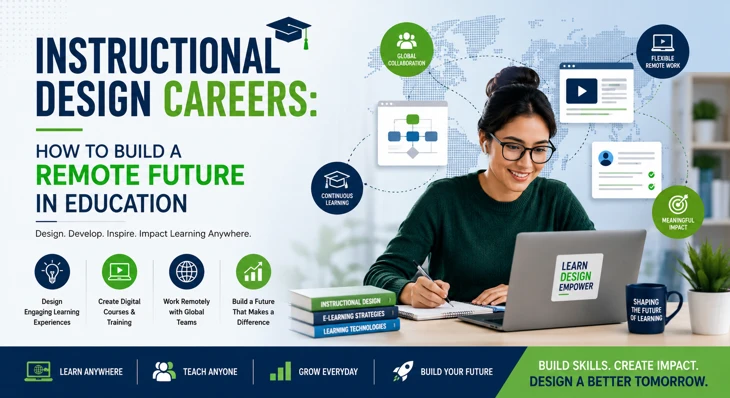
Instructional Design Careers: How to Build a Remote Future in Education
Introduction: Why Instructional Design Careers Are Becoming a Global Opportunity
Education is no longer confined to classrooms, lecture halls, or rigid schedules. Learning today is digital, flexible, and deeply experience-driven. This shift has quietly opened one of the most promising professional paths in the education and EdTech space—instructional design careers. From online learning platforms to corporate training systems, organizations are now investing heavily in structured digital learning experiences. And behind these experiences are instructional designers who shape how knowledge is delivered, understood, and retained. What makes this career even more attractive is its strong alignment with remote work. Many professionals in instructional design jobs now collaborate with global teams, create learning content from home, and contribute to international education projects without geographical limits. If you're exploring a stable, creative, and future-ready path in education, instructional design offers a compelling direction worth understanding in depth.Understanding Instructional Design in Simple Terms
At its core, instructional design is about making learning easier, clearer, and more effective. It is the thoughtful process of turning raw information into structured learning experiences that people can actually understand and apply. Instead of simply presenting content, instructional designers focus on how learners interact with that content. They consider attention span, learning behavior, motivation, and real-world application. In many ways, instructional designers act like learning architects—they don’t just deliver information; they design the entire learning journey.What Instructional Designers Typically Do
- Build structured online courses and training modules
- Break down complex topics into simple learning units
- Develop storyboards for digital learning experiences
- Work closely with subject matter experts
- Use e-learning authoring tools to create interactive content
- Evaluate learner performance and improve course design
Why Instructional Design Careers Are Growing So Fast
The rise of instructional design careers is not accidental—it is directly linked to how education and business learning have evolved.1. Rapid Shift Toward Digital Learning
Schools, universities, and training institutes are increasingly moving to online platforms. This shift has created a consistent demand for professionals who understand instructional design and digital learning development.2. Corporate Learning and Development Expansion
Companies are no longer relying only on in-person training. Instead, they are building full-scale digital learning ecosystems for employees. Instructional designers play a key role in creating these systems.3. Remote and Hybrid Work Culture
With remote work becoming standard, organizations need structured digital onboarding and continuous training. This has significantly boosted instructional design remote jobs across industries.4. Growth of the EdTech Industry
EdTech companies are continually developing learning apps, online courses, and skill-development platforms. This creates long-term opportunities for instructional designers worldwide.Skills That Define Successful Instructional Designers
A strong instructional design career is built on a combination of technical ability, creativity, and communication skills.Core Instructional Design Skills
- Understanding learning theories and models like ADDIE and SAM
- Designing structured learning paths and curricula
- Creating engaging storyboards for courses
- Applying instructional strategies for different learner types
Technical Skills You Will Need
- E-learning tools such as Articulate 360, Adobe Captivate, and Rise
- Learning Management Systems (LMS) like Moodle, Canvas, and TalentLMS
- Basic design tools like Canva and Figma
- Video and multimedia editing tools for interactive content
Soft Skills That Matter
- Clear communication with teams and stakeholders
- Collaboration with subject matter experts
- Analytical thinking and problem-solving
- Strong attention to detail when designing content
How to Start a Career in Instructional Design
Starting a career in instructional design does not require a fixed path, but a structured approach can make the journey smoother and faster.Step 1: Build a Basic Understanding
Begin by learning how instructional design works, including how people learn and how content is structured into lessons.Step 2: Learn Through Practical Courses
Online certifications in instructional design, e-learning development, or learning experience design can help build foundational knowledge.Step 3: Create a Strong Portfolio
A portfolio is essential in this field. Even sample projects, such as mock courses or training modules, can effectively demonstrate your skills.Step 4: Get Hands-On with Tools
Practice using industry-standard tools. Real experience with authoring software is often more valuable than theory alone.Step 5: Apply for Entry-Level Roles
Look for roles such as junior instructional designer, learning content developer, or training assistant positions.Step 6: Gain Experience Through Freelancing
Freelance projects or internships help you understand real-world expectations and build credibility faster.Where Instructional Design Is Used in the Real World
Instructional design is not limited to schools or universities. It is widely used across multiple industries.Corporate Training Programs
Organizations use instructional design to train employees on systems, soft skills, compliance, and leadership development.Healthcare and Medical Training
Hospitals rely on structured digital learning modules to train staff on medical procedures, safety protocols, and patient care standards.Higher Education Institutions
Universities use instructional design principles to build online degrees, blended courses, and virtual classrooms.Technology and SaaS Companies
Tech companies use instructional designers to create onboarding materials, product training guides, and customer education programs.Remote Instructional Design Careers and Opportunities
One of the biggest advantages of this profession is the ability to work remotely.Popular Remote Roles in Instructional Design
- Instructional Designer
- E-learning Developer
- Learning Experience Designer (LXD)
- Digital Training Content Creator
Why Remote Instructional Design Jobs Are in Demand
- Companies can hire talent globally
- Reduced operational costs
- Faster collaboration across time zones
- Efficient content development cycles
Tools That Power Modern Instructional Design Careers
To succeed in instructional design, familiarity with industry tools is essential.Authoring and Development Tools
- Articulate Storyline
- Adobe Captivate
- iSpring Suite
Design and Creativity Tools
- Canva for quick visuals
- Figma for UX-focused designs
- Photoshop for advanced editing
Learning Management Systems
- Moodle
- Blackboard
- TalentLMS
Collaboration Platforms
- Zoom
- Microsoft Teams
- Slack
Salary Growth and Career Progression
Instructional design offers strong long-term career stability with competitive earning potential. Entry-level professionals typically begin with foundational roles and gradually move into more specialized positions such as:- Learning Experience Architect
- Learning and Development Manager
- Corporate Training Consultant
- EdTech Product Designer
Challenges You May Face in This Career
Like any profession, instructional design comes with its own learning curve.- Keeping up with evolving digital learning technologies
- Managing tight project deadlines
- Understanding diverse learner needs across industries
- Balancing creativity with instructional accuracy