📚 Table of Contents
- What Is Telepathology?
- Understanding How Digital Pathology Works
- Tissue Sample Collection
- Slide Preparation in the Laboratory
- Whole Slide Imaging
- Secure Digital Storage
- Remote Review by Pathologists
- Diagnosis and Reporting
- Why Telepathology Is Becoming So Important
- Faster Access to Specialists
- Improved Rural Healthcare Support
- Better Collaboration Between Experts
- Reduced Delays in Diagnosis
- Growing Adoption of AI in Pathology
- More Remote Healthcare Careers
- Different Types of Telepathology Systems
- Static Telepathology
- Dynamic Telepathology
- Whole Slide Imaging Systems
- Hybrid Telepathology Solutions
- Why Professionals Are Interested in Remote Digital Pathology Careers
- Flexible Work Environment
- Expanding Job Market
- Competitive Earning Potential
- Opportunity to Work Internationally
- Exposure to Advanced Healthcare Technology
- Meaningful Healthcare Contribution
- Popular Remote Jobs in Telepathology and Digital Pathology
- Remote Pathologist
- Digital Pathology Technician
- Telepathology Coordinator
- Healthcare IT Specialist
- Clinical Application Specialist
- AI Data Annotation Specialist
- Medical Content and Training Roles
- Essential Skills for a Career in Telepathology
- Technical Knowledge
- Attention to Detail
- Communication Skills
- Problem-Solving Ability
- Adaptability
- Time Management
- Educational Paths for Telepathology Careers
- Medical Pathology Careers
- Laboratory and Technician Roles
- Healthcare IT Careers
- Non-Clinical Digital Healthcare Roles
- How to Start a Remote Career in Digital Pathology
- Learn the Fundamentals of Digital Pathology
- Build Relevant Technical Skills
- Gain Practical Experience
- Create a Professional Online Profile
- Network With Healthcare Professionals
- Apply for Entry-Level Digital Healthcare Jobs
- Challenges in Telepathology Remote Work
- Data Security Requirements
- Technology Dependence
- Licensing Limitations
- Adjustment to Digital Systems
- Salary Potential in Digital Pathology Careers
- Remote Pathologists
- Digital Pathology Technicians
- Healthcare Technology Specialists
- AI and Digital Healthcare Roles
- The Future of Telepathology and Digital Pathology
- Practical Tips for Long-Term Career Growth
- Keep Learning
- Improve Communication Skills
- Stay Organized
- Learn New Software Tools
- Build Professional Relationships
- Maintain Certifications and Training
- FAQs About Telepathology Careers
- What is telepathology in healthcare?
- Can you work remotely in digital pathology?
- What skills are important for telepathology careers?
- Is digital pathology a growing field?
- Do telepathology jobs require medical degrees?
- Does AI play a role in digital pathology?
- Conclusion
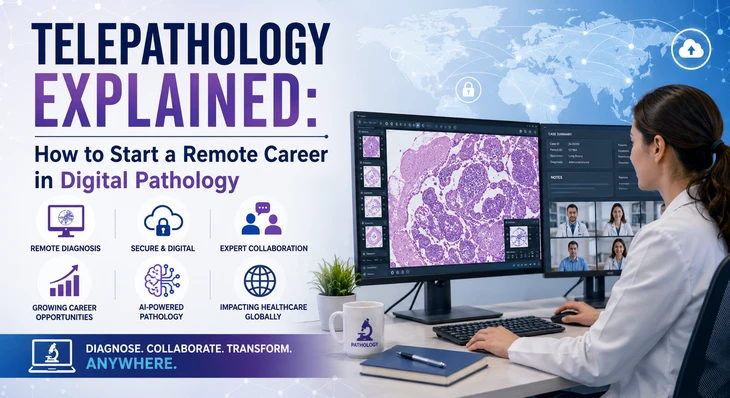
Telepathology Explained: How to Start a Remote Career in Digital Pathology
Healthcare is no longer limited to hospital walls, physical laboratories, or face-to-face consultations. Over the last few years, digital healthcare systems have completely changed how medical professionals work, collaborate, and deliver patient care. One area seeing major growth is telepathology. For many healthcare professionals, telepathology has created something that barely existed a decade ago — the chance to build a remote career in digital pathology while still contributing to accurate disease diagnosis and patient treatment. Today, hospitals and diagnostic centers can scan pathology slides, upload them securely, and allow specialists to review cases from another city or even another country. This shift has increased demand for professionals who understand digital pathology workflows, medical imaging systems, and remote healthcare technology. If you are exploring remote healthcare careers, telepathology may offer the perfect mix of medical science, technology, flexibility, and long-term career growth. This guide explains how telepathology works, why digital pathology jobs are growing, what skills employers look for, and how beginners can start building a successful remote career in this evolving healthcare field.What Is Telepathology?
Telepathology refers to the practice of reviewing pathology images remotely using digital technology. Instead of relying only on physical slides under a microscope, healthcare professionals can analyze tissue samples through high-resolution digital images. In traditional pathology, glass slides often need to be physically transported between laboratories or hospitals for diagnosis and consultation. Telepathology removes much of that delay by allowing digital slides to be shared instantly. This technology supports several important healthcare functions, including:- Remote disease diagnosis
- Digital pathology consultations
- Second-opinion reviews
- Medical education and training
- Research collaboration
- Faster pathology reporting
- Rural healthcare support
Understanding How Digital Pathology Works
Digital pathology may sound highly technical at first, but the process is easier to understand when broken into steps.Tissue Sample Collection
A tissue sample is collected from a patient during surgery, biopsy, or laboratory testing.Slide Preparation in the Laboratory
The sample is prepared and placed on a glass slide. Laboratory professionals stain the tissue so that important structures become visible under imaging systems.Whole Slide Imaging
A specialized scanner converts the physical slide into a high-resolution digital image. This process is commonly called whole slide imaging.Secure Digital Storage
The scanned image is uploaded to a digital pathology platform or cloud-based healthcare system.Remote Review by Pathologists
Pathologists can access the slide remotely using digital pathology software. They zoom in, examine tissue structures, and analyze the sample much like they would with a microscope.Diagnosis and Reporting
After completing the review, the pathologist prepares a report and shares findings with the healthcare team. In many hospitals, this process has significantly reduced turnaround times. For example, a rural clinic without a full-time pathology expert can scan slides locally and send them to a specialist in a larger city for rapid analysis.Why Telepathology Is Becoming So Important
Healthcare systems worldwide are dealing with increasing patient demand, staffing shortages, and pressure to improve efficiency. Telepathology helps address many of these challenges.Faster Access to Specialists
Some hospitals do not have immediate access to experienced pathologists. Digital pathology allows healthcare providers to connect with specialists remotely.Improved Rural Healthcare Support
Smaller healthcare centers can now access advanced pathology expertise without having to relocate patients.Better Collaboration Between Experts
Pathologists from different institutions can review complex cases together in real time.Reduced Delays in Diagnosis
Shipping physical slides can take days. Digital slide sharing happens much faster.Growing Adoption of AI in Pathology
Artificial intelligence tools are now being used to assist with image analysis, workflow organization, and pattern detection.More Remote Healthcare Careers
Healthcare organizations are increasingly open to remote pathology support, creating new job opportunities in digital pathology.Different Types of Telepathology Systems
Not all telepathology systems work the same way. Different healthcare organizations use different methods depending on their budget, infrastructure, and workflow needs.Static Telepathology
This approach uses still images captured from a microscope. The images are shared electronically for review. While affordable, static telepathology offers limited flexibility because only selected images are available.Dynamic Telepathology
Dynamic systems allow pathologists to control a microscope remotely. The specialist can move across the slide and adjust magnification during live examinations.Whole Slide Imaging Systems
Whole slide imaging is one of the most advanced forms of digital pathology. Entire pathology slides are scanned with extremely high detail, allowing pathologists to navigate the images freely.Hybrid Telepathology Solutions
Some hospitals combine multiple technologies to improve diagnostic workflows and collaboration.Why Professionals Are Interested in Remote Digital Pathology Careers
Remote work opportunities in healthcare were once very limited. Telepathology has changed that. Many professionals are now exploring careers in digital pathology because the field combines healthcare expertise with modern technology.Flexible Work Environment
Many telepathology professionals work remotely or follow hybrid schedules.Expanding Job Market
The adoption of digital pathology systems continues to grow across hospitals, laboratories, and research organizations.Competitive Earning Potential
Specialized healthcare technology roles often offer strong salaries and long-term stability.Opportunity to Work Internationally
Remote pathology services allow professionals to collaborate with healthcare providers in different locations.Exposure to Advanced Healthcare Technology
Professionals in digital pathology regularly work with AI systems, imaging software, and cloud-based healthcare platforms.Meaningful Healthcare Contribution
Even in remote roles, telepathology professionals play a direct role in patient diagnosis and treatment planning.Popular Remote Jobs in Telepathology and Digital Pathology
The telepathology industry includes both clinical and non-clinical roles.Remote Pathologist
Remote pathologists examine digital slides, diagnose diseases, and prepare pathology reports online. This role usually requires:- Medical degree
- Pathology residency training
- Licensing and certification
Digital Pathology Technician
Technicians prepare slides, operate scanners, and manage imaging workflows. Healthcare organizations often look for professionals with laboratory experience and technical skills.Telepathology Coordinator
These professionals help organize communication between laboratories, hospitals, and remote specialists.Healthcare IT Specialist
Healthcare IT teams support pathology software systems, cybersecurity, cloud infrastructure, and digital workflow management.Clinical Application Specialist
Technology companies hire specialists to train healthcare staff on digital pathology platforms and imaging equipment.AI Data Annotation Specialist
Artificial intelligence systems need properly labeled pathology images for training and testing. This has created new opportunities within AI-driven digital healthcare.Medical Content and Training Roles
Digital pathology companies also hire medical writers, trainers, and healthcare educators to create learning resources.Essential Skills for a Career in Telepathology
Success in digital pathology requires more than medical knowledge alone.Technical Knowledge
Professionals should understand:- Digital pathology software
- Whole slide imaging systems
- Healthcare data platforms
- Laboratory workflows
- Remote collaboration tools
Attention to Detail
Pathology work requires precision because small observations can affect the accuracy of the diagnosis.Communication Skills
Remote healthcare professionals must communicate clearly with laboratories, physicians, and support teams.Problem-Solving Ability
Technical issues and workflow challenges are common in digital healthcare systems.Adaptability
Healthcare technology changes rapidly, so continuous learning is essential.Time Management
Remote professionals often manage multiple cases independently.Educational Paths for Telepathology Careers
The educational requirements depend heavily on the type of role you want.Medical Pathology Careers
To become a pathologist, professionals generally need:- Medical degree
- Pathology residency
- Professional licensing
- Board certification
Laboratory and Technician Roles
Many technicians complete:- Histotechnology programs
- Medical laboratory science degrees
- Laboratory certifications
Healthcare IT Careers
Useful educational backgrounds include:- Information technology
- Healthcare informatics
- Biomedical engineering
- Computer science
Non-Clinical Digital Healthcare Roles
Medical writing, healthcare communication, and digital health certifications can support non-clinical career paths.How to Start a Remote Career in Digital Pathology
Starting in telepathology does not always require years of experience. Many professionals enter the field gradually by building the right skills and industry exposure.Learn the Fundamentals of Digital Pathology
Start by understanding pathology workflows, medical terminology, and imaging technology. Online courses, webinars, and digital pathology communities can be helpful for beginners.Build Relevant Technical Skills
Healthcare employers increasingly value professionals who understand:- Digital imaging systems
- Laboratory software
- Cloud healthcare platforms
- Data privacy standards
- Telemedicine technology
Gain Practical Experience
Hands-on exposure is extremely valuable. You can build experience through:- Laboratory internships
- Healthcare technology projects
- Research programs
- Digital healthcare companies
Create a Professional Online Profile
Recruiters frequently search for candidates through professional platforms. A strong LinkedIn profile highlighting healthcare technology skills can improve visibility.Network With Healthcare Professionals
Industry networking often leads to job opportunities. Joining pathology associations, attending webinars, and participating in healthcare technology events can help expand your connections.Apply for Entry-Level Digital Healthcare Jobs
Many professionals start with support roles before moving into specialized digital pathology positions. Even experience in workflow coordination or healthcare software support can provide a strong foundation.Challenges in Telepathology Remote Work
Like any healthcare career, telepathology also comes with challenges.Data Security Requirements
Patient information must remain secure at all times. Healthcare organizations follow strict privacy regulations and cybersecurity standards.Technology Dependence
Internet connectivity issues or software problems can disrupt workflow.Licensing Limitations
Medical professionals may need specific licenses depending on where patients are located.Adjustment to Digital Systems
Professionals transitioning from traditional pathology sometimes need time to adapt to fully digital workflows. Despite these challenges, healthcare organizations continue investing in training and improved technology infrastructure.Salary Potential in Digital Pathology Careers
Salary levels vary based on role, experience, specialization, and geographic location.Remote Pathologists
Experienced pathologists working remotely often earn high compensation due to their specialized expertise.Digital Pathology Technicians
Technicians with imaging and scanning experience are increasingly valuable in modern laboratories.Healthcare Technology Specialists
IT professionals supporting digital pathology systems are also seeing growing demand.AI and Digital Healthcare Roles
Professionals working with AI-assisted pathology platforms may access premium salary opportunities. Freelance consulting and contract-based healthcare technology work are also becoming more common.The Future of Telepathology and Digital Pathology
The future of telepathology looks highly promising as healthcare systems continue embracing digital transformation. Artificial intelligence, machine learning, and cloud-based healthcare platforms are expected to play a larger role in pathology workflows over the next decade. Several industry trends are already shaping the future:- Increased adoption of AI-assisted diagnostics
- Expansion of telemedicine services
- Faster digital pathology reporting systems
- Greater collaboration between global healthcare teams
- Improved healthcare access in underserved regions
- Higher demand for remote healthcare specialists