📚 Table of Contents
- The Shift Toward Remote Tourism Careers
- Digital Transformation in the Tourism Industry
- Emerging Remote Careers in Tourism
- Remote Travel Consultant
- Digital Travel Marketing Specialist
- Customer Support Executive for Travel Platforms
- Travel Content Creator
- Benefits of Remote Careers in Tourism
- Flexibility and Work-Life Balance
- Global Job Opportunities
- Cost Savings
- Access to Diverse Experiences
- Skills Required for Remote Tourism Careers
- Challenges in Remote Tourism Jobs
- Limited Face-to-Face Interaction
- Time Zone Differences
- High Competition
- Dependence on Technology
- Future Trends in Remote Tourism Careers
- How to Start a Remote Career in Tourism
- FAQs
- 1. What are remote tourism jobs?
- 2. Can I work in tourism without traveling?
- 3. What skills are needed for remote travel jobs?
- 4. Is remote work common in the tourism industry?
- 5. How can beginners start in this field?
- Conclusion
Why Remote Careers in Tourism Are Growing
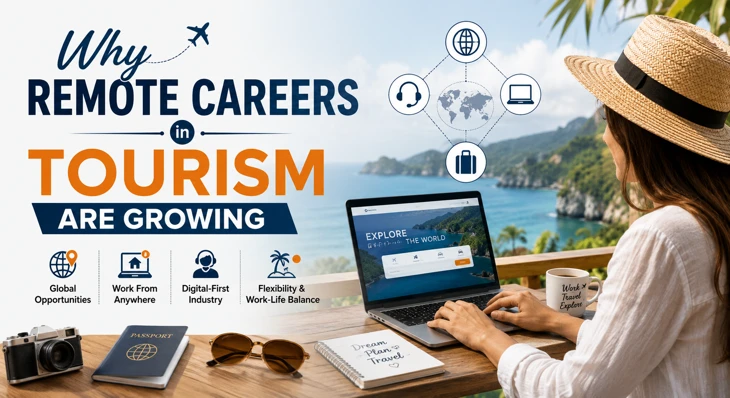
The tourism industry has always been dynamic, people-driven, and deeply connected to global movement. But in recent years, something significant has changed—careers in tourism are no longer tied to physical offices, airports, or travel agencies. Today, remote work is reshaping how the travel ecosystem operates, opening doors to flexible, digital-first opportunities worldwide. From travel planning to customer support and digital marketing, remote tourism careers are becoming an increasingly viable alternative to traditional roles. This shift is not just a temporary trend—it reflects a long-term transformation in how the travel industry functions in a digital world. In this blog, we’ll explore why remote careers in tourism are growing, what roles are emerging, and how professionals can take advantage of this global shift.The Shift Toward Remote Tourism Careers
The travel industry has always relied on communication, coordination, and customer service. These functions, once restricted to physical offices, are now easily managed through digital platforms. This shift has given rise to a new wave of remote tourism jobs that allow professionals to work from anywhere. One of the biggest drivers behind this change is the global acceptance of a flexible work culture. Companies in the travel and hospitality industry are now more open to hiring remote employees to manage bookings, handle inquiries, and create virtual travel experiences. Another key factor is the rise of online travel platforms. Instead of visiting a travel agency in person, customers now prefer booking flights, hotels, and tours online. This has created a strong demand for online travel consultants and digital support teams who operate remotely.Digital Transformation in the Tourism Industry
The tourism industry has undergone a massive digital transformation over the last decade. From mobile booking apps to AI-powered travel recommendations, technology has completely changed how people plan and experience travel. This transformation has directly influenced the growth of work-from-home travel jobs. Companies now rely heavily on:- Cloud-based booking systems
- Virtual communication tools
- Automated customer service platforms
- Social media marketing strategies
Emerging Remote Careers in Tourism
The tourism sector now offers a wide range of remote opportunities. These roles are not only flexible but also highly rewarding for individuals with strong communication and digital skills.Remote Travel Consultant
A remote travel consultant helps clients plan trips, choose destinations, and manage bookings—all online. They use booking platforms, email communication, and video calls to deliver personalized travel experiences. This role requires strong destination knowledge and excellent customer service skills. Many professionals in this field work independently or with online travel agencies.Digital Travel Marketing Specialist
Marketing plays a major role in attracting travelers. Remote marketing specialists create campaigns for hotels, airlines, and travel companies using SEO, social media, and paid ads. They focus on increasing visibility and engagement for travel brands, making this one of the most in-demand online tourism careers.Customer Support Executive for Travel Platforms
With millions of people booking travel online, customer support has become essential. Remote support executives handle queries related to bookings, cancellations, refunds, and travel policies. This role is typically done through chat systems, email support, and virtual call centers.Travel Content Creator
Content creation has become a powerful part of the tourism industry. Remote travel writers, bloggers, and video creators share destination guides, travel tips, and experiences online. Many companies hire content creators to improve their online presence and attract global audiences.Benefits of Remote Careers in Tourism
The growth of remote tourism careers is driven by several advantages that appeal to both employees and employers.Flexibility and Work-Life Balance
One of the biggest benefits is flexibility. Professionals can work from anywhere, allowing them to balance their personal lives and careers more effectively.Global Job Opportunities
Remote work removes geographical barriers. A person in India can work for a travel company in Europe or the United States without relocating.Cost Savings
Employees save money on commuting, relocation, and office expenses. Companies also reduce operational costs by hiring remote teams.Access to Diverse Experiences
Working in tourism remotely allows professionals to interact with clients from different cultures, enhancing their global exposure and understanding.Skills Required for Remote Tourism Careers
To succeed in remote tourism roles, professionals need a combination of technical and soft skills. Key skills include:- Strong communication and interpersonal abilities
- Knowledge of travel booking systems
- Digital marketing and SEO understanding
- Time management and self-discipline
- Problem-solving and customer handling skills
Challenges in Remote Tourism Jobs
While remote careers in tourism offer many benefits, they also come with challenges that professionals must navigate.Limited Face-to-Face Interaction
Working remotely can sometimes feel isolating, especially in a people-centric industry like tourism.Time Zone Differences
Handling clients or teams across different time zones can be challenging and requires flexibility in scheduling.High Competition
As remote tourism careers grow in popularity, competition for roles has increased significantly.Dependence on Technology
Reliable internet and digital tools are essential. Any technical issue can directly impact productivity.Future Trends in Remote Tourism Careers
The future of tourism is increasingly digital. Several trends are expected to shape remote careers in this sector:- AI-powered travel planning assistants
- Virtual reality travel experiences
- Increased demand for personalized travel consulting
- Expansion of hybrid travel teams
- Growth of freelance tourism professionals
How to Start a Remote Career in Tourism
Getting started in this field does not require a traditional tourism degree, although it can be helpful. Many professionals transition from related industries like hospitality, customer service, or digital marketing. Here are a few steps to begin:- Build knowledge of travel destinations and booking platforms
- Develop digital communication skills
- Learn basic marketing and SEO concepts
- Gain experience through internships or freelance projects
- Apply for entry-level remote travel roles