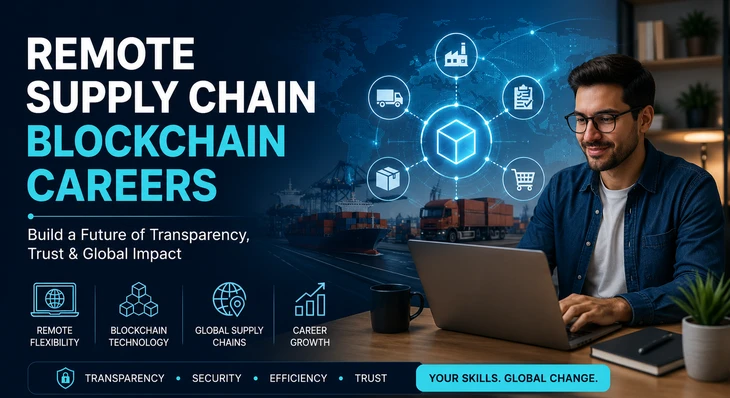
Remote Supply Chain Blockchain Careers
Introduction
Global supply chains are no longer what they used to be. A few years ago, tracking goods across countries meant paperwork, delays, and a lot of guesswork. Today, things look very different. Technology has stepped in and quietly changed how everything moves—from raw materials to finished products reaching customers.
One of the biggest shifts driving this change is blockchain in supply chain management. At the same time, remote work has opened doors for professionals to contribute from anywhere in the world, whether that’s a busy city or a small town.
Put these two together, and you get a fast-growing career space: remote supply chain blockchain careers. It’s a field where technology meets real-world impact, helping businesses build trust, reduce fraud, and improve how global trade actually works behind the scenes.
This guide breaks it all down in a simple way—what these roles involve, why they matter, and how you can step into them even if you’re just starting out.
How Blockchain Fits Into Modern Supply Chains
At its core, blockchain is a shared digital record that stores information in a secure and transparent way. Once data is added, it cannot be easily changed, which makes it incredibly useful for industries that rely on accuracy.
Now think about a supply chain. A single product might pass through manufacturers, shipping companies, warehouses, and retailers before reaching a customer. Without a reliable system, things can easily get lost, duplicated, or even tampered with.
This is where blockchain supply chain systems come in. Every step is recorded, verified, and visible to authorized participants. It creates a kind of “digital trail” that everyone can trust.
For example, in the food industry, companies can trace a product back to its farm within seconds. In pharmaceuticals, blockchain helps confirm whether a medicine is genuine or counterfeit. These small improvements build a much bigger outcome—trust across the entire system.
Why Remote Blockchain Supply Chain Careers Are Expanding
There’s a reason more people are searching for blockchain supply chain jobs and remote blockchain careers today.
First, companies are under pressure to become more transparent and efficient. Old systems simply don’t provide the visibility needed in a global economy.
Second, remote work is no longer an experiment—it’s a normal way of working. Companies now hire specialists from different countries without needing them in one office.
Third, supply chain disruptions over the past few years exposed weaknesses in traditional tracking systems. Businesses are now actively investing in blockchain solutions to prevent similar issues in the future.
Put all of this together, and you get strong demand for professionals who understand both logistics and blockchain technology.
Key Career Paths in Blockchain Supply Chain
This field isn’t limited to one type of job. In fact, there are several interesting roles depending on your skill set.
Blockchain Supply Chain Analyst
These professionals work closely with data. They study how products move through the system and look for gaps or delays. Their insights help companies make smarter decisions.
Blockchain Developer
Developers are the builders. They create the systems that power blockchain logistics platforms, including smart contracts that automate parts of the supply chain process.
Supply Chain Solution Architect
Think of this role as the designer. They plan how blockchain systems will fit into existing supply chain structures and ensure everything connects smoothly.
Logistics Data Specialist
These specialists focus on interpreting real-time logistics data. Their work helps companies improve delivery times and reduce operational errors.
Blockchain Project Manager
They bring everything together. From planning to execution, they ensure blockchain supply chain projects stay on track and deliver real results.
Skills You Actually Need to Get Started
You don’t need to know everything on day one. Most professionals grow into the role over time. Still, a few core skills make a big difference.
Understanding blockchain basics is a must. You should know how distributed systems work and why smart contracts matter.
A basic understanding of supply chain operations also helps. Even knowing how goods are stored, shipped, and tracked gives you an advantage.
For technical roles, programming languages like Python or Solidity can open more doors. But not every job requires coding.
Data analysis is another useful skill. Many decisions in this field are based on interpreting patterns in large datasets.
And finally, communication matters more than people expect—especially in remote blockchain careers where teams are spread across different time zones.
How People Enter This Career Path
Most professionals don’t start directly in blockchain supply chain roles. Instead, they transition from related fields.
Some begin in logistics or operations and slowly move into blockchain-focused projects. Others come from IT backgrounds and specialize in supply chain systems.
A good starting point is learning through online courses or certifications. After that, small projects or internships can help you gain practical exposure.
What really helps is building a simple portfolio. Even basic case studies or demo projects can show employers that you understand how blockchain supply chain systems work in practice.
Salary Expectations and Career Growth
One of the reasons this field is gaining attention is career potential.
Entry-level roles like analysts or junior developers typically start with modest salaries, but the growth path is strong.
As experience builds, professionals move into mid-level positions where responsibilities—and compensation—increase significantly.
Senior roles such as solution architects or blockchain project managers often earn high salaries, especially in global companies handling large-scale logistics operations.
Because this is a specialized field, skills are valued highly, particularly in remote blockchain supply chain jobs where global hiring is common.
Industries Actively Hiring Blockchain Talent
This isn’t a niche limited to tech companies. Many industries are adopting blockchain for supply chain transparency.
In the food and beverage industry, it helps ensure safety and traceability.
In the pharmaceutical industry, it reduces the risk of counterfeit drugs entering the market.
Retail and e-commerce companies use it to confirm product authenticity and improve customer trust.
Manufacturing firms rely on it to track raw materials and production flow.
Logistics and shipping companies use blockchain to manage real-time tracking and documentation more efficiently.
Real Challenges in This Field
Like any growing industry, this one comes with its challenges.
One common issue is integration. Many companies still rely on older systems, so shifting to blockchain takes time and planning.
Another challenge is the learning curve. You need to understand both technology and supply chain processes, which can feel overwhelming at first.
There’s also the evolving nature of blockchain regulations, which can vary by region.
Even with these challenges, most companies agree on one thing—the long-term benefits outweigh the short-term difficulties.
What the Future Looks Like
The future of remote supply chain blockchain careers looks strong and steady.
More companies are expected to adopt blockchain for transparency and automation. Artificial intelligence will likely combine with blockchain to make supply chains even smarter and more predictive.
Remote work will continue to play a major role, allowing businesses to hire talent from anywhere without geographic limits.
Over time, new job roles will emerge that don’t even exist today, especially as blockchain becomes more deeply integrated into global trade systems.
FAQs
1. What are remote supply chain blockchain careers really about?
They involve using blockchain technology to improve and manage supply chain systems while working remotely.
2. Do I need technical skills to enter blockchain supply chain jobs?
Not always. Some roles are technical, but others focus on analysis, operations, or project coordination.
3. Why is blockchain important in supply chain management?
It improves transparency, reduces fraud, and makes tracking products much more reliable.
4. Can beginners build a career in this field?
Yes, many people start with basic learning and gradually move into entry-level roles.
5. Are remote blockchain careers stable?
Yes, demand is growing as more companies adopt digital supply chain systems.
Conclusion
Remote supply chain blockchain careers are more than just a trend. They represent a shift in how global trade is managed and trusted.
It’s a space where technology creates real-world impact—making systems cleaner, faster, and more transparent. Whether you’re from a technical background or just exploring new opportunities, this field offers room to grow, learn, and build a meaningful career over time.