📚 Table of Contents
- Introduction: Work Is No Longer Tied to One Place
- Why Startups Are Moving Toward Remote Hiring Models
- Access to Global Skills Without Limits
- Smarter Budget Use Without Sacrificing Quality
- Faster Execution and Around-the-Clock Progress
- How Modern Startups Actually Hire Remote Teams
- Digital Platforms for Finding Talent
- Clear and Consistent Onboarding Process
- Everyday Collaboration Through Cloud Tools
- Strategies That Help Startups Hire Remote Talent Worldwide
- Building Trust Through Employer Branding
- Flexibility That Matches Modern Work Expectations
- Focusing on Skills Instead of Location
- Data-Driven Hiring Decisions
- Challenges in Global Remote Hiring
- Communication Across Time Zones
- Cultural Differences in Team Dynamics
- Legal and Compliance Complexity
- Keeping Remote Teams Connected
- Real Examples of Remote Hiring Success
- SaaS Companies With Distributed Engineering Teams
- E-Commerce Brands With Global Support Teams
- Marketing Teams Built Across Borders
- Technology Behind Remote Recruitment
- AI-Based Talent Matching
- Virtual Interviews Becoming the Norm
- HR Systems for Distributed Teams
- What the Future of Remote Hiring Looks Like
- FAQs
- Why are startups increasingly hiring remote talent worldwide?
- Which platforms are commonly used for remote hiring?
- How do companies manage remote teams effectively?
- Is remote hiring suitable for all startups?
- What are the main challenges of global remote hiring?
- Does remote work affect company culture?
- Conclusion: The Shift Toward a Borderless Workforce
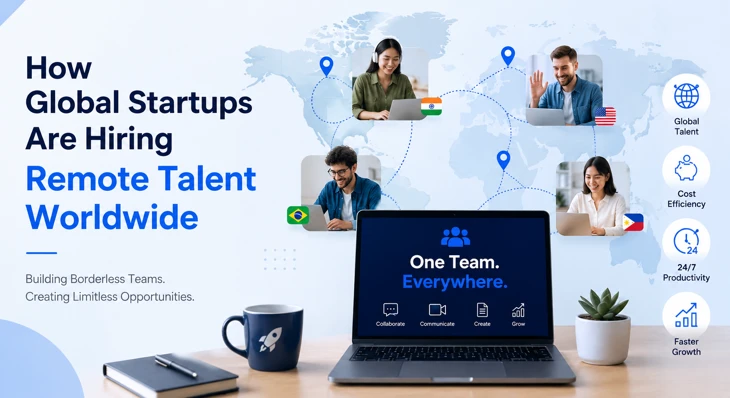
How Global Startups Are Hiring Remote Talent Worldwide
Introduction: Work Is No Longer Tied to One Place
The idea of a fixed workplace has changed more in the last few years than it did in decades before. Today, startups are no longer limited by geography when they look for talent. Instead, they are actively building teams across countries, time zones, and cultures. This shift toward hiring remote talent worldwide is not just a trend—it is becoming the norm for building modern companies. From small early-stage startups to fast-scaling tech businesses, teams are now designed to operate without borders. What makes this even more interesting is how naturally it is working. A designer in one country, a developer in another, and a marketer somewhere else can now work together as if they are sitting in the same office.Why Startups Are Moving Toward Remote Hiring Models
Startups don’t adopt remote hiring just because it sounds modern. There are real business reasons behind it, and most of them are tied to growth, speed, and access.Access to Global Skills Without Limits
One of the biggest advantages of remote hiring models is simple: better access to talent. Instead of choosing from a small local pool, companies can now hire remote workers with very specific skills worldwide. This opens doors to experts who might not be available in their own city or even their country. For example, a startup based in Europe can easily work with a developer in India, a UX expert in South America, and a content strategist in North America—all in one team. This kind of global talent acquisition gives startups a serious edge when building products quickly.Smarter Budget Use Without Sacrificing Quality
Early-stage startups often struggle with costs. Office space, relocation, and local hiring expenses can quickly add up. Remote hiring changes that equation. By building distributed teams, companies reduce overhead while still hiring high-quality professionals. Many startups reinvest those savings into product development, marketing, and scaling efforts.Faster Execution and Around-the-Clock Progress
When teams are spread across time zones, work doesn’t stop at the end of the day. One team finishes their tasks, and another picks them up. This continuous workflow helps startups move faster, launch products earlier, and respond to market changes without delays. In highly competitive industries, this speed can make a huge difference.How Modern Startups Actually Hire Remote Teams
Remote hiring is not random or informal. Successful startups follow structured systems to ensure they run smoothly.Digital Platforms for Finding Talent
Most companies now depend on digital hiring platforms like LinkedIn, remote job boards, and talent marketplaces. These platforms make it easier to connect with professionals who are already open to remote work. Instead of waiting for applications, startups actively search and reach out to candidates across regions.Clear and Consistent Onboarding Process
Once someone is hired, the onboarding experience becomes extremely important. Startups usually provide virtual onboarding sessions, shared documentation, and structured learning paths. This helps new team members understand expectations, tools, and workflows without confusion.Everyday Collaboration Through Cloud Tools
Tools like Slack, Zoom, Notion, and Trello are now the backbone of remote-first companies. They help teams communicate in real time, manage projects, and stay aligned even when they are working from different parts of the world.Strategies That Help Startups Hire Remote Talent Worldwide
Behind every successful remote team, there is usually a clear hiring strategy. Companies don’t just hire quickly—they hire intentionally.Building Trust Through Employer Branding
Startups that succeed in remote hiring usually invest in how they present themselves online. A clear mission, transparent culture, and active digital presence help attract people who genuinely want to be part of the journey.Flexibility That Matches Modern Work Expectations
Flexibility is one of the strongest reasons professionals choose remote work. Companies that allow flexible hours and asynchronous communication tend to attract stronger and more independent talent.Focusing on Skills Instead of Location
One major shift in modern hiring is the move toward skills-first decision-making. Instead of asking where someone lives, startups focus on what they can do. This simple change opens the door to much stronger hiring outcomes.Data-Driven Hiring Decisions
Many startups now use smart hiring tools to review applications, assess skills, and reduce bias. This makes the hiring process faster and more structured while improving overall candidate quality.Challenges in Global Remote Hiring
Even though remote hiring offers major advantages, it is not without challenges. Startups need to handle them carefully to avoid long-term issues.Communication Across Time Zones
When teams are spread globally, real-time communication becomes difficult. Startups often solve this by relying more on written communication and clear documentation rather than constant meetings.Cultural Differences in Team Dynamics
Working across cultures brings diversity, but it also requires understanding. Different communication styles, work habits, and expectations can sometimes lead to misunderstandings if not managed properly.Legal and Compliance Complexity
Hiring in different countries means dealing with different labor laws, contracts, and tax systems. To simplify this, many startups use global employment platforms or legal partners.Keeping Remote Teams Connected
One common concern in remote setups is isolation. To address this, companies organize virtual meetups, casual check-ins, and team-building activities to maintain a sense of connection.Real Examples of Remote Hiring Success
SaaS Companies With Distributed Engineering Teams
Many SaaS startups now build engineering teams across multiple continents. Developers collaborate on the same product while working from completely different locations.E-Commerce Brands With Global Support Teams
Customer support is often spread across regions to ensure 24/7 availability. This significantly improves response time and customer satisfaction.Marketing Teams Built Across Borders
Digital marketing startups often bring together writers, designers, and strategists from different countries. This mix of perspectives leads to more creative campaigns.Technology Behind Remote Recruitment
Technology is the foundation that makes global remote hiring possible today.AI-Based Talent Matching
AI tools help startups find candidates who more accurately match job requirements. This reduces manual screening time and improves hiring quality.Virtual Interviews Becoming the Norm
Video interviews are now standard practice. They save time, reduce travel needs, and allow hiring teams to evaluate candidates more efficiently.HR Systems for Distributed Teams
Cloud-based HR tools manage payroll, performance tracking, and employee records across countries. This simplifies operations for global teams.What the Future of Remote Hiring Looks Like
The direction is already clear—work is becoming borderless. In the coming years, we will likely see:- More companies are fully adopting remote-first structures
- Greater use of automation in hiring processes
- Expansion of digital nomad-friendly job roles
- Stronger global freelance ecosystems