📚 Table of Contents
- How Design Work Quietly Moved Beyond Offices
- What Remote Architecture Careers Actually Look Like Today
- Tools That Make It All Possible
- Remote Interior Design Careers Feel Even More Flexible
- A Typical Remote Interior Design Workflow
- Skills That Actually Matter in This Field
- Why More People Are Choosing Remote Design Careers
- The Not-So-Perfect Side of Remote Design Work
- Getting Started Without Feeling Overwhelmed
- A Simple Real-Life Example
- Where This Is All Heading
- FAQs
- Is remote architecture really a stable career option?
- Can interior designers work completely online?
- What software should I learn first?
- Do I need a degree to start?
- How do beginners get their first clients?
- Conclusion
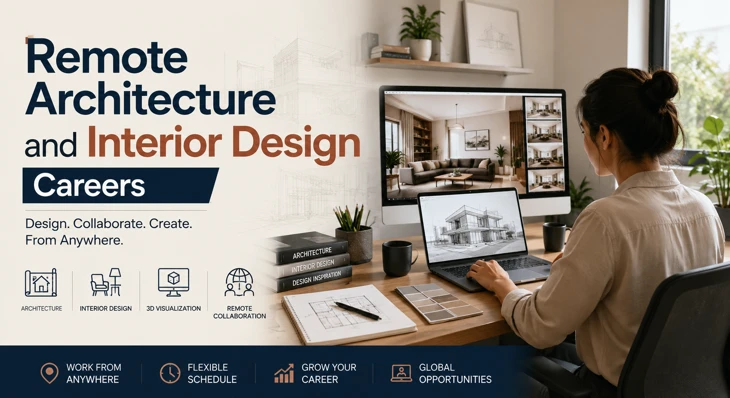
Remote Architecture and Interior Design Careers
Remote architecture and interior design careers are no longer a distant idea reserved for a few tech-savvy professionals. They’ve quietly become part of how the design industry actually works today. What used to feel tied to drafting tables, site visits, and long office hours now happens on laptops, through cloud tools, and over video calls from almost anywhere in the world. And honestly, this shift didn’t happen overnight. It crept in slowly—first through freelancers experimenting with digital tools, then through firms realizing they could collaborate remotely, and now through a full ecosystem where remote architecture and interior design careers are not just accepted but actively preferred in many cases. What makes this even more interesting is that you don’t need a fancy studio to be taken seriously anymore. You need skill, clarity of thought, and the ability to communicate design visually.How Design Work Quietly Moved Beyond Offices
If you think about it, architecture and interior design were always visual-first professions. The idea of physically sitting in the same room was helpful, but not always necessary. Now with tools like AutoCAD, SketchUp, Revit, and real-time rendering platforms, the “room” has essentially moved online. Designers today can:- Sketch and refine architectural concepts digitally without printing a single sheet
- Build detailed 3D interiors that clients can actually walk through virtually
- Share instant design updates instead of waiting for meetings
- Work with engineers, contractors, and clients across different time zones
What Remote Architecture Careers Actually Look Like Today
Remote architecture is often misunderstood as “just drafting from home.” It’s much broader than that. In real-world practice, remote architecture careers span planning, visualization, problem-solving, and coordination. Some professionals focus purely on technical drawings, while others spend most of their time building lifelike 3D environments. You’ll often see roles like:- Architectural drafter working on precise CAD drawings from home setups
- BIM specialist managing building models and coordination data
- 3D visualization artist turning sketches into realistic spaces
- Concept designer shaping early-stage ideas that guide entire projects
- Planning or research-based roles supporting urban or spatial design decisions
Tools That Make It All Possible
Without digital tools, none of this would exist. The backbone of remote architecture careers usually includes:- AutoCAD for technical drafting
- Revit for structured building models
- SketchUp for fast conceptual modeling
- Lumion or V-Ray for rendering realistic visuals
- Cloud collaboration platforms for syncing work in real time
Remote Interior Design Careers Feel Even More Flexible
Interior design adapted to remote work faster than most expected. Why? Because a lot of the process was already visual and client-driven. Today, clients are completely comfortable sending room photos, videos, and measurements via WhatsApp or email and receiving a full design transformation digitally. That’s how remote interior design careers are operating now. You’ll find professionals working as:- Virtual interior design consultants guiding clients online
- Space planning specialists optimizing layouts digitally
- Mood board creators setting the visual direction of projects
- 3D interior artists building realistic room experiences
- E-design freelancers delivering complete design packages remotely
A Typical Remote Interior Design Workflow
Most projects follow a surprisingly simple rhythm: A client shares a space → designer studies it → concepts are created → visuals are built → final design is delivered digitally. That’s it. No physical meetings required in many cases. And yet, the output can be incredibly detailed—down to furniture placement, lighting suggestions, and color palettes.Skills That Actually Matter in This Field
There’s a common misconception that remote design work is only about software skills. That’s only half the truth. Yes, tools matter. But the way you think matters more. Strong professionals usually have a mix of: Technical ability:- CAD and modeling skills
- 3D visualization and rendering
- Understanding of materials and spatial logic
- Sense of proportion and balance
- Ability to visualize space before it exists
- Comfort experimenting with styles and layouts
- Explaining design decisions clearly
- Handling client feedback without confusion
- Managing multiple projects without losing track
Why More People Are Choosing Remote Design Careers
There isn’t just one reason this shift is happening—it’s a combination of lifestyle, technology, and opportunity. One of the biggest drivers is access. You no longer need to live in a major design hub to work on serious projects. Another is flexibility. Many designers prefer to set their own working hours rather than follow rigid office schedules. Cost is also a factor. Working remotely removes commuting, relocation, and studio expenses. But perhaps the most underrated reason is creative freedom. Remote work often allows designers, especially freelancers, to explore personal style more openly.The Not-So-Perfect Side of Remote Design Work
Of course, it’s not all smooth. Miscommunication can happen easily when feedback is only written or visual. A small misunderstanding in a design revision can lead to delays. There’s also the technical side. High-quality rendering and modeling require powerful systems, and not everyone starts with that setup. Time zones can also complicate things when clients and teams are spread across the globe. And while digital tools are powerful, nothing fully replaces walking through a real construction site when needed. Still, most of these issues are manageable once systems and workflows are in place.Getting Started Without Feeling Overwhelmed
Most people assume they need everything figured out before starting. That’s not true. A more realistic path looks like this: Start with a portfolio, even if it’s small. Add practice projects, redesigns, or concept spaces. Learn one or two core tools first, rather than trying to master everything at once. Take small freelance or practice projects to understand real-world expectations. Share your work online. Visibility often leads to unexpected opportunities. And slowly, find a niche—residential interiors, commercial spaces, or sustainable design are common starting points.A Simple Real-Life Example
Think of a designer who begins by creating small e-design concepts for bedrooms. Nothing fancy—just simple layouts and mood boards. Over time, those small projects turn into consistent freelance work. Clients start recommending them. Then international inquiries begin. Eventually, they’re managing full home interiors remotely while coordinating with local contractors in different countries. No office. No physical studio. Just structured remote work and strong communication. That’s how many remote architecture and interior design careers actually grow.Where This Is All Heading
The future of design is becoming even more digital and immersive. We’re already seeing:- AI is helping generate design concepts faster
- VR walkthroughs that let clients experience spaces before they’re built
- Cloud-based design systems are replacing traditional file sharing
- Smarter, more sustainable building and interior solutions