Remote Oil and Gas Consulting Careers
Introduction
The oil and gas industry has always been associated with physical presence—rigs in the ocean, drilling sites in remote deserts, and engineers working long rotations away from home. But that picture doesn’t fully reflect how things work today.
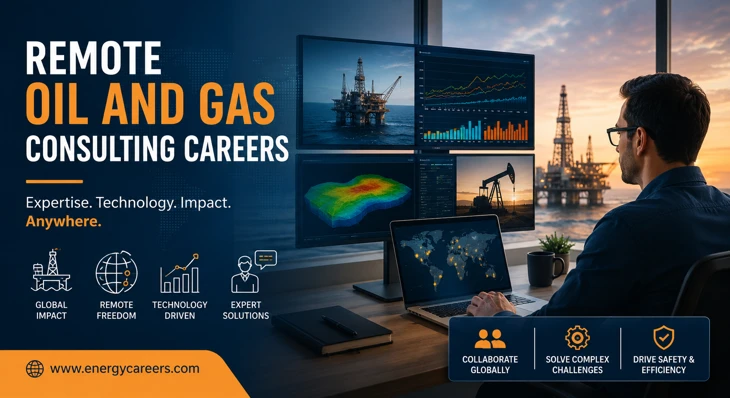
A quiet shift has been taking place. More and more technical decisions are now being made through screens, dashboards, and shared data systems. Because of that, remote oil and gas consulting careers have started to feel less like an exception and more like a practical career direction for many professionals in the energy space.
What’s interesting is how normal this has become. A reservoir model can be reviewed from a laptop. A drilling plan can be adjusted in real time through a virtual meeting. Even complex production forecasts are now built collaboratively across continents.
So instead of thinking of consulting as something tied to a physical office or field site, it’s now closer to a global knowledge service—one that travels faster than people ever could.
Understanding Remote Oil and Gas Consulting Careers
At a basic level, remote oil and gas consulting involves providing technical guidance and problem-solving support without being physically present at the project site. Most of the work happens through digital platforms, shared files, and live discussions.
A consultant might review seismic data in the morning, join a video call with a drilling team in the afternoon, and finish the day by writing recommendations for production optimization. The work is still technical and high-stakes—it just doesn’t always happen on-site anymore.
These professionals typically work with exploration companies, drilling contractors, and energy operators who need external expertise to make better decisions, reduce risk, or improve efficiency.
Where Remote Consultants Actually Add Value
Instead of trying to cover everything broadly, most remote consultants focus on specific technical areas where their input directly impacts outcomes:
- Interpreting reservoir behavior and predicting production trends
- Reviewing drilling strategies and identifying operational risks
- Working with geological data to understand underground formations
- Supporting energy pricing analysis and investment decisions
- Advising on environmental compliance and safety standards
- Helping companies shift toward digital oilfield systems
Each of these areas may sound technical—and they are—but the real goal is simple: help teams make clearer, faster, and safer decisions.
Why Remote Oil and Gas Consulting Careers Are Expanding
There isn’t just one reason behind this shift. It’s a combination of technology, cost pressure, and changing workplace expectations.
Technology Has Quietly Changed Everything
A decade ago, most oil and gas decisions depended heavily on field reports and in-person evaluations. Today, companies use cloud platforms, live sensor data, and digital twins to monitor operations in real time.
That means consultants no longer need to be physically present to understand what’s happening underground or on a drilling rig. The data comes to them instead.
Expertise Is No Longer Bound by Geography
Earlier, companies often relied on experts within their region or those willing to travel. Now, a specialist in one part of the world can support a project thousands of miles away without delay.
This has opened up a much larger talent pool—and made consulting more flexible for both companies and professionals.
Short-Term Expertise Is More Practical
Not every project needs a full-time hire. Sometimes, a company only needs a reservoir model reviewed or a drilling risk assessed for a few weeks.
Remote consulting fits naturally into this kind of demand. It’s focused, efficient, and doesn’t require relocation or long-term commitments.
Work Culture Has Shifted for Good
After the global shift toward remote work, even traditionally field-heavy industries started rethinking how work gets done. Many technical roles that once required travel can now be handled remotely with the right systems in place.
Skills That Matter in Remote Oil and Gas Consulting
This is not a career where surface-level knowledge is enough. Clients expect depth, clarity, and confidence in decision-making.
Technical Understanding Still Comes First
Most professionals in this field come from petroleum engineering, geology, or energy-related backgrounds. Depending on their focus, they may also work with:
- Reservoir simulation platforms
- Geological mapping and seismic interpretation tools
- Production optimization systems
- Drilling engineering software
But tools alone aren’t enough. Knowing how to interpret results and apply them in real-world situations is what really matters.
Thinking in Patterns, Not Just Numbers
A big part of consulting is connecting information that doesn’t always look connected at first glance. Pressure changes in a well, production drops, and geological anomalies all tell a story when viewed together.
The ability to see that bigger picture is what separates good consultants from average ones.
Communication Makes or Breaks the Work
Even the best technical insight loses value if it isn’t explained clearly. Remote consultants spend a lot of time turning complex findings into actions teams can take.
That might be a short report, a visual dashboard, or a direct recommendation during a call. The format matters less than the clarity.
Since everything happens remotely, familiarity with cloud systems, analytics dashboards, and collaboration platforms is essential. The smoother the digital workflow, the more effective the consultant becomes.
Different Paths Within Remote Consulting
Not all consulting work looks the same. In fact, roles vary quite a bit depending on specialization.
Reservoir-Focused Consultants
These professionals spend their time understanding what’s happening beneath the surface—how oil and gas move, how reservoirs respond, and how production can be improved over time.
Drilling and Operations Advisors
This group focuses more on execution. They help design drilling plans, identify risks before they become problems, and improve operational safety and efficiency.
Energy Market Specialists
Some consultants don’t work directly with physical operations at all. Instead, they analyze global oil and gas trends, pricing movements, and market behavior to guide business strategy.
As energy companies modernize, consultants are increasingly brought in to help implement AI tools, automation systems, and data-driven workflows.
Environmental and Compliance Advisors
With stricter regulations and sustainability goals, companies rely on remote consultants to review environmental impact, ensure compliance, and support reporting requirements.
Behind every remote consulting role is a set of tools that keeps everything connected.
Cloud platforms allow teams to share massive datasets without physical storage limitations. Simulation software helps test drilling scenarios before they happen. Analytics tools turn raw production data into meaningful insights.
And then there are communication tools—video calls, messaging apps, and project dashboards—that keep everyone aligned even across time zones.
Without this ecosystem, remote consulting simply wouldn’t function at the level it does today.
A Realistic Look at How It Works
Picture a consultant working from India while supporting a drilling project in the North Sea.
They receive continuous data from sensors on the rig—pressure levels, temperature changes, and formation readings. Instead of traveling there, they analyze everything through a secure dashboard.
At one point, they notice a pattern that suggests instability in the drilling process. Rather than waiting for a scheduled meeting, they quickly prepare a recommendation and share it with the on-site team.
The team adjusts the drilling parameters based on that input, avoiding what could have become a costly delay.
That’s the real value of remote consulting—it’s fast, informed, and directly tied to operational outcomes.
Benefits of Building a Career in This Space
One of the biggest advantages is flexibility. Professionals are no longer tied to a specific location or rotation schedule.
There’s also exposure to global projects. A single consultant might work with companies across multiple regions in a short span of time, gaining experience that would be hard to replicate in traditional roles.
Financially, specialized expertise is still highly valued. Skilled consultants often earn competitive rates, especially when they bring niche technical knowledge.
And perhaps most importantly, the work itself stays varied. Each project brings a different challenge, which keeps the role engaging over time.
The Not-So-Easy Parts
Of course, it’s not without challenges.
Security is a serious concern, especially when dealing with sensitive geological or production data. Everything needs to be handled carefully and through approved systems.
There’s also the lack of physical field exposure. Some professionals prefer being on-site because it gives a deeper sense of context that data alone can’t always provide.
Time zones can also make coordination tricky. A late-night call or early-morning review isn’t unusual in global consulting work.
And like any remote role, reliable technology isn’t optional—it’s the foundation of the job.
Where This Is Heading Next
The direction is fairly clear. As artificial intelligence, predictive modeling, and digital twin systems advance, remote consulting will become increasingly integrated into daily operations.
Instead of replacing field work entirely, it will continue to reduce the need for constant physical presence in many areas of decision-making.
We’re already seeing increased demand for remote experts in areas like predictive maintenance, drilling optimization, sustainability planning, and energy transition strategy.
Getting Started in the Field
Most people don’t enter this space overnight. It usually starts with a technical background—engineering, geology, or energy systems.
From there, real-world experience helps build confidence and credibility. Understanding how things actually work on the ground is still important, even if the end role is remote.
Over time, professionals add digital skills—learning software, data tools, and cloud platforms that support remote collaboration.
Networking also plays a big role. Many consulting opportunities come through professional connections rather than job boards.
And in many cases, the first step is small—short contracts, project-based work, or freelance assignments.
FAQs
Is remote oil and gas consulting really practical?
Yes, many technical tasks such as analysis, modeling, and forecasting can be handled remotely using modern tools.
Do you need field experience first?
In most cases, yes. Real operational understanding helps improve the quality of remote decision-making.
What kind of background is preferred?
Most professionals come from petroleum engineering, geology, or related energy disciplines.
Can beginners enter this field?
It’s possible, but most start with traditional roles before transitioning into consulting.
Is demand increasing in this area?
Yes, as companies continue adopting digital systems and remote workflows.
Conclusion
Remote oil and gas consulting careers are no longer a niche idea—they are becoming a normal part of how the energy industry functions.
The shift is driven by data, technology, and a growing need for flexibility in how expertise is delivered.
For professionals who combine technical depth with digital confidence, this space offers long-term relevance and steady opportunity. It’s not about replacing traditional engineering—it’s about expanding how and where that expertise can be used.