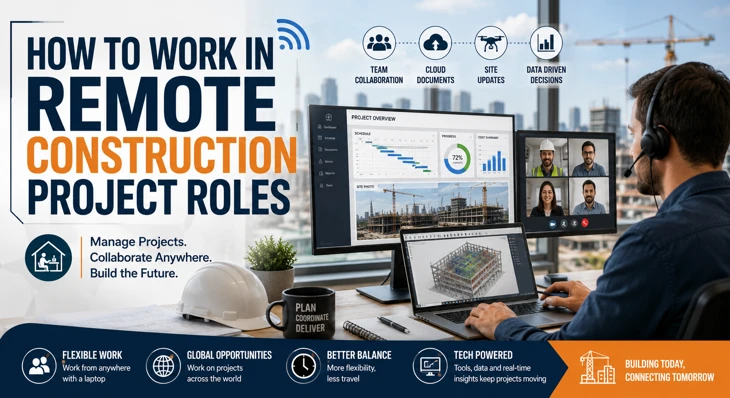
How to Work in Remote Construction Project Roles
Introduction
Construction used to mean one thing in most people’s minds: boots on site, hard hats, noise, dust, and constant physical supervision. That picture still exists, of course, but it’s no longer the whole story. A surprising shift is happening in the industry—more and more work is now being handled remotely, often from completely different cities or even countries.
It sounds unusual at first. How can something as physical as construction be managed from a laptop? But once you look closer, it starts to make sense. Most of what keeps a project moving isn’t physical labor—it’s planning, coordination, communication, and decision-making. And those parts can travel digitally.
That’s exactly where remote construction project roles come in. They allow engineers, planners, and managers to stay deeply involved in real projects without needing to be on-site every single day.
What Remote Construction Project Roles Actually Look Like
If you imagine someone working remotely in construction, you might think they are completely disconnected from the site. In reality, it’s the opposite. They are often more connected than ever—but through screens, reports, and live updates instead of physical presence.
A typical day might involve checking progress photos sent from site engineers, reviewing a BIM model update, jumping on a call with contractors, and adjusting schedules based on new information. It feels less like “distance work” and more like “digital control room work.”
These roles usually include people who handle planning, cost control, coordination, and technical reviews. For example, a remote construction project manager might never step onto the site that day, but still guide every major decision happening there.
Other common roles include planners, quantity surveyors, BIM coordinators, and remote engineering support specialists. Each one plays a different part, but they all rely on the same thing—clear digital communication.
Why This Shift Is Happening Now
This change didn’t happen overnight. It gradually built up as construction companies adopted better technology.
A few years ago, most updates were shared through phone calls or static reports. Today, everything is moving in real time. Teams can see live dashboards showing progress, delays, and resource usage. It changes how decisions are made.
There’s also another reason—projects are no longer local. A single project might involve design teams in one country, contractors in another, and clients somewhere else entirely. Coordinating all of this without remote roles would be nearly impossible.
And then there’s lifestyle. Many professionals no longer want to be tied to one physical location all the time. Remote construction project roles give them a way to stay in the industry while working more flexibly.
The Core Roles You’ll Come Across
Instead of listing job titles like a checklist, it helps to think of these roles in terms of what they actually
do in a working day.
A remote construction project manager, for example, is usually the person connecting everything together. They check progress updates, resolve delays, and make sure every team is aligned. Their inbox is rarely quiet.
A construction planner spends a lot of time adjusting timelines. One delay on-site can ripple through the entire schedule, so they are constantly reshaping the plan to keep things realistic.
A BIM coordinator works in a more visual space. They deal with 3D models, checking if designs clash or if something won’t work once built. It’s almost like solving a puzzle before construction even begins.
Quantity surveyors focus on costs. They track changes in materials, labor, and budget. Even small adjustments can affect the entire financial structure of a project, so attention to detail matters.
Then there are remote support engineers who act like backup eyes for site teams. When something unclear happens on-site, they step in, analyze reports, and help decide the next move.
Skills That Make Remote Construction Work Actually Work
One thing becomes clear quickly in this field—you don’t succeed just by knowing software. Tools help, but understanding how construction behaves in real life is what really matters.
Someone might be excellent at using scheduling software, but if they don’t understand how delays actually happen on-site, their plans won’t hold up.
Communication is another big piece. When you’re not physically present, your instructions need to be clear enough that someone on-site can act on them without confusion. That means writing better, explaining better, and sometimes simplifying complex technical ideas.
There’s also a quiet skill that matters more than people expect: staying organized when multiple things are happening at once. Remote roles often involve juggling several projects, each with different teams and deadlines.
And of course, problem-solving. Construction rarely goes exactly as planned. Something always shifts. The ability to respond calmly and practically is what keeps projects moving.
Behind every smooth remote construction setup is a stack of tools doing the heavy lifting.
Some are for planning, like scheduling platforms that show timelines and dependencies. Others are for design work, where teams collaborate on 3D models and detect issues before anything is built.
Communication tools are probably the most used. Teams rely heavily on quick calls, messages, and video meetings to stay aligned. It’s not unusual for someone to spend most of their day switching between tools.
Then there’s cloud storage, which sounds simple but is essential. Drawings, reports, contracts—everything needs to be accessible instantly, without confusion about versions or updates.
On top of that, modern sites often use drones or mobile reporting apps. So instead of guessing what’s happening on-site, remote teams can actually see it.
How People Usually Enter This Field
Very few people start directly in remote roles. Most begin on-site. That early exposure matters more than it seems at first.
When you’ve stood on a real construction site, you understand how small decisions affect real outcomes. That experience becomes incredibly useful later when you move into remote coordination.
After that, many professionals start learning digital tools and gradually shift into hybrid roles. They might spend part of their time on-site and part working remotely. Over time, the remote side grows.
It’s not a sudden switch. It feels more like a transition that builds naturally with experience.
The Real Challenges Nobody Talks About Much
Remote construction work isn’t perfect, even though it sounds convenient.
One of the biggest challenges is not seeing things directly. No matter how good reports are, they don’t always capture the full picture. Sometimes, you only realize the real issue after a delay.
Communication can also become messy if teams aren’t disciplined. A missed update or unclear instruction can affect the entire chain of work.
Technology dependence is another reality. If systems go down or data is missing, decision-making slows immediately.
And then there are time zones. When teams are spread across the world, someone is always working at an unusual hour.
Still, most of these challenges become manageable once systems are properly set up.
Why People Still Choose This Path
Despite the challenges, many professionals are drawn to remote construction project roles because of the freedom they offer.
There’s less travel, more flexibility, and exposure to international work environments. Instead of being limited to local projects, professionals can contribute to large-scale global developments.
It also changes how growth happens. You’re not just working on one site—you’re often involved in multiple projects, each with different complexity levels.
A Simple Real-World Picture
Imagine a highway project where the design team is in one country, the client is in another, and the construction site is somewhere else entirely.
The remote project manager wakes up, checks progress updates from the site, reviews design changes from the engineering team, and joins a video call with the client.
No long travel. No constant site visits. Just structured communication, clear reporting, and quick decisions based on real-time data.
This is not a future concept anymore. It’s already happening.
Where This Is Heading Next
The direction is pretty clear. Construction is becoming more digital every year.
With better tools, AI-assisted planning, and virtual monitoring systems, remote involvement will only increase. Even site inspections are slowly becoming partially virtual.
It doesn’t mean physical sites will disappear. Far from it. But the way people interact with those sites is changing permanently.
FAQs
Can construction really be managed remotely?
Yes, a large portion of planning, coordination, reporting, and design work can be handled remotely with the right systems in place.
Do I need field experience first?
In most cases, yes. Real site experience helps you understand how decisions actually play out on the ground.
What roles are most common in remote construction work?
Project managers, planners, BIM coordinators, and quantity surveyors are among the most common.
Is this field suitable for beginners?
It’s possible, but most people start on-site or in hybrid roles before moving fully remote.
What skills matter most?
Understanding construction basics, communication, and comfort with digital tools matter more than anything else.
Conclusion
Remote construction project roles are quietly reshaping how the industry operates. They don’t replace traditional construction—they extend it. Work that once required physical presence is now being handled through structured digital systems, better communication, and smarter tools.
For professionals, this means more flexibility, broader opportunities, and a chance to work on projects that span across regions and countries. It’s not about leaving the construction world—it’s about working inside it in a new way.
And that shift is only going to grow from here.