📚 Table of Contents
- Introduction
- Why YouTube Has Become a Powerful Learning Platform
- Choosing the Right Skills to Learn on YouTube
- Creating a Structured Learning Plan
- Turning YouTube Learning Into Real Skills
- Building a Strong Portfolio
- Getting Real-World Experience
- Career Paths You Can Build From YouTube Learning
- Freelancing
- Remote Jobs
- Content Creation
- Full-Time Employment
- Entrepreneurship
- Common Mistakes to Avoid
- Real-Life Example of YouTube Learning Success
- FAQs
- 1. Can I really build a career only from YouTube learning?
- 2. How much time does it take to become job-ready?
- 3. Do I need certificates to get a job?
- 4. What are the best skills to learn from YouTube?
- 5. Is YouTube enough for advanced learning?
- Conclusion
How to Build a Career From YouTube Learning
Introduction
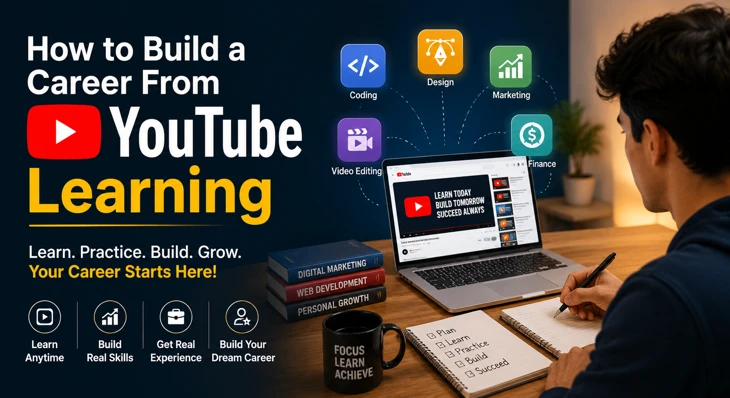
In today’s digital world, education is no longer limited to classrooms or expensive degrees. With just a smartphone and internet connection, anyone can access high-quality learning resources for free. One of the most powerful platforms leading this change is YouTube. From coding and digital marketing to design, finance, and communication skills, YouTube has become a global learning hub for millions of people. What makes it even more exciting is that many individuals are now building full-fledged careers using skills they learned entirely from YouTube. Whether you are a student, a job seeker, or someone looking to switch careers, YouTube learning can open doors you may never have imagined. This guide will walk you through building a career on YouTube, step by step, using practical strategies that work in the real world.Why YouTube Has Become a Powerful Learning Platform
YouTube is no longer just an entertainment platform. It has evolved into a massive knowledge ecosystem where experts, professionals, and educators share real-world skills. One of the biggest advantages is accessibility. You don’t need to pay expensive tuition fees or enroll in formal courses. Everything is available instantly and often in a highly visual, easy-to-understand format. Another major advantage is variety. Whether you want to learn graphic design, web development, video editing, communication skills, or even entrepreneurship, there is unlimited content available. YouTube also allows self-paced learning. You can pause, rewind, and replay lessons until you fully understand the concept. This flexibility makes it ideal for beginners and working professionals alike. Most importantly, the platform is constantly updated. You can learn modern tools, trending technologies, and industry-relevant skills in real time.Choosing the Right Skills to Learn on YouTube
Before diving into learning, it is important to choose the right skill path. Not every skill will lead to a stable or rewarding career, so selection matters. Start by identifying your interest area. Ask yourself what excites you the most—technology, creativity, business, or communication. Your interest will determine how consistent you remain during the learning process. Some high-demand skills you can learn from YouTube include:- Web development and programming
- Graphic design and UI/UX
- Digital marketing and SEO
- Video editing and animation
- Freelancing and communication skills
- Data analysis and Excel skills
Creating a Structured Learning Plan
One of the biggest mistakes learners make is consuming random videos without direction. To build a career from YouTube learning, structure is essential. Start by searching for beginner-to-advanced playlists instead of random videos. Many creators design complete courses in sequence, which makes learning more organized. Divide your learning into weekly goals. For example:- Week 1: Understand basics and terminology
- Week 2: Practice foundational concepts
- Week 3: Work on small projects
- Week 4: Build advanced understanding
Turning YouTube Learning Into Real Skills
Watching videos alone is not enough. The real transformation happens when you apply what you learn. For example, if you are learning graphic design, try creating posters or social media posts. If you are learning coding, start building small websites or apps. Practical application helps you understand real-world challenges. It also builds confidence in your abilities. Another effective method is imitation learning. Try to recreate the projects shown in the tutorials without blindly copying. This forces you to think and problem-solve independently. Over time, gradually start experimenting with your own ideas instead of following tutorials step by step.Building a Strong Portfolio
A portfolio is your proof of work. It shows potential clients or employers what you are capable of, even if you don’t have formal experience. Start building your portfolio from day one. Every small project you create should be added. You can create a simple portfolio using platforms like:- GitHub (for coding projects)
- Behance (for design work)
- Personal website
- Project title
- Short description
- Tools used
- Screenshots or links