📚 Table of Contents
- What Lifelong Learning Really Means Today
- Why Lifelong Learning Is Critical for the Future of Work
- Technology Is Moving Faster Than Careers
- Hiring Is Becoming Skill-Focused
- Job Roles Are No Longer Fixed
- Real Benefits of Lifelong Learning
- Better Career Growth Opportunities
- Stronger Problem-Solving Ability
- Higher Confidence at Work
- Greater Job Security
- How Digital Transformation Has Changed Learning
- How Lifelong Learning Supports Career Change
- Example from Real Life
- Skills That Matter Most in the Future Workforce
- Technical Skills in Demand
- Human Skills That Never Go Out of Style
- Learning Culture Inside Modern Companies
- What Companies Are Doing Differently
- The Learning Mindset
- What Real Career Growth Looks Like Through Learning
- Challenges People Face While Learning Continuously
- Finding Time
- Too Many Choices
- Staying Consistent
- How to Build a Strong Learning Habit
- Set a Clear Direction
- Learn in Small Steps
- Apply What You Learn
- Stay Curious
- The Future of Work Depends on Learning
- Conclusion
- FAQs
- 1. What does lifelong learning mean in today’s job market?
- 2. Why is lifelong learning important for career growth?
- 3. How does lifelong learning support the future of work?
- 4. What are simple ways to start lifelong learning?
- 5. Can lifelong learning help with career switching?
The Role of Lifelong Learning in the Future of Work
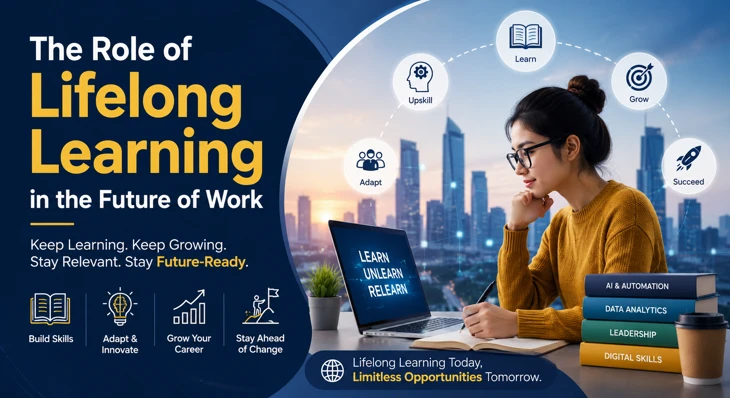
The world of work is no longer what it used to be—and honestly, it probably never will be again. Jobs are evolving, industries are shifting, and the skills that once felt “enough” now need constant upgrading. In the middle of all this change, one idea has quietly become the difference between staying relevant and slowly falling behind: lifelong learning. It’s not just a buzzword anymore. It’s a working strategy. A mindset. A survival skill for modern careers. Whether someone is just starting out or already deep into their professional journey, the ability to keep learning is what shapes long-term success in the future of work.What Lifelong Learning Really Means Today
Lifelong learning is simply the habit of continuously building knowledge and skills throughout life. It doesn’t stop at school or college. Instead, it continues through online courses, certifications, workplace training, reading, mentorship, podcasts, and real-world experience. What makes it powerful today is how fast everything is changing. A skill that was in high demand a few years ago might already be outdated. That’s why continuous learning and skill development are no longer optional—they’re essential. Unlike traditional education, which ends with a degree, lifelong learning never really finishes. It grows with you, helping you stay relevant no matter how the job market shifts.Why Lifelong Learning Is Critical for the Future of Work
Technology Is Moving Faster Than Careers
Artificial intelligence, automation, and digital tools are reshaping almost every industry. Tasks that once took hours are now completed in seconds. That sounds exciting, but it also means roles are changing quickly. Think about how workplaces now rely on data tools, AI assistants, and digital collaboration platforms. If professionals don’t keep up with these changes, they risk being left behind. Upskilling is no longer a choice—it’s part of staying employed and competitive.Hiring Is Becoming Skill-Focused
One major shift in the job market is that employers are looking less at degrees and more at skills. Can you do the work? Can you adapt quickly? Can you learn what the job requires? This shift makes lifelong learning incredibly valuable. Certifications, short courses, and real-world experience often carry as much weight as formal education. In many cases, even more.Job Roles Are No Longer Fixed
Careers today are rarely linear. People switch industries, roles, and even entire career paths more than ever before. Lifelong learning gives professionals the flexibility to adapt. For example, someone in customer service can transition into UX design or digital support by learning the right tools and skills. That flexibility creates security in an uncertain job market.Real Benefits of Lifelong Learning
Better Career Growth Opportunities
People who keep learning naturally move ahead faster in their careers. They become eligible for promotions, leadership roles, and specialized positions because they bring updated knowledge to the table.Stronger Problem-Solving Ability
Learning new things changes how the brain works. It improves critical thinking and helps professionals consider challenges from multiple angles rather than sticking to a single fixed approach.Higher Confidence at Work
There’s a different kind of confidence that comes from knowing you’re up to date. When professionals learn new tools or skills, they feel more prepared to handle challenges without hesitation.Greater Job Security
In uncertain markets, adaptable professionals are the ones who stay secure. Continuous learning ensures that even if one role disappears, new opportunities are always within reach.How Digital Transformation Has Changed Learning
Learning today is not limited to classrooms or training centers. Thanks to digital transformation, knowledge is available anytime, anywhere. Online platforms now offer everything from coding and digital marketing to leadership and communication skills. This has made education more flexible and accessible than ever before. Companies are also investing heavily in employee development. Internal training programs, online learning subscriptions, and mentorship systems are now common in modern workplaces.How Lifelong Learning Supports Career Change
Changing careers used to feel risky. Today, it’s becoming normal. Many professionals switch industries multiple times during their working life. Lifelong learning makes these transitions possible by bridging the gap between old skills and new requirements.Example from Real Life
Imagine someone working in administrative support. As automation takes over repetitive tasks, they start learning tools like project management software, data handling systems, and basic analytics. Over time, they move into roles such as operations coordination or project assistance. The shift isn’t sudden—it’s built step by step through learning. That’s the real power of continuous skill development.Skills That Matter Most in the Future Workforce
To stay relevant in the future of work, professionals need a balance of technical and human skills. Lifelong learning helps build both.Technical Skills in Demand
- Data analysis and interpretation
- Digital tools and platforms
- AI and automation basics
- Cybersecurity awareness
- Cloud computing understanding
Human Skills That Never Go Out of Style
- Clear communication
- Emotional intelligence
- Adaptability in changing environments
- Critical thinking
- Collaboration and teamwork
Learning Culture Inside Modern Companies
Organizations today understand that employee growth directly impacts business success. That’s why many companies are actively promoting a learning culture.What Companies Are Doing Differently
- Offering training programs and workshops
- Providing access to online learning platforms
- Encouraging mentorship and coaching
- Supporting skill-based career growth