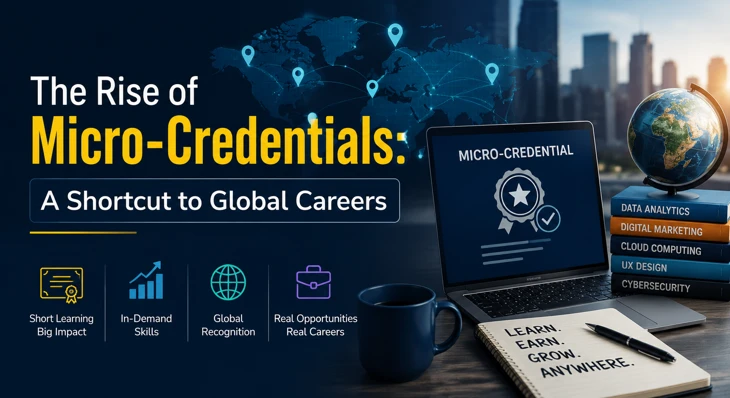
The Rise of Micro-Credentials: A Shortcut to Global Careers
In the last few years, the way people learn and build careers has changed more than it did in the previous few decades combined. Degrees are still important, but they are no longer the only path to meaningful work. Employers today care deeply about what you can actually do. This shift has quietly pushed micro-credentials into the spotlight as one of the most practical ways to grow professionally in a fast-changing world.
Micro-credentials are not just another online learning trend. They represent a shift in how skills are earned, validated, and applied. Instead of spending years in traditional education systems, learners can now focus on specific, job-ready skills that directly connect with real-world roles. This makes them especially powerful for people who want to switch careers, grow faster, or stay relevant in competitive industries.
Let’s take a deeper look at why micro-credentials are becoming a trusted shortcut to global career opportunities and how they are reshaping modern learning.
A New Way of Learning That Fits Real Life
One of the biggest reasons micro-credentials are gaining attention is simple: they fit into real life. Not everyone has the time or resources to commit to multi-year degree programs. Many people are already working, managing responsibilities, or looking for faster career transitions.
Micro-credentials offer a more flexible path. These are short, focused learning programs designed around specific skills rather than broad academic subjects. You might complete a program in a few weeks or months and walk away with a verified certification that reflects what you can actually do.
Instead of studying everything at once, learners focus on one skill at a time—like data visualization, social media advertising, cloud computing, or UX design. This makes learning more practical and less overwhelming.
The modern job market is no longer limited by geography. Remote work and global hiring have opened doors for professionals everywhere. In this environment, employers care less about where you studied and more about what you bring to the table.
This is where micro-credentials play a powerful role.
Skills Are Now More Valuable Than Degrees Alone
Companies across industries are shifting toward skill-based hiring. Big names in tech and business are increasingly evaluating candidates based on practical ability rather than academic background. Micro-credentials act as proof of those abilities, especially when they come from recognized online learning platforms or industry leaders.
Faster Career Movement Is Possible
In traditional systems, career growth often takes years. With micro-credentials, people can upskill or reskill in months. This speed matters in industries like technology, marketing, and design, where tools and trends change constantly.
Global Recognition Is Growing
Because many micro-credentials are created in partnership with international universities and companies, they carry weight across borders. A certification earned in one country can open doors in another, especially for remote and freelance opportunities.
How Micro-Credentials Actually Work in Real Life
To understand their impact, it helps to see how they fit into a real career journey.
Imagine someone working in customer support who wants to move into digital marketing. Instead of going back to university, they enroll in a series of short certifications covering SEO, paid ads, and content strategy. Each course builds a small but important piece of knowledge.
Within a few months, they are not just learning theory—they are building real projects, running mock campaigns, and creating a portfolio. That portfolio becomes their entry ticket into a new career.
This is how micro-credentials turn learning into action instead of just theory.
Industries Where Micro-Credentials Are Changing Careers
The influence of micro-credentials is not limited to one field. They are reshaping multiple industries where practical skills matter more than long academic histories.
Digital Marketing and Content Creation
Businesses today operate online, making digital marketing one of the fastest-growing skill areas. Micro-credentials in SEO, social media strategy, and content writing help learners become job-ready quickly.
Technology and IT Careers
Fields like cybersecurity, cloud computing, artificial intelligence, and software development rely heavily on practical knowledge. Micro-credentials allow learners to build technical expertise step by step without waiting for a full degree.
Business, Leadership, and Management
Short certifications in project management, agile methodologies, and leadership skills are helping professionals move into managerial roles faster than ever before.
Creative and Design Fields
Graphic design, video editing, animation, and UX/UI design are highly skill-based industries. Micro-credentials help creatives prove their abilities through portfolios backed by certifications.
The rise of micro-credentials would not have been possible without online learning platforms. Platforms like Coursera, edX, Udemy, and LinkedIn Learning have made education more accessible than ever.
These platforms collaborate with universities and global companies to design courses that match industry needs. This ensures learners are not just studying theory but gaining skills that employers actually use.
Another major advantage is flexibility. Learners can study anytime, from anywhere, and often at their own pace. This makes it easier for working professionals to keep improving without putting their careers on hold.
Real-World Impact: A Career Transformation Story
Consider someone like Aarav, who started his career in retail sales. He had strong communication skills but limited technical experience. Instead of waiting for a career break, he began taking micro-credentials in digital advertising and analytics.
At first, it was just curiosity. But as he completed more certifications, he started working on freelance projects. Each project built his confidence and strengthened his portfolio.
Within a year, he transitioned into a full-time role in performance marketing for an international company. His growth did not come from a single degree but from a series of focused learning steps.
Stories like this are becoming increasingly common as professionals look for faster and more practical ways to grow.
Choosing the Right Micro-Credentials for Your Career
With so many options available, choosing the right program matters. Not every certification carries the same value, so making smart decisions is important.
A good starting point is clarity. Before enrolling in any course, it helps to understand your career direction. Whether you want to enter tech, marketing, or business, your learning should match that path.
It is also important to look at credibility. Certifications from recognized institutions or platforms tend to carry more weight with employers.
Finally, practical learning matters most. Courses that include real projects, case studies, or hands-on assignments are far more valuable than theory-heavy programs.
Challenges You Should Be Aware Of
While micro-credentials offer many advantages, they are not a magic solution. One challenge is inconsistency. Not all certifications are equally valued, and some may not be recognized by all employers.
Another challenge is competition. As more people earn certifications, standing out requires more than just collecting badges. Real experience and strong portfolios still matter.
There is also the need for continuous learning. Skills evolve quickly, especially in digital fields. What is relevant today may need updating tomorrow.
Even with these challenges, micro-credentials remain one of the most practical ways to stay competitive in today’s job market.
The Future of Careers Powered by Micro-Credentials
The future of work is moving toward continuous learning rather than one-time education. Instead of studying once and working for life, people will keep learning throughout their careers.
Micro-credentials fit perfectly into this future. They allow professionals to stack skills over time, adapt to new roles, and stay relevant in changing industries.
We are also seeing companies design their own certifications to train employees faster. Governments and institutions are beginning to recognize these digital credentials as part of formal education systems.
Over time, this could completely change how we define qualifications and career readiness.
Conclusion
Micro-credentials are no longer just an alternative learning option—they are becoming a powerful career strategy. They enable people to learn faster, adapt quickly, and compete in a global job market where skills matter more than traditional labels.
While they may not entirely replace traditional education, they complement it, making careers more flexible and dynamic. For anyone looking to grow, switch fields, or enter global opportunities, micro-credentials offer a realistic and practical path forward.
In a world where industries evolve quickly, the ability to keep learning is the real advantage. Micro-credentials simply make that journey more accessible and achievable.
FAQs
1. Are micro-credentials really useful for getting jobs?
Yes, many employers now value micro-credentials, especially when they are backed by strong projects and practical skills.
2. Can I build a full career using micro-credentials alone?
In many modern fields like marketing, IT, and design, it is possible to build a career through skills gained from micro-credentials, especially when combined with experience.
3. How long does it take to complete a micro-credential?
Most programs take a few weeks to a few months, depending on the subject's depth.
4. Do micro-credentials replace degrees?
They do not fully replace degrees in all fields, but they significantly enhance employability and career growth opportunities.
5. Which industries benefit most from micro-credentials?
Technology, digital marketing, business management, and creative industries benefit the most from skill-based certifications.
Yes, especially those partnered with universities or global companies. Always choose recognized providers for better career value.