📚 Table of Contents
- Why Student Personal Branding Matters More Than Ever
- What Exactly Is a Personal Brand for Students?
- Real Benefits of Building a Student's Personal Brand Online
- 1. Better Chances of Internships and Opportunities
- 2. Strong Professional Networking Without Pressure
- 3. Clear Direction in Your Career Path
- 4. A Living Portfolio of Skills
- 5. Confidence That Builds Over Time
- How to Build a Strong Personal Brand as a Student
- Start With What You Already Have
- Optimize Your LinkedIn Profile the Right Way
- Share Your Learning Journey, Not Just Achievements
- Build a Simple Portfolio That Grows With You
- Engage Instead of Just Posting
- Stay Real, Not Perfect
- Common Mistakes Students Should Avoid
- Waiting for the “Perfect Time”
- Posting Without Consistency
- Copying Others
- Ignoring Engagement
- A Simple Real-Life Scenario
- Why Social Media Matters in Student Personal Branding
- Why Employers Notice Strong Student Branding
- FAQs
- 1. Do I need experience to start personal branding as a student?
- 2. Which platform is best for student personal branding?
- 3. How often should students post content online?
- 4. Can personal branding really help get internships?
- 5. What should students focus on first?
- 6. Is a portfolio website necessary?
- Conclusion
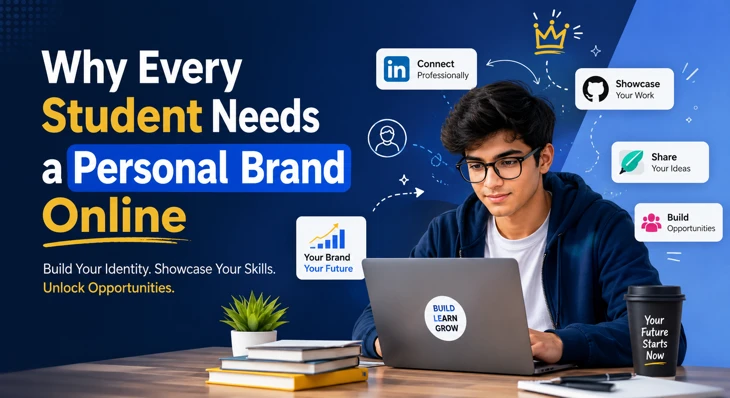
Why Every Student Needs a Personal Brand Online
In today’s digital-first world, a student is no longer defined only by marks, degrees, or certificates. The way you show up online now plays a huge role in how opportunities find you. Whether it’s an internship, a freelance project, or even your first job interview, your online identity often speaks before you do. This is exactly where personal branding for students becomes important. It is not about trying to look perfect or building a fake professional image. It’s about shaping a clear, honest, and consistent digital identity that reflects your skills, learning journey, and potential. When done right, a strong student personal brand online can quietly work in your favour—even while you are still studying.Why Student Personal Branding Matters More Than Ever
Hiring has changed. Companies are no longer relying only on resumes or academic scores. They want proof—real examples of what a student can actually do. That’s why a student’s online presence is becoming just as important as their classroom performance. Today, platforms like LinkedIn, GitHub, Behance, and even personal blogs serve as living resumes. They don’t just list your skills—they show them in action. And here’s the reality: recruiters often search your name before they even call you. If they find a clear, confident, and active digital identity for students, it immediately builds trust. On the other hand, no presence or an incomplete profile can easily make you forgettable—even if you are talented.What Exactly Is a Personal Brand for Students?
Think of your personal brand as the story people see when they search for you online. It includes:- Your skills and strengths
- The projects you work on
- The content you share
- The way you communicate ideas
Real Benefits of Building a Student's Personal Brand Online
1. Better Chances of Internships and Opportunities
Many students don’t realize this, but recruiters often discover candidates through students' LinkedIn profiles or GitHub projects before any application is submitted. If your profile shows active learning, real work, or consistent engagement, it increases your chances of getting noticed. Even small projects can lead to big conversations when presented properly.2. Strong Professional Networking Without Pressure
Earlier, networking meant attending events or conferences. Now, it can happen from your phone. A strong personal brand helps students connect naturally with professionals, alumni, and mentors. People are more likely to respond when they clearly understand your interests and goals.3. Clear Direction in Your Career Path
When students start building their online identity, they slowly begin to understand what they actually enjoy doing. You might start posting about design and realize you love UI/UX. Or you might share coding projects and discover your interest in backend development. This clarity is often missing in traditional education but naturally develops through personal branding.4. A Living Portfolio of Skills
Instead of just saying “I know this skill,” you actually show it. Your student portfolio online becomes a collection of:- Projects
- Case studies
- Assignments
- Certifications
5. Confidence That Builds Over Time
There is something powerful about seeing your work appreciated online—even in small ways. A comment, a like, or even a simple connection request can boost your confidence and motivate you to keep improving.How to Build a Strong Personal Brand as a Student
Start With What You Already Have
You don’t need to wait for big achievements. Start with what you are currently learning. Ask yourself:- What am I interested in right now?
- What skill am I trying to improve?
- What small project can I share today?
Optimize Your LinkedIn Profile the Right Way
Your LinkedIn profile for students is often your first impression. Make sure it feels real, not forced. Focus on:- A clear, friendly headline
- A simple introduction about your interests
- Projects you have worked on (even academic ones)
- Skills you are actively learning
Share Your Learning Journey, Not Just Achievements
One of the biggest mistakes students make is waiting until they become “good enough.” But personal branding is not about perfection. It can be as simple as:- What you learned today
- A small coding fix you made
- A design you experimented with
- A challenge you solved in class
Build a Simple Portfolio That Grows With You
You don’t need a complex website at the start. Even a basic portfolio is enough if it includes:- About you
- Skills you are learning
- Projects (even small ones)
- Contact information
Engage Instead of Just Posting
Personal branding is not a one-way activity. If you want visibility, you also need to participate:- Comment on posts that interest you
- Ask questions
- Share insights from others
Stay Real, Not Perfect
Your personal brand should feel like you—not a copied version of someone else. Authenticity builds trust. And trust builds opportunities. Even if your journey is slow, showing it honestly is far more powerful than pretending to be ahead of where you are.Common Mistakes Students Should Avoid
Many students start building their brand but quickly lose direction. Here are a few things to avoid:Waiting for the “Perfect Time”
There is no perfect time. Starting early—even with small steps—always works better.Posting Without Consistency
A strong student's personal brand online is built over time. Random activity doesn’t help.Copying Others
Your journey is unique. Copying content makes your presence feel disconnected and less trustworthy.Ignoring Engagement
Posting alone is not enough. Interaction builds visibility.A Simple Real-Life Scenario
Imagine a student who starts sharing small coding exercises on LinkedIn. At first, there is little response. But over time, the posts become consistent. People start noticing the effort. A recruiter sees the profile and gets interested. Instead of applying through a job portal, the student receives a direct message for an internship. This is how personal branding for students quietly creates real-world opportunities.Why Social Media Matters in Student Personal Branding
Social media is often seen as distraction—but it depends on how you use it. When used properly, platforms become powerful tools:- LinkedIn builds professional connections
- GitHub shows technical work
- Behance highlights creative portfolios
- Medium helps share ideas and writing
Why Employers Notice Strong Student Branding
Employers are not just hiring skills—they are hiring a mindset. A strong digital identity shows:- Initiative
- Curiosity
- Consistency
- Communication ability