📚 Table of Contents
- Why Online Certifications Matter More Than Ever for Remote Work
- Start With One Simple Question: What Do You Actually Want?
- Common Remote Career Directions You Can Explore
- Don’t Just Pick Popular Courses—Pick Relevant Ones
- Always Check What You’ll Actually Learn
- Platform Reputation Still Matters
- Quick way to judge credibility:
- Flexibility Can Make or Break Your Learning Journey
- Skills Matter More Than Certificates Alone
- Certifications That Support Your Career Growth
- Mistakes You Should Avoid When Choosing Certifications
- A Real-Life Example That Makes It Clear
- Where Online Certifications Are Heading Next
- FAQs
- 1. Can online certifications really help me get a remote job?
- 2. Which certification is best for beginners starting remote careers?
- 3. How long does it usually take to complete a certification?
- 4. Do companies trust online certifications?
- 5. Can I switch careers using online certifications?
- Conclusion
How to Choose the Right Online Certification for Remote Careers
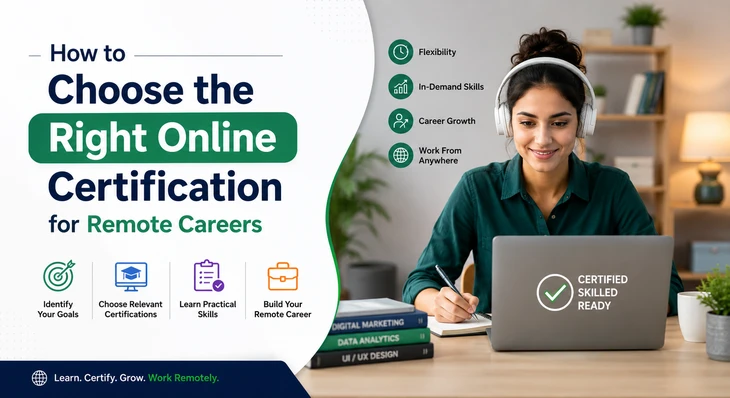
Remote work has quietly shifted from being a “nice option” to a real career direction for millions of professionals. Whether it’s tech, marketing, design, or support roles, companies are now hiring talent based on skills rather than location. And this is exactly where online certifications for remote careers are making a real difference. But here’s the truth—having access to thousands of courses doesn’t automatically make the decision easy. In fact, most people feel stuck because everything looks useful. The real challenge is not finding a certification, but finding the right one that actually helps you build a remote-ready career. This guide will help you figure that out in a simple, practical way—without confusion or overwhelming jargon.Why Online Certifications Matter More Than Ever for Remote Work
Remote companies care less about traditional degrees and more about what you can actually do. When teams are distributed across countries and time zones, they rely on proof of skills rather than assumptions. That’s where online learning certifications become powerful. They help you:- Show employers you understand real tools used in the industry
- Build confidence when applying for remote roles
- Shift into a new career without going back to college
- Strengthen freelance profiles for platforms like Upwork or Fiverr
Start With One Simple Question: What Do You Actually Want?
Before jumping into any course, pause for a moment. This step saves people the most time—and money. Ask yourself:- Do I want a stable remote job or the flexibility of freelance work?
- Am I switching careers or upgrading my current skills?
- Which field actually interests me enough to stay consistent?
Common Remote Career Directions You Can Explore
You don’t need to rush, but here are some strong and in-demand paths:- Web development and software engineering
- Digital marketing and SEO roles
- UI/UX and product design
- Data analytics and business intelligence
- Virtual assistance and customer support
- Project coordination and operations roles
Don’t Just Pick Popular Courses—Pick Relevant Ones
A big mistake many learners make is choosing certifications just because they’re trending. Popular doesn’t always mean useful for your goal. A better approach is to focus on relevance. Look for certifications that:- Are recognized by employers in your target industry
- Teach skills that match real job descriptions
- Include hands-on projects instead of just theory
Always Check What You’ll Actually Learn
A course title can sound impressive, but the real value is in the syllabus. Before enrolling, check:- Are there real-world projects included?
- Will you learn the actual tools used in companies?
- Does it teach problem-solving or just theory?
Platform Reputation Still Matters
Not all platforms carry the same weight in the job market. Some are highly trusted, while others are more casual learning spaces. Trusted learning platforms include:- Coursera
- edX
- LinkedIn Learning
- Google Digital Garage
Quick way to judge credibility:
- Check learner reviews carefully
- Look at whether companies recognize the certification
- See if the course has been updated recently
Flexibility Can Make or Break Your Learning Journey
Many people underestimate this, but flexibility is one of the most important factors when choosing an online certification. Think about:- How many hours can you realistically study each week?
- Do you prefer structured deadlines or self-paced learning?
- Can you stay consistent for weeks or months?
Skills Matter More Than Certificates Alone
A certificate is helpful, but it’s not the final goal. What really matters is what you can do after completing it. Employers hiring for remote careers look for:- Practical experience
- Portfolio work
- Ability to solve real problems
- Communication and independence
Certifications That Support Your Career Growth
Some programs go beyond teaching—they actively support your job journey. These extra features can be a big advantage:- Resume-building guidance
- Interview preparation sessions
- Career mentorship
- Internship or job placement support
Mistakes You Should Avoid When Choosing Certifications
It’s easy to get overwhelmed and make rushed decisions. Here are some common mistakes:- Enrolling in too many courses at once
- Choosing a certification without checking the job demand
- Ignoring hands-on practice
- Switching paths too quickly without completing anything
A Real-Life Example That Makes It Clear
Imagine you want to work remotely in digital marketing. Instead of randomly picking courses, you take a focused approach:- Start with Google Digital Marketing Certification
- Add SEO training with practical tools like Google Analytics
- Build a small blog or social page to apply your skills
Where Online Certifications Are Heading Next
The future of learning is becoming more practical and skill-driven. We’re already seeing:- Short skill-based certifications replacing long courses
- AI-assisted personalized learning paths
- More employer-recognized micro-certifications
- Hybrid programs combining technical + soft skills