How to Enter the Renewable Energy Supply Chain
Introduction
The shift toward clean energy isn’t something happening in the background anymore—it’s right in front of us. Solar farms are expanding across dry landscapes, wind turbines are becoming a familiar sight near coastlines, and battery storage systems are now a core part of how electricity is managed.
Behind all of this sits a complex network that rarely gets attention: the renewable energy supply chain.
If you’re trying to understand how to enter the renewable energy supply chain, it helps to see it less like a strict career ladder and more like a working ecosystem. People move into it from logistics, procurement, engineering support, project coordination, and even unrelated industries. What really matters is how well you can understand systems, solve practical problems, and stay adaptable as projects move across countries and timelines.
This guide breaks it down in a straightforward, real-world way so you can see where you might fit without overcomplicating the process.
Understanding What the Renewable Energy Supply Chain Actually Is
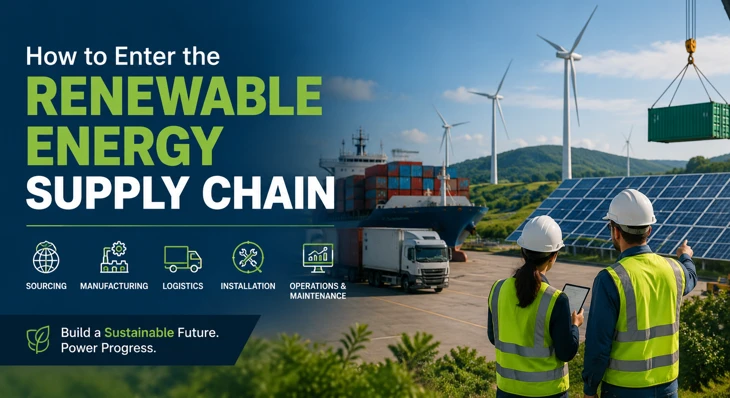
At its core, the renewable energy supply chain is simply the journey of turning raw materials into functioning energy systems—and keeping them running efficiently once they are installed.
But in reality, it’s a lot more layered than that.
It begins with sourcing materials like lithium for batteries, silicon for solar panels, and steel for turbine structures. These materials often come from different parts of the world, which means coordination starts very early in the process.
From there, manufacturing takes over. This is where raw inputs are turned into usable components—solar modules, wind turbine blades, inverters, and storage systems. Each piece must meet strict performance expectations, as even small defects can affect entire energy projects later on.
Then comes one of the most challenging parts: logistics.
Moving renewable energy equipment is not like shipping standard goods. A single turbine blade can be over 60 meters long. Transporting it may involve special trailers, route planning, permits, and sometimes even temporary road modifications. This is where supply chain professionals spend much of their time solving unexpected problems.
After delivery, installation teams step in. They coordinate engineers, site managers, and contractors to assemble and commission the systems. Timing matters a lot here because delays can affect energy production schedules and investor commitments.
Finally, operations and maintenance ensure everything continues to run smoothly. Monitoring systems track performance, detect faults, and help teams respond quickly when something goes off track.
Once you see all these stages together, it becomes clear why this field is growing so quickly—it connects engineering, logistics, data, and sustainability in one continuous flow.
Why So Many Professionals Are Moving Into This Industry
There’s a noticeable shift happening in the job market. People are not just looking for stable work anymore—they want meaningful work that is also long-term relevant.
The renewable energy supply chain offers exactly that combination.
Instead of working in isolated processes, you become part of something larger: building infrastructure that supports cleaner energy and reduces dependence on fossil fuels.
A few reasons this industry continues to attract professionals include steady global investment in renewable energy, expanding infrastructure projects across continents, and the growing need for skilled coordination in large-scale systems.
But beyond numbers and demand, there’s another factor: visibility of impact. It’s easier to see the outcome of your work when a solar farm you helped support starts generating electricity for thousands of homes.
Skills That Help You Break Into the Field
One of the most misunderstood parts of entering this industry is the assumption that you need highly specialized technical knowledge from day one. In reality, many roles rely more on structured thinking and coordination skills.
If you already have experience in supply chain management, logistics, procurement, or operations, you’re already closer than you think.
Understanding how goods move from one point to another, how inventory is managed, and how suppliers are evaluated translates well into renewable energy projects.
Technical awareness helps too, but it doesn’t need to be deep. Knowing how solar panels convert sunlight into energy or how wind turbines generate electricity is often enough to communicate effectively with engineering teams.
Project coordination is another major skill. Renewable energy projects involve multiple stakeholders, often across different countries and time zones. Keeping timelines aligned and avoiding miscommunication becomes extremely important.
Then there’s problem-solving. Things rarely go exactly as planned in this industry. Weather delays, transport disruptions, or supplier shortages can quickly shift schedules. The ability to stay calm and adjust plans is highly valued.
And finally, communication. Clear updates and accurate documentation can prevent delays that might otherwise cost significant time and money.
Educational Backgrounds and Learning Paths
There is no single entry route into the renewable energy supply chain, which is one of its biggest advantages.
People enter through degrees in supply chain management, engineering, business administration, environmental science, or operations. But degrees are not the only pathway.
Many professionals build their foundation through certifications such as project management programs, supply chain certifications, or courses in renewable energy fundamentals.
Short online courses have also become a popular entry point. They allow beginners to understand key concepts like energy systems, logistics planning, and sustainable sourcing without committing to long academic programs.
What matters most is how well you can connect what you learn to real-world situations.
Entry-Level Roles That Open the Door
Starting out in this industry doesn’t require a senior position. In fact, most careers begin with support roles that build practical experience.
You might start as a logistics coordinator, where you track shipments and help manage transportation schedules for equipment moving across regions.
Or you might join as a procurement assistant, helping teams evaluate suppliers, manage purchase orders, and support sourcing decisions.
Supply chain analyst roles focus more on data—tracking performance, identifying delays, and improving efficiency.
Project support roles are also common entry points, especially in large renewable energy companies. These positions involve assisting engineers and project managers with documentation, scheduling, and coordination tasks.
Operations support roles focus on what happens after installation, ensuring systems continue to perform efficiently.
Each of these roles shapes a different aspect of your experience, but all of them lead to a deeper understanding of how the industry functions.
A Practical Way to Enter the Renewable Energy Supply Chain
Instead of trying to plan everything at once, it helps to think in stages.
Start by learning the basics of renewable energy systems. You don’t need deep technical knowledge—just enough to understand how solar, wind, and storage systems work together.
Next, connect your existing skills to potential roles. Someone with logistics experience might lean toward transportation planning, while someone with strong analytical skills might explore supply chain analysis.
After that, focus on building targeted skills through short courses or certifications. Even a few months of focused learning can make a noticeable difference in job applications.
Real-world exposure is equally important. Internships, entry-level roles, or project-based work can give you insights that no course can fully replicate.
Networking also plays a quiet but powerful role. Many opportunities come through conversations, referrals, or industry events rather than open job postings.
Finally, consistency matters. Breaking into a new industry often takes time, but steady effort usually pays off.
Challenges You Should Be Prepared For
Like any global industry, renewable energy supply chains come with real challenges.
Large-scale coordination across countries can complicate communication. A delay in one region can affect an entire project timeline.
Transporting oversized equipment requires careful planning, and even small disruptions can cause setbacks.
Technology evolves quickly, so continuous learning is part of the job, not an optional extra.
Regulatory requirements also vary from country to country, making compliance a constant consideration.
Despite these challenges, the demand for skilled professionals continues to rise because the industry depends on people who can manage exactly these complexities.
Future Trends Shaping the Industry
The renewable energy supply chain is changing quickly, driven by innovation and global sustainability goals.
Digital tools and automation are improving how companies forecast demand and manage logistics. This reduces manual errors and improves efficiency.
Sustainable sourcing is becoming a priority, with companies paying closer attention to how and where materials are extracted.
Energy storage is also gaining importance. Batteries are no longer a supporting component—they are becoming central to energy systems.
At the same time, international collaboration is increasing as countries work together on large renewable projects.
These trends suggest that the industry will continue expanding, creating new opportunities for professionals who are ready to adapt.
FAQs
What does the renewable energy supply chain include?
It includes sourcing raw materials, manufacturing components, transporting equipment, installing systems, and maintaining renewable energy projects.
Do I need an engineering background to enter this field?
Not necessarily. Many roles focus on logistics, procurement, analysis, and coordination rather than technical engineering work.
What is the best way to start a career in this industry?
Entry-level roles in logistics, procurement, or project support are often the most accessible starting points.
Are remote roles available in this sector?
Yes, especially in planning, analysis, and coordination functions, depending on the organization.
Is this a growing career path?
Yes. Renewable energy is one of the fastest-growing global industries, with strong long-term demand.
Conclusion
Building a career in the renewable energy supply chain is less about following a fixed path and more about understanding how to position your skills in a growing ecosystem.
There is space for different backgrounds, different strengths, and different ways of working. What matters most is starting with clarity, building experience step by step, and staying open to learning as the industry evolves.
Over time, even entry-level roles can grow into meaningful careers that contribute to one of the most important global transitions of this era.