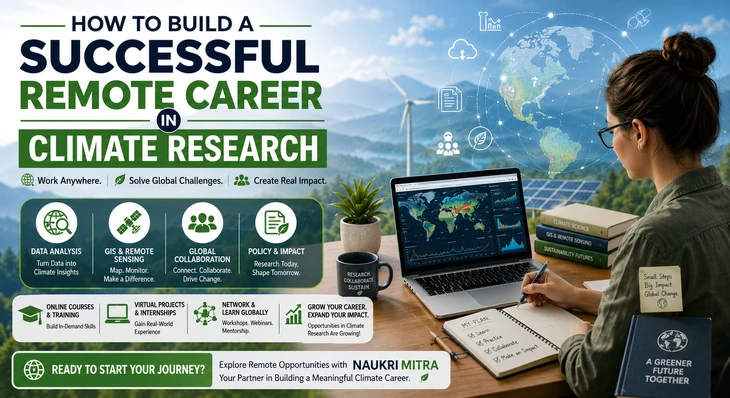
How to Build a Successful Remote Career in Climate Research

How to Build a Successful Remote Career in Climate Research

Introduction

Ever wondered how some people contribute to fighting climate change without stepping into a traditional lab? If you’re passionate about environmental science but dread long commutes, you’re not alone. Virtual climate research pathways let you make a real impact from anywhere. You can analyze global climate data, participate in online collaborations, and explore projects that connect researchers worldwide.

At the start, it’s normal to feel overwhelmed. Tackling geospatial analysis in climate studies or learning data modeling might seem daunting. But by taking small, structured steps, you can enter environmental research positions and gradually build global experience. Online communities and collaborative platforms are your allies, providing guidance and networking opportunities along the way.

There’s a growing need for professionals in climate innovation and technology. Whether your focus is sustainability research, policy-focused climate projects, or project management in environmental science, there’s room to grow. Begin by mastering fundamental research skills, then layer in collaboration tools and hands-on projects—this approach makes your profile immediately more compelling.

Real Experiences & Storytelling

Here’s a story: Dr. Emily Lopez started as a research intern in environmental science. She slowly added virtual projects to her portfolio and now leads climate data analysis teams spread across continents. Jason Kumar, a sustainability researcher, began by joining online workshops focused on climate modeling. Those workshops turned into a policy-focused climate project role.

Sarah Alston, a GIS specialist, first analyzed satellite images for local projects. Over time, she contributed to mapping and remote sensing for environmental research spanning multiple countries. Her work was eventually published in international journals. The key takeaway? Success in virtual climate research pathways stems from strategic skill-building and collaboration, not luck. Attending online workshops and conferences provides mentorship and insights you can’t get on your own.

Michael Tan took professional training online and began monitoring environmental data in Southeast Asia. The entire project was remote, requiring coordination across time zones. It was chaotic at first, but the experience honed his technical and teamwork skills, leading him to lead global climate innovation initiatives.

Overcoming Initial Challenges

Ever wondered why beginners often struggle in online climate research roles? Part of the challenge is balancing technical skills with networking. Can you lead a remote team for climate modeling? Are you comfortable managing environmental monitoring tasks virtually?

Start with high-demand skills, then integrate collaboration tools like Slack, Trello, or Zoom. Even learning to draft policy briefs or research papers can make you stand out. Small internships or online projects are perfect for gaining real experience without the stress of a full-time role.

Networking matters as much as technical skills. Virtual workshops, webinars, and online communities let you connect with peers and mentors. By contributing to data visualization projects or climate research report writing, you can showcase your abilities and attract attention for policy-focused or international sustainability projects.

Practical Tips and Spoken Advice

Start small—maybe track local weather patterns first. It sounds simple, but it builds confidence and shows you the rhythm of working remotely.

You don’t need to master everything at once. Focus on what’s relevant to your chosen path. Online courses in GIS, climate modeling, and report writing can accelerate your learning. Consistent, short practice sessions are more effective than sporadic deep dives.

Empathy and Encouragement

Feeling uncertain is normal. You might ask, ā€œCan I really contribute to climate research online?ā€ Many have felt the same way. Remote work can feel isolating, but global projects thrive on teamwork. Joining virtual initiatives and mentorship programs helps build confidence and progress steadily.

With so many roles—policy-focused climate projects, geospatial analysis, environmental monitoring—it’s easy to feel lost. Small actions, like contributing to open-source tools or attending a webinar, accumulate into a meaningful experience. Mentors and online communities provide guidance and support, making the journey less intimidating.

Relatable Comparisons

Think of it like a school science project, but on a global scale. Instead of classmates, you’re collaborating with international researchers. You might manage climate policy research tasks remotely, attend workshops online, and coordinate efforts using digital tools. The structure is familiar; the impact is global.

Remember your first university group project? Coordinating tasks and presenting findings seemed tricky. Now imagine doing that with experts across continents. The skills—organization, communication, problem-solving—remain the same. What changes is the scale and the potential impact of your work.

Actionable Insights

Here’s the thing: practical application beats theory alone. Learn to handle climate datasets, use geospatial tools effectively, and write reports or policy briefs. Focusing on real projects helps you grow in virtual climate research pathways and sustainability roles.

Instead of simply learning climate modeling tools, dive into CMIP6 or WRF. Interpret outputs, compare scenarios, and integrate results into projects. Practice climate research report writing by drafting papers or policy briefs. Online platforms provide datasets, collaboration opportunities, and funding that let you put skills into action.

Essential Skills, Tools, and Insights

Data analysis is critical. Using Python, R, or MATLAB allows you to model climate patterns and predict trends—skills that make you valuable in online climate projects. Climate modeling tools like CMIP6, WRF, or HadGEM help test scenarios and assess potential impacts. GIS and remote sensing skills let you map environmental changes accurately using ArcGIS, QGIS, or Google Earth Engine.

Communication matters. Drafting reports, research papers, or policy briefs ensures your findings reach the right audience. Tools like Slack, Trello, Zoom, and Miro help remote teams stay connected. Attending virtual conferences allows you to network and share work globally. Data visualization with Tableau or Python libraries turns complex data into understandable insights. Knowing about funding opportunities also helps expand projects and portfolios.

Project management for remote teams, environmental policy analysis positions, and familiarity with open-source tools round out the skills needed to thrive in global climate research projects.

Career Outlook and Future Opportunities

Opportunities in climate research are growing. Platforms like Naukri Mitra show rising demand for professionals skilled in global climate data analysis, policy-focused projects, and sustainability work. As research becomes more data-driven, expertise in GIS, modeling, and visualization is increasingly valuable.

Growth is strong in modeling tool development, environmental monitoring, and climate innovation. Professionals skilled in report writing and remote collaboration are in high demand. Virtual workshops and conferences accelerate learning, networking, and collaboration. Remote pathways also allow leadership, mentorship, and strategic roles in environmental science.

Step-by-Step Guide to Start Your Remote Career

Starting your online climate research journey is easier with clear steps:

Begin by identifying your focus—modeling, data analysis, geospatial work, policy projects, or environmental monitoring. Next, build core skills through online courses and professional training. Gain hands-on experience by joining internships or virtual projects, and contribute to open-source tools whenever possible.

Network through online workshops, webinars, and virtual conferences to connect with peers and mentors. Leverage trusted platforms like Naukri Mitra to find online opportunities. Practice climate research report writing and data visualization to communicate your work effectively. Stay informed about emerging trends and funding. Maintain a portfolio of projects and seek guidance from experienced professionals in virtual project management and policy-focused climate projects.

These steps help transition from beginner to expert in global climate research pathways.

Conclusion and Call-to-Action

Virtual climate research pathways are real, impactful opportunities for committed individuals. By focusing on data analysis, geospatial mapping, modeling, and collaboration, you can engage in high-impact work. Participating in online projects and using digital platforms strengthens skills and global connections.

If you’re ready to take the next step, explore opportunities today with Naukri Mitra. Whether you aim to contribute to sustainability projects, climate policy analysis, or environmental monitoring, the guidance and resources are accessible. Start your journey in working remotely in environmental science now—the global research community is waiting for your expertise.

Share this article:
Previous Post: How Solar Startups Are Creating Global Career Opportunities

October 17, 2025 - In Green Tech and Sustainability

Next Post: The Role of Electric Mobility in Job Creation Worldwide

October 17, 2025 - In Green Tech and Sustainability

Related Posts

Leave a Reply

Your email address will not be published.