📚 Table of Contents
- A New Chapter for Eco-Friendly Architecture
- Why Remote Work Fits Naturally Into Sustainable Design
- Collaboration Without Borders
- Technology Makes It Seamless
- A Surprisingly Sustainable Work Model
- Career Paths in Remote Eco-Friendly Architecture and Design
- Sustainable Design Architect
- Green Building Consultant
- BIM Specialist
- Environmental Design Researcher
- Remote Interior Designer (Sustainability Focus)
- Skills That Matter in This Field
- Technical Design Skills
- Understanding Sustainability
- Communication in a Remote World
- Problem-Solving Mindset
- Where Remote Opportunities Are Growing
- A Realistic Look at Remote Sustainable Design Work
- Benefits of Building a Remote Career in Sustainable Architecture
- Flexibility in Daily Work
- Exposure to Global Projects
- Meaningful Work
- Better Work-Life Balance
- Challenges You Should Be Prepared For
- The Future of Eco-Friendly Architecture and Remote Work
- Conclusion
- FAQs
- 1. What are remote opportunities in eco-friendly architecture and design?
- 2. Do I need a degree in architecture to work in this field?
- 3. What software is commonly used in remote architectural work?
- 4. Is remote work common in sustainable architecture today?
- 5. Can beginners enter this field remotely?
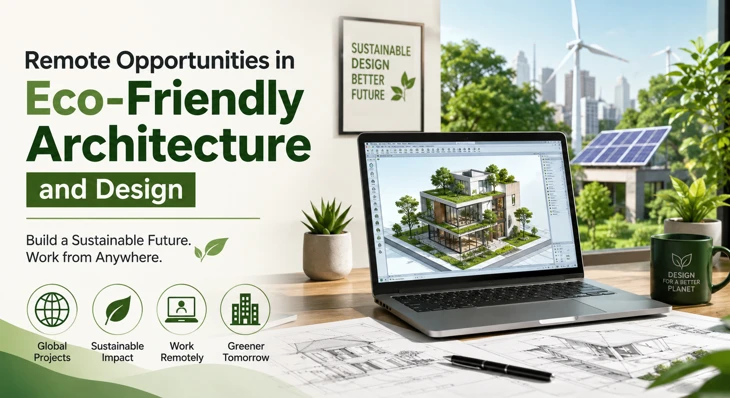
Remote Opportunities in Eco-Friendly Architecture and Design
There’s something quietly powerful happening in the world of architecture right now. Buildings are no longer being designed only for how they look or function today—they’re being shaped around how they impact the planet tomorrow. At the same time, the way professionals work has changed just as dramatically. Offices are no longer the center of creativity they once were. Screens, cloud tools, and global collaboration have taken their place. Put these two shifts together, and a new career space opens up: remote opportunities in eco-friendly architecture and design. This isn’t just a trend. It’s a real shift in how sustainable buildings are imagined, planned, and delivered. And for designers, architects, and creative thinkers, it means one thing—freedom to work on meaningful environmental projects from almost anywhere.A New Chapter for Eco-Friendly Architecture
Eco-friendly architecture is no longer a specialized niche. It has become a baseline expectation in modern construction. Whether it’s a small residential home or a large commercial complex, sustainability is now part of the conversation from day one. At its core, sustainable architecture is about designing spaces that work with nature instead of against it. That might mean reducing energy consumption, improving natural ventilation, choosing low-impact materials, or integrating renewable energy systems. But what’s really changed is how quickly this mindset is spreading. Governments are tightening environmental regulations, companies are committing to net-zero goals, and clients are becoming more aware of long-term energy costs. A few clear forces are pushing this transformation forward:- Growing concern around climate change and carbon emissions
- Demand for energy-efficient homes and workplaces
- Expansion of green certification systems like LEED and BREEAM
- Rapid advancement in digital design and simulation tools
Why Remote Work Fits Naturally Into Sustainable Design
Architecture has always been collaborative, but the way collaboration happens has changed completely. Today, it’s not unusual for a project team to be spread across multiple countries, time zones, and disciplines. And surprisingly, this actually improves sustainable design in many cases.Collaboration Without Borders
Think about a modern eco-friendly building project. You might have an architect in one country, an energy consultant in another, and a BIM specialist in yet another. Instead of flying back and forth, they meet online, share models instantly, and refine designs together in real time. This global collaboration brings in more perspectives and often leads to smarter, more efficient design decisions.Technology Makes It Seamless
None of this would be possible without digital tools. Platforms like BIM software, AutoCAD, SketchUp, and Rhino have completely changed how architectural work is done. Add to that cloud-based collaboration systems, and suddenly teams can work on the same model simultaneously without confusion or delays. Energy simulation tools also play a big role here. They allow designers to test how a building will perform in different climates before it is even constructed.A Surprisingly Sustainable Work Model
Remote work doesn’t just support architecture—it supports its core values. Less travel means lower emissions. Fewer physical meetings reduce resource use. Even digital documentation reduces paper waste. In a way, remote work naturally aligns with eco-friendly architecture and design principles.Career Paths in Remote Eco-Friendly Architecture and Design
One of the most exciting things about this field is how many different roles it offers. Not everyone is designing entire buildings from scratch. Some are analyzing data, others are modeling structures, and some are focused entirely on sustainability strategy.Sustainable Design Architect
These professionals focus on creating buildings that balance beauty, function, and environmental responsibility. They consider sunlight, airflow, insulation, and energy systems at every stage of the design process.Green Building Consultant
A green building consultant helps projects meet environmental standards. They guide teams on material selection, energy efficiency, and compliance with sustainability certifications.BIM Specialist
Building Information Modeling specialists are the backbone of modern architectural projects. They create detailed digital representations of buildings, helping teams understand how every element will perform before construction begins.Environmental Design Researcher
These professionals dig deep into climate data, materials science, and urban development trends. Their insights help shape better design decisions across projects.Remote Interior Designer (Sustainability Focus)
Interior designers in this space work with eco-friendly materials, low-waste concepts, and energy-conscious layouts. Many collaborate with clients entirely through virtual presentations and 3D walkthroughs.Skills That Matter in This Field
Success in remote eco-friendly architecture isn’t just about knowing software. It’s about combining technical ability with environmental awareness and clear communication.Technical Design Skills
You need to be comfortable working with tools like CAD software, BIM platforms, and 3D modeling applications. These are the foundations of modern architectural work.Understanding Sustainability
Knowing how buildings affect the environment is just as important as knowing how they are built. This includes understanding:- Energy efficiency principles
- Passive heating and cooling strategies
- Renewable energy integration
- Sustainable materials and lifecycle impact