📚 Table of Contents
- Why OTT Platforms Need More Scriptwriters Than Ever
- What Does a Scriptwriter for OTT Platforms Actually Do?
- Creating Original Stories
- Writing Episodic Content
- Adapting Existing Material
- Working With Creative Teams
- Rewriting and Polishing Scripts
- Essential Skills Needed for OTT Scriptwriting
- Creating Original Stories
- Writing Episodic Screenplays
- Adapting Existing Content
- Collaborating With Production Teams
- Revising Scripts
- Essential Skills Needed for OTT Scriptwriting
- Storytelling Skills
- Understanding Screenplay Structure
- Writing Natural Dialogue
- Research and Observation
- Discipline and Adaptability
- How Beginners Can Learn Scriptwriting for OTT Platforms
- Watch Shows More Carefully
- Read Screenplays Instead of Only Watching Shows
- Practice Small Scenes First
- Learn Basic Screenplay Formatting
- Build a Writing Routine
- Building a Portfolio for OTT Scriptwriting Jobs
- Include Multiple Writing Samples
- Focus on Original Ideas
- Create a Professional Online Presence
- Where to Find Remote Scriptwriting Opportunities
- Freelance Platforms
- Networking With Filmmaking Communities
- Pitching Story Ideas
- Using Social Media Strategically
- Challenges of Starting a Career in OTT Scriptwriting
- Rejection Can Feel Personal
- Competition Is Real
- Deadlines Can Become Stressful
- Financial Stability Takes Time
- Practical Tips for Starting Your Remote Creative
- Start With One Genre
- Observe Real Conversations
- Learn Visual Storytelling
- Accept Feedback Without Defensiveness
- Keep Writing Even Without Immediate Success
- A Realistic Example of How Writers Enter the OTT Industry
- Why Remote Creative Careers Are Growing Fast
- Future Scope of OTT Scriptwriting
- FAQs
- How do I start scriptwriting for OTT platforms with no experience?
- Do I need professional training to become a scriptwriter?
- Can scriptwriting become a remote career?
- Which genres perform well on OTT platforms?
- What software is commonly used for screenplay writing?
- How long does it take to become successful in OTT scriptwriting?
- Conclusion
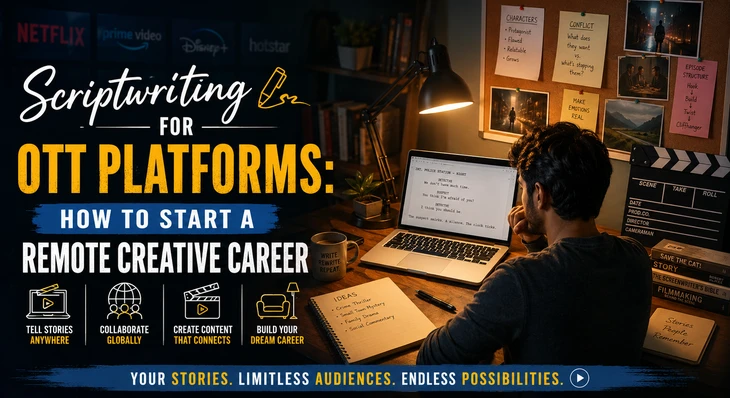
Scriptwriting for OTT Platforms: How to Start a Remote Creative Career
Streaming entertainment has completely reshaped the way stories are created and consumed. A few years ago, aspiring writers often believed they had only one option — move to a major entertainment city, build industry contacts, and hope someone noticed their work. That path still exists, but OTT platforms have opened another door. Today, writers from small towns, remote locations, and even different countries are contributing to web series, streaming films, and digital shows without ever stepping into a traditional studio office. The rise of Netflix-style entertainment has created a steady demand for fresh scripts, engaging characters, and emotionally driven storytelling. For creative people who enjoy writing stories, building scenes, and imagining cinematic moments, scriptwriting for OTT platforms can become a realistic remote creative career. The industry is competitive, but it is also more accessible than ever before. Production companies now collaborate online, conduct virtual writers’ rooms, and hire freelance scriptwriters for projects across genres. If you have been thinking about entering the entertainment space, this guide will help you understand how OTT scriptwriting works, what skills matter most, and how beginners can start building a career from home.Why OTT Platforms Need More Scriptwriters Than Ever
A few years ago, television schedules controlled what people watched. Now, viewers open an app and choose exactly what they feel like watching at that moment. That simple shift changed the entertainment business completely. Streaming platforms are under constant pressure to release new content. If audiences lose interest, they quickly move to another platform. Because of that, production companies are always searching for fresh stories and writers who can bring something different to the screen. This is one of the biggest reasons scriptwriting for OTT platforms has become such a popular creative career option. Writers today are contributing to:- Web series
- Streaming films
- Mini-series
- Documentary scripts
- Audio-visual storytelling projects
- Regional-language productions
- Youth-focused digital content
What Does a Scriptwriter for OTT Platforms Actually Do?
When people hear the word “scriptwriter,” they often imagine someone typing dramatic dialogues late at night with coffee beside a laptop. The reality is far more layered than that. An OTT scriptwriter helps shape the emotional and visual experience of a show from the ground up. Some days involve writing scenes. Other days are spent fixing pacing issues, discussing character motivations, or rewriting moments that no longer feel believable. The work changes from project to project.Creating Original Stories
Some writers begin with a completely blank page. They develop the core idea, set the show's tone, build the characters, and figure out how the story unfolds episode by episode. For example, a thriller writer may spend more time planning suspense than actually writing dialogue.Writing Episodic Content
OTT storytelling depends heavily on episode structure. Every episode needs movement. Something important must happen emotionally, visually, or dramatically. If an episode feels flat, viewers may stop watching. That is why writers focus so carefully on pacing and endings.Adapting Existing Material
Not every streaming show starts as an original screenplay. Many projects are adapted from books, articles, podcasts, or even true events. In those situations, the writer’s job is to reshape the material into something cinematic and engaging.Working With Creative Teams
Writing for OTT platforms is highly collaborative. Directors may request changes. Producers may shorten scenes. Editors may suggest restructuring certain sequences. A good writer learns how to improve the script without losing the heart of the story.Rewriting and Polishing Scripts
Most scripts go through multiple drafts. Sometimes a scene looks great on paper but feels weak during production discussions. Other times, practical issues like budgets or locations force rewrites. Professional writers understand that rewriting is not failure. It is part of the process.Essential Skills Needed for OTT Scriptwriting
Many beginners assume scriptwriting simply means writing dialogues, but the work goes much deeper. A professional OTT scriptwriter helps shape the entire viewing experience. Depending on the project, responsibilities may include:Creating Original Stories
Some writers develop completely new concepts for streaming platforms. This includes building the plot, designing character arcs, and structuring episodes. For example, a crime thriller writer may spend weeks planning how clues are revealed across multiple episodes to keep viewers engaged.Writing Episodic Screenplays
OTT content often follows episodic storytelling. That means writers must maintain continuity, emotional progression, and pacing across several episodes rather than in a single film. A strong episode ending matters because viewers should feel motivated to continue watching.Adapting Existing Content
Many successful streaming shows are based on:- Books
- Podcasts
- Real events
- International formats
- Short stories
Collaborating With Production Teams
Scriptwriting is rarely a solo process. Writers regularly communicate with directors, producers, editors, and researchers. In remote creative careers, this collaboration usually happens through online meetings and cloud-based tools.Revising Scripts
Rewriting is part of the industry. Scenes may change due to budget constraints, audience testing, production timelines, or creative direction. Writers who accept feedback professionally usually build stronger long-term careers.Essential Skills Needed for OTT Scriptwriting
You do not necessarily need a film school degree to become a successful OTT writer. However, certain skills can make a major difference.Storytelling Skills
Every successful streaming show starts with compelling storytelling. Viewers stay invested when characters feel believable and emotionally layered. Strong storytellers know how to:- Create emotional tension
- Build conflict naturally
- Write memorable characters
- Maintain suspense
- Balance pacing
- Deliver satisfying endings
Understanding Screenplay Structure
Screenplays follow a professional format. Learning screenplay structure helps writers communicate clearly with production teams. Most scripts include:- Scene headings
- Action descriptions
- Character names
- Dialogues
- Scene transitions
Writing Natural Dialogue
Dialogue is one of the biggest strengths of modern OTT shows. People no longer enjoy conversations that sound overly dramatic or artificial. Good dialogue feels realistic. Characters should speak differently based on:- Personality
- Background
- Age
- Emotional state
- Environment
Research and Observation
Strong writers observe people carefully. They notice:- Human behavior
- Everyday conversations
- Emotional reactions
- Social patterns
- Cultural details
Discipline and Adaptability
Remote scriptwriting jobs require self-management. Writers often handle deadlines independently while juggling revisions and multiple projects. Adaptability is equally important because production requirements can change quickly.How Beginners Can Learn Scriptwriting for OTT Platforms
A lot of aspiring writers spend too much time waiting for the “perfect” moment to start. In reality, most writers improve by consistently creating imperfect work. Nobody writes an excellent screenplay on day one. The important thing is building storytelling habits.Watch Shows More Carefully
Watching OTT content casually and studying it as a writer are completely different experiences. Next time you watch a web series, pause occasionally and ask yourself:- Why did this scene feel emotional?
- Why did the dialogue sound natural?
- Why did the episode's ending create curiosity?
- Why does this character feel memorable?
Read Screenplays Instead of Only Watching Shows
Many beginners skip this step, but reading scripts is incredibly useful. You start to understand how scenes are described before they appear on screen. You also notice how professional writers keep action lines short, clean, and cinematic. Over time, reading screenplays naturally improves structure.Practice Small Scenes First
Writing an entire eight-episode series immediately can become overwhelming. A better starting point is to write about smaller moments. For example:- A tense conversation between two strangers
- A breakup scene
- A comedy misunderstanding
- A suspenseful interrogation
- A family argument
Learn Basic Screenplay Formatting
Formatting may sound boring at first, but it matters professionally. A properly formatted script is easier for directors, actors, and producers to read. Thankfully, modern tools like Celtx and WriterDuet simplify most of the technical work.Build a Writing Routine
Many beginner writers depend too much on inspiration. Professional writers depend more on consistency. Even writing for thirty minutes daily can improve storytelling skills over time. The habit matters more than occasional bursts of motivation.Building a Portfolio for OTT Scriptwriting Jobs
In creative industries, portfolios matter more than traditional resumes. Production companies want proof that a writer can create engaging stories.Include Multiple Writing Samples
A strong portfolio may contain:- Short film scripts
- Pilot episodes
- Dialogue samples
- Story outlines
- Character profiles
- Adaptation samples
Focus on Original Ideas
Originality matters heavily in OTT content writing. Instead of copying popular shows, focus on experiences, emotions, or cultural settings that feel genuine. For example:- A small-town mystery
- A remote-work comedy
- A relationship drama built around social media
- A regional thriller inspired by local folklore
Create a Professional Online Presence
Many writers are discovered online. Maintaining a professional presence on platforms like LinkedIn or portfolio websites can help attract collaborations. Writers sometimes share:- Scene snippets
- Short scripts
- Story ideas
- Dialogue samples
- Creative writing threads
Where to Find Remote Scriptwriting Opportunities
Remote creative careers are growing rapidly in entertainment. Production companies frequently hire freelance writers for digital content projects.Freelance Platforms
Many freelance marketplaces feature projects related to:- Web series writing
- Short film scripts
- YouTube storytelling
- OTT content development
- Dialogue writing
Networking With Filmmaking Communities
Networking remains valuable in the entertainment industry. Writers can join:- Screenwriting forums
- Film communities
- Virtual workshops
- Independent filmmaker groups
- Creative networking events
Pitching Story Ideas
Writers can also pitch directly to production houses and independent creators. A good pitch usually explains:- The story concept
- Main characters
- Genre
- Audience appeal
- Episode structure
Using Social Media Strategically
Some writers gain recognition by consistently posting short creative content online. This might include:- Mini scenes
- Dialogue snippets
- Storytelling threads
- Character concepts
- Short visual scripts
Challenges of Starting a Career in OTT Scriptwriting
Creative careers can look exciting from the outside, but the early phase often feels uncertain. Many writers struggle with self-doubt before they gain confidence in their work. That experience is normal.Rejection Can Feel Personal
Scripts are deeply creative works, so rejection can feel emotional. But in entertainment, rejection happens for countless reasons unrelated to talent. A platform may already have a similar project in development. Budgets may shift. Audience trends may change unexpectedly. Writers who survive long-term learn not to treat every rejection as a final judgment.Competition Is Real
The growth of streaming platforms has encouraged more people to enter the field. That means competition is stronger now than it was years ago. However, many writers still stand out through:- Original storytelling
- Consistent writing habits
- Distinct dialogue
- Professional communication
- Strong emotional depth
Deadlines Can Become Stressful
OTT production schedules move quickly. Sometimes writers are asked to revise scenes overnight or adjust scripts within very short timelines. Balancing creativity with deadlines becomes part of the job.Financial Stability Takes Time
One of the hardest parts of freelance creative careers is unpredictability. Many writers spend the early phase combining multiple income sources while building experience. That might include:- Content writing
- YouTube scripting
- Editing work
- Freelance storytelling projects
- Dialogue writing assignments
Practical Tips for Starting Your Remote Creative
Building a sustainable writing career takes consistency more than perfection.Start With One Genre
Trying every genre immediately can become overwhelming. Choose one area you genuinely enjoy, such as:- Thriller
- Romance
- Comedy
- Horror
- Drama
- Documentary storytelling
Observe Real Conversations
Natural dialogue comes from observation. Pay attention to how people actually speak in different situations. Real conversations include:- Interruptions
- Pauses
- Humor
- Subtext
- Emotional reactions
Learn Visual Storytelling
Screenwriting is different from novel writing. Instead of explaining emotions directly, writers show emotions through:- Body language
- Actions
- Reactions
- Silence
- Scene details
Accept Feedback Without Defensiveness
Most professional scripts go through multiple revisions. Feedback helps writers identify weak pacing, confusing scenes, or unnecessary dialogue. Improvement usually comes through rewriting.Keep Writing Even Without Immediate Success
Creative careers often grow slowly. Many successful writers spent years developing skills before landing larger projects. Consistency matters more than instant results.A Realistic Example of How Writers Enter the OTT Industry
Imagine someone who starts by writing short thriller scenes and posting them online. An independent creator notices the writer's writing style and invites them to collaborate on a low-budget web project. That project leads to small freelance assignments, which later build into stronger industry contacts. Eventually, the writer contributes to a regional web series for a streaming platform. This gradual progression is extremely common. Most OTT scriptwriting careers develop step by step rather than through one breakthrough moment.Why Remote Creative Careers Are Growing Fast
Digital collaboration tools have changed how entertainment teams work. Today, writers can:- Join virtual writers’ rooms
- Share scripts online instantly
- Work with international teams
- Attend remote brainstorming sessions
- Build freelance careers from home
Future Scope of OTT Scriptwriting
The streaming industry continues to expand globally. Platforms are investing heavily in:- Regional-language storytelling
- International collaborations
- Digital-first entertainment
- Documentary content
- Experimental storytelling formats