📚 Table of Contents
- What Does a Creative Director Actually Do?
- Why Remote Creative Careers Are Growing Fast
- Skills That Matter Most in Remote Creative Direction
- Strong Visual Thinking
- Leadership and Team Management
- Clear Communication and Presentation Skills
- Strategic Thinking
- Time Management for Remote Work
- Creating a Portfolio That Global Agencies Actually Notice
- Focus on Problem-Solving
- Show Leadership Experience
- Include International or Diverse Projects
- Keep Your Portfolio Website Simple
- Best Platforms to Find Remote Creative Direction Jobs
- Behance
- Dribbble
- Creative Staffing Platforms
- Building a Strong Personal Brand Online
- Share Your Creative Process Online
- Create Thoughtful Content
- Network Intentionally
- The Less Glamorous Side of Remote Creative Work
- Communication Across Time Zones
- Creative Burnout
- Isolation and Collaboration Gaps
- Real-Life Example of Building a Remote Creative Career
- Ways to Stand Out in a Competitive Global Market
- Develop a Unique Creative Perspective
- Learn Business and Marketing Basics
- Become Reliable
- Where Remote Creative Direction Is Heading Next
- Frequently Asked Questions
- Can you become a creative director without working in a traditional agency?
- What qualifications do global agencies look for in remote creative directors?
- How long does it take to build a remote creative career?
- Which industries hire remote creative directors most frequently?
- Is freelancing a good path toward creative direction?
- Final Thoughts
Creative Direction Online: How to Build a Remote Career in Global Agencies
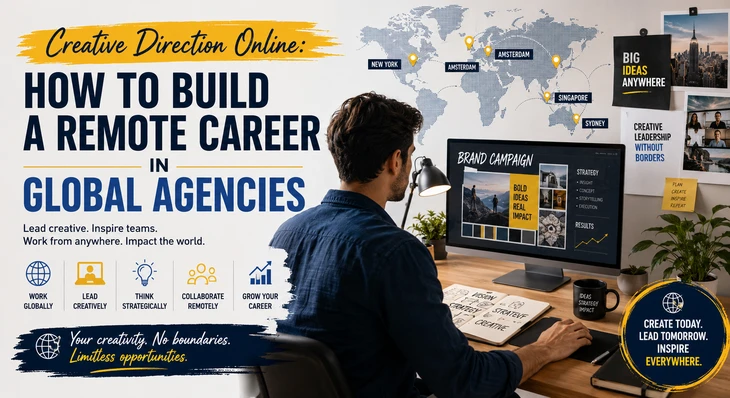
A few years ago, most creative professionals believed that working with top international agencies meant moving to a major city. Places like New York, London, and Amsterdam were seen as the center of the creative world. That idea has changed completely. Today, a talented designer in a small town can collaborate with global brands, lead international campaigns, and build a strong career without leaving home. Remote work has reshaped the creative industry in ways few people expected. Remote work has opened the doors to global collaboration, giving creative professionals access to international clients, better opportunities, flexible schedules, and higher earning potential. Whether you are a graphic designer hoping to transition into leadership or a creative professional looking to work with worldwide brands, building a remote career in creative direction is more achievable than ever. Even with all these opportunities, one challenge remains surprisingly common: getting noticed by global agencies when you are not physically present in the same city or country. The professionals who succeed remotely usually have more than design talent. They know how to communicate ideas clearly, present strategy confidently, and demonstrate to agencies that they can lead creative projects from anywhere. This guide explains how to build a successful remote career in creative direction, what skills global agencies look for, how to attract international clients, and how to stand out in a highly competitive creative industry.What Does a Creative Director Actually Do?
Before building a remote creative career, it is important to understand what creative direction really involves. A creative director oversees the visual and strategic direction of campaigns, brands, and creative projects. Instead of focusing only on design execution, they guide the overall creative vision. In global agencies, creative directors often:- Lead creative teams remotely
- Develop branding strategies
- Manage campaigns for international clients
- Coordinate with copywriters, designers, marketers, and developers
- Present creative concepts to stakeholders
- Ensure consistency across all brand touchpoints
- Solve creative and communication challenges
Why Remote Creative Careers Are Growing Fast
The demand for remote creative professionals increased rapidly after companies realized distributed teams could work efficiently without sacrificing quality. Today, many international agencies actively hire remote creative talent because it allows them to:- Access global expertise
- Reduce operational costs
- Build diverse creative teams
- Operate across multiple time zones
- Scale projects faster
Skills That Matter Most in Remote Creative Direction
A common misconception is that creative directors only create visuals or supervise designers. In practice, the role is much broader. Creative directors shape ideas, guide campaigns, solve communication problems, and help brands connect with audiences in meaningful ways. If you want to work remotely with global agencies, focus on developing these key abilities.Strong Visual Thinking
Creative directors must translate ideas into compelling visual experiences. You should understand:- Branding systems
- Typography
- Layout principles
- Motion design trends
- User experience basics
- Campaign storytelling
- Digital advertising design
Leadership and Team Management
Remote creative leadership requires excellent collaboration skills. You may need to guide:- Designers
- Illustrators
- Editors
- Marketing teams
- Developers
- Social media managers
Clear Communication and Presentation Skills
One of the most overlooked skills in remote creative work is communication. Since global agencies often work through video meetings and messaging platforms, creative directors must explain ideas clearly and confidently. This includes:- Pitch presentations
- Client communication
- Creative feedback
- Project documentation
- Visual storytelling
Strategic Thinking
Creative directors are problem solvers. Global agencies want professionals who understand:- Market positioning
- Brand psychology
- Audience behavior
- Campaign objectives
- Conversion-focused design
Time Management for Remote Work
Remote agency environments move quickly. You may handle multiple clients across different countries simultaneously. Managing deadlines independently becomes critical. Successful remote creatives know how to:- Prioritize tasks
- Organize workflows
- Communicate delays early
- Balance creative energy with productivity
Creating a Portfolio That Global Agencies Actually Notice
Your portfolio is often the first impression international agencies will have of you. One of the biggest mistakes creative professionals make is building portfolios that only show finished visuals. While attractive designs matter, agencies also want to understand the thinking behind the work. Global agencies want to see how you think, not just how you design.Focus on Problem-Solving
Instead of only showing final designs, explain:- The client's problem
- Your creative approach
- The strategy behind the visuals
- The project outcome
- Your role in the process
Show Leadership Experience
If you want remote creative director roles, highlight projects where you:- Led a team
- Directed campaigns
- Managed branding systems
- Oversaw creative strategy
- Coordinated multiple stakeholders
Include International or Diverse Projects
Global agencies often work with multicultural audiences. Showing experience across industries, styles, or international markets can strengthen your positioning significantly. For example, a designer who has worked with ecommerce brands, tech startups, and hospitality companies may appear more adaptable than someone with only one niche.Keep Your Portfolio Website Simple
A complicated portfolio experience can hurt your credibility. Your website should:- Load quickly
- Be mobile-friendly
- Include clear navigation
- Showcase only your best work
- Explain projects clearly
- Include contact information
Best Platforms to Find Remote Creative Direction Jobs
Finding international remote opportunities requires consistency and smart networking. While traditional job boards help, many global agencies hire through creative communities and referrals.- Remote creative director
- Brand strategist
- Art director
- Visual storytelling expert
- Creative lead
- Digital creative consultant
Behance
Behance is still highly valuable for visual professionals. Agencies frequently scout talent directly through:- Branding projects
- Campaign presentations
- Motion graphics work
- UI/UX case studies
Dribbble
Dribbble works especially well for modern digital design and branding professionals. Many startups and international agencies actively recruit remote creatives through the platform.Creative Staffing Platforms
Remote-focused websites also offer opportunities, including:- We Work Remotely
- Working Not Working
- Contra
- Toptal
- Upwork Pro
Building a Strong Personal Brand Online
Your personal brand can influence hiring decisions almost as much as your portfolio. Global agencies want creative leaders who appear confident, professional, and insightful.Share Your Creative Process Online
A large audience is not required to build credibility online. Consistency and clarity matter far more than follower count. Posting consistently about:- Branding strategy
- Design thinking
- Campaign breakdowns
- Creative leadership
- Industry trends
Create Thoughtful Content
Some remote creatives grow their careers through:- Design newsletters
- Creative blogs
- YouTube tutorials
- Portfolio walkthroughs
- Twitter threads
- Instagram case studies
Network Intentionally
Remote creative careers often grow through relationships. Attend:- Online creative conferences
- Design webinars
- Slack communities
- Creative networking groups
- Virtual workshops
The Less Glamorous Side of Remote Creative Work
Remote creative careers offer freedom and flexibility, but they are not always easy. Working across countries and time zones can become exhausting if you do not build healthy systems early. Understanding these early can help you build a more sustainable career.Communication Across Time Zones
Working with global agencies means your clients or team members may be spread across several countries. Clear communication becomes essential. Successful remote creative leaders:- Write detailed updates
- Use project management tools
- Confirm expectations clearly
- Schedule meetings strategically
Creative Burnout
Creative professionals often struggle with overwork in remote environments. Without boundaries, it becomes easy to stay online constantly. To avoid burnout:- Set work hours
- Take screen breaks
- Separate workspace from personal space
- Avoid excessive multitasking
- Prioritize mental recovery
Isolation and Collaboration Gaps
Remote work can sometimes feel isolating. Many creatives miss spontaneous brainstorming sessions and in-person collaboration. To stay connected:- Join creative communities
- Participate in live discussions
- Collaborate on side projects
- Attend virtual events
Real-Life Example of Building a Remote Creative Career
Consider the example of a freelance designer who started by creating branding projects for small local businesses. Instead of only posting finished logos online, they documented their entire process:- Research insights
- Mood boards
- Typography decisions
- Brand positioning strategy
- Final rollout
Ways to Stand Out in a Competitive Global Market
Competition in remote creative work is intense because agencies can hire professionals from almost anywhere. That means technical skills alone are rarely enough to separate you from other applicants. Standing out requires more than strong visuals.Develop a Unique Creative Perspective
Agencies remember creatives with a distinctive point of view. Instead of constantly copying trends, focus on building a recognizable approach to:- Storytelling
- Brand systems
- Campaign thinking
- Visual identity
- User experience
Learn Business and Marketing Basics
Creative directors who understand marketing strategy become more valuable. Learning about:- Customer psychology
- Conversion optimization
- Digital advertising
- Brand positioning
- Consumer behavior
Become Reliable
Reliability is underrated in creative industries. Global agencies appreciate professionals who:- Meet deadlines consistently
- Communicate proactively
- Handle feedback professionally
- Stay organized
- Maintain quality under pressure
Where Remote Creative Direction Is Heading Next
Creative direction is evolving quickly, especially as digital experiences continue to dominate marketing and branding. Agencies are investing more heavily in:- Remote-first teams
- AI-assisted workflows
- Interactive content
- Motion branding
- Virtual collaboration systems
- Global creative partnerships