📚 Table of Contents
- Why More Artists Are Choosing to Teach Art Online
- Skills That Help You Succeed as an Online Art Teacher
- Strong Communication Makes a Huge Difference
- Patience Improves Student Retention
- Basic Technical Skills Are Essential
- Best Art Subjects to Teach Online
- High-Demand Online Art Classes
- How to Start Teaching Art Online
- Decide How You Want to Teach
- Build a Simple Home Setup
- Organize Your Lessons Clearly
- Best Platforms for Teaching Art Online
- Online Teaching Marketplaces
- Social Media Platforms
- Personal Website and Portfolio
- How to Attract International Students for Online Art Classes
- Share Helpful Content Regularly
- Use SEO Keywords Naturally in Your Content
- Offer Low-Risk Trial Lessons
- Ask for Honest Student Feedback
- How Much Should You Charge for Online Art Classes?
- Popular Pricing Models
- Managing Different Time Zones
- Building Your Personal Brand as an Online Art Teacher
- Share Your Creative Process
- Keep Your Visual Style Consistent
- Challenges of Teaching Art Online
- Technical Problems Can Interrupt Lessons
- Keeping Students Engaged Online
- Creative Burnout Is Real
- Real Example of Growing an Online Art Teaching Career
- Additional Ways Online Art Teachers Earn Income
- Sell Digital Art Resources
- Create Membership Communities
- Partner With Art Brands
- Practical Tips for Long-Term Success
- Keep Improving Your Own Artwork
- Prioritize the Student Experience
- Stay Consistent During Slow Periods
- Create a Community Around Your Classes
- Can I teach art online without formal qualifications?
- Which platform is best for teaching art online?
- How much do online art teachers earn?
- Do I need professional equipment to start?
- How can I attract international students?
- Conclusion
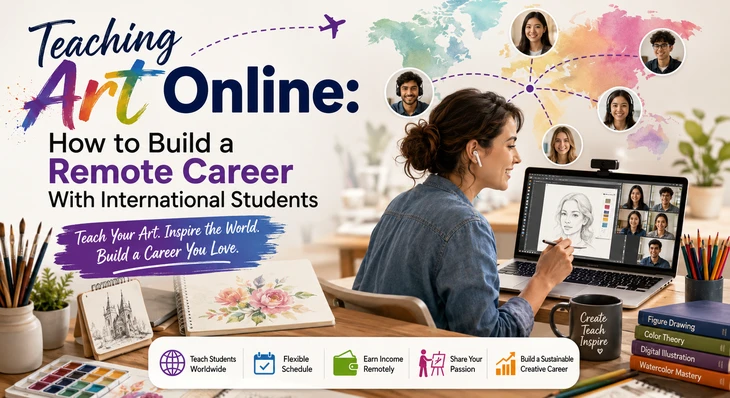
Teaching Art Online: How to Build a Remote Career With International Students
A few years ago, most artists believed teaching required a physical classroom, a local studio, or private in-person sessions. That has changed completely. Today, artists are building successful remote careers by teaching students from different countries without ever leaving home. From digital illustrators and watercolor painters to sketch artists and animation creators, many creative professionals are turning online teaching into a steady source of income. Students around the world are actively seeking flexible art lessons they can attend from home, and they are willing to learn from instructors located thousands of miles away. What makes this opportunity exciting is the freedom it offers. You can teach part-time while freelancing, create your own schedule, work with international students, and even turn your artistic knowledge into long-term passive income. Whether you want to teach beginner drawing classes or advanced digital illustration, this guide explains how to build a remote career teaching art online while attracting students from around the world.Why More Artists Are Choosing to Teach Art Online
A lot of artists once viewed teaching as something tied to schools, local workshops, or private studio sessions. Online learning changed that mindset completely. Now, someone who loves sketching portraits in a small home studio can teach students across multiple countries in the same week. That kind of reach simply was not realistic for most independent artists before remote learning became common. Students are also learning differently today. Many prefer flexible classes they can attend after work, during weekends, or from the comfort of home. Instead of searching for the nearest art school, they search online for instructors whose work genuinely inspires them. That shift has opened new doors for creative professionals. Teaching art online gives artists the chance to:- Create flexible working hours
- Build a global student base
- Earn income remotely
- Teach specialized art styles
- Work independently
- Combine teaching with freelance projects
Skills That Help You Succeed as an Online Art Teacher
Artistic talent matters, but successful online art teachers also develop communication, patience, and presentation skills.Strong Communication Makes a Huge Difference
Online students rely heavily on verbal explanations and demonstrations. If instructions feel confusing, students may lose confidence quickly. Clear teaching works better than complicated terminology. For instance, instead of saying: “Focus on tonal variation and visual depth.” You could explain: “Use lighter and darker pencil pressure to make the drawing look more realistic.” Simple explanations help students understand techniques faster.Patience Improves Student Retention
Not every learner progresses at the same speed. Some students may grasp anatomy quickly, while others need repeated demonstrations. Patient teachers create a more encouraging learning environment. This is especially important when teaching beginners or younger students online.Basic Technical Skills Are Essential
You do not need advanced technical knowledge to start teaching art online, but you should feel comfortable using common digital tools. These may include:- Zoom or Google Meet
- Screen-sharing tools
- Drawing tablets
- Digital whiteboards
- Recording software
- File-sharing platforms
Best Art Subjects to Teach Online
One mistake many beginners make is trying to teach every possible art skill. In reality, specialization often helps online art teachers grow faster. Students usually search for specific lessons rather than general art classes.High-Demand Online Art Classes
Some of the most popular subjects include:- Digital illustration
- Online drawing classes for beginners
- Watercolor painting tutorials
- Character design
- Cartoon art lessons
- Acrylic painting
- Fashion illustration
- Procreate lessons
- Art portfolio preparation
- Calligraphy and hand lettering
- Animation basics
- Kids' art classes online
How to Start Teaching Art Online
Starting your online teaching journey becomes much easier when you focus on simple, practical steps.Decide How You Want to Teach
There are several ways to teach art remotely.Live One-on-One Sessions
Private classes offer personalized guidance and usually allow teachers to charge higher rates. Students also value direct feedback during sketching, painting, or design exercises.Small Group Workshops
Group sessions create a more interactive atmosphere while helping teachers earn more per class. Many students enjoy learning alongside others because it feels less intimidating.Pre-Recorded Art Courses
Recorded courses create passive income opportunities. Once lessons are uploaded, students can purchase and watch them anytime. Most successful online art teachers eventually combine live sessions with recorded educational content.Build a Simple Home Setup
You do not need an expensive studio to begin. A beginner-friendly setup may include:- Laptop or desktop computer
- Stable internet connection
- Basic webcam
- Good lighting
- Headphones with a microphone
- Sketchbook, easel, or drawing tablet
Organize Your Lessons Clearly
Students enjoy classes that feel structured. A well-organized lesson usually includes:- Introduction to the topic
- Live demonstration
- Guided student practice
- Feedback and corrections
- Homework or creative challenge
Best Platforms for Teaching Art Online
Finding the right platform can help you reach international students more quickly.Online Teaching Marketplaces
Several platforms already have active student audiences searching for online art teachers. Popular choices include:- Skillshare
- Udemy
- Outschool
- Superprof
- Classgap
- Preply
Social Media Platforms
Social media has become one of the strongest tools for attracting art students. Artists regularly gain students through:- Instagram reels
- YouTube tutorials
- TikTok art videos
- Pinterest content
Personal Website and Portfolio
A professional website builds trust and improves your online visibility. Your website should include:- Artist bio
- Teaching services
- Student testimonials
- Portfolio samples
- Booking details
- Contact information
- Pricing structure
How to Attract International Students for Online Art Classes
Even talented artists struggle to find students at first. Visibility takes time. Most successful online art teachers grow slowly at first. They post consistently, improve their lessons, and gradually build trust with their audience.Share Helpful Content Regularly
People are naturally drawn to creators who teach useful things without sounding overly promotional. Simple content ideas work surprisingly well:- Quick drawing exercises
- Beginner watercolor tips
- Speed-painting clips
- Perspective tutorials
- Common sketching mistakes
- Color mixing demonstrations
Use SEO Keywords Naturally in Your Content
Search engines still matter. If your website, blog posts, or social profiles include relevant search phrases naturally, students have a better chance of discovering your classes. Useful long-tail keywords include:- Online art classes for beginners
- Virtual painting lessons
- Digital illustration teacher online
- Remote drawing tutor
- Kids' art lessons online
Offer Low-Risk Trial Lessons
A lot of students hesitate before paying for a full course. That is why short trial classes work well. Even a 20-minute introductory session can help learners feel comfortable with your teaching style. Many teachers find that trial sessions convert into long-term students more often than aggressive sales tactics.Ask for Honest Student Feedback
Reviews make a huge difference online. When students talk about their progress or positive learning experience, future learners feel more confident booking classes. A short testimonial describing how a student improved their sketching skills can be more convincing than a long promotional paragraph.How Much Should You Charge for Online Art Classes?
Pricing can feel confusing at first, especially for new teachers. Many artists undervalue their expertise when starting online. Your pricing should reflect:- Skill level
- Experience
- Preparation time
- Specialization
- Student demand
- Lesson quality
Popular Pricing Models
Online art teachers often use:- Hourly rates
- Course bundles
- Monthly memberships
- Workshop fees
- Subscription communities
Managing Different Time Zones
Teaching international students means scheduling carefully. Tools like Calendly, Zoom, and Google Calendar can simplify time zone management. Many teachers divide their schedules based on regions. For example:- Morning classes for Asian students
- Evening sessions for European students
- Weekend workshops for North American learners
Building Your Personal Brand as an Online Art Teacher
Your personal brand helps students remember you. A strong brand is not about looking perfect. It is about being recognizable, authentic, and consistent.Share Your Creative Process
Students often connect more with honest artistic journeys than with highly polished perfection. You can share:- Practice sketches
- Failed artwork experiments
- Studio routines
- Creative struggles
- Daily drawing habits
- Work-in-progress updates
Keep Your Visual Style Consistent
Consistency improves recognition online. Using similar colors, fonts, thumbnails, and presentation styles across your platforms creates a stronger identity. Over time, students begin recognizing your content instantly.Challenges of Teaching Art Online
While remote teaching offers flexibility, it also comes with challenges.Technical Problems Can Interrupt Lessons
Internet issues, poor lighting, or software glitches can sometimes affect the quality of class. Many teachers prepare backup resources, such as recorded videos or downloadable PDFs, in case live sessions are interrupted.Keeping Students Engaged Online
Virtual learning can sometimes feel distracting. Interactive activities help maintain attention:- Live art challenges
- Portfolio reviews
- Creative prompts
- Student critiques
- Collaborative drawing sessions
Creative Burnout Is Real
Teaching constantly without personal creative time can lead to exhaustion. Many successful instructors intentionally reserve time for their own artwork and skill development. Protecting your creativity ultimately improves your teaching quality as well.Real Example of Growing an Online Art Teaching Career
Imagine a freelance illustrator who started posting quick drawing tutorials online after work. At first, only a handful of people watched the videos. But after several months of consistent posting, beginner artists began asking for personalized guidance. The illustrator slowly expanded services by offering:- Private online art classes
- Character design workshops
- Downloadable sketch guides
- Monthly mentorship programs
Additional Ways Online Art Teachers Earn Income
Live teaching sessions are only one piece of the puzzle. Many artists expand their income using digital products and communities.Sell Digital Art Resources
Popular digital products include:- Brush packs
- Printable worksheets
- Coloring pages
- Tutorial PDFs
- Art templates
- Reference photo packs
Create Membership Communities
Membership-based learning communities provide recurring monthly income. Teachers may offer:- Weekly tutorials
- Exclusive livestreams
- Art critiques
- Private Discord groups
- Community challenges
- Resource libraries
Partner With Art Brands
As your audience grows, art supply companies or software brands may approach you for sponsorships or collaborations. These partnerships can increase both income and visibility.Practical Tips for Long-Term Success
Building a remote teaching career rarely happens overnight. Most online art teachers spend months experimenting with lesson formats, pricing, scheduling, and content creation before things begin to feel stable. That is completely normal.Keep Improving Your Own Artwork
Students want to learn from artists who continue to practice. You do not need to create perfect masterpieces every week, but staying creatively active helps you remain inspired and confident as a teacher. Some instructors even share their personal practice sessions online because students enjoy seeing the learning process.Prioritize the Student Experience
People remember supportive teachers. A student is far more likely to return if they feel encouraged, understood, and comfortable asking questions. Sometimes small things matter most:- Replying to messages on time
- Giving thoughtful feedback
- Celebrating progress
- Remembering student goals
Stay Consistent During Slow Periods
Online growth can feel frustrating in the beginning. Some videos may receive very little attention. Certain classes may not fill up immediately. That does not necessarily mean your teaching lacks value. Consistency usually matters more than quick results. Artists who continue to show up, improve their content, and refine their teaching style often build stronger careers over time.Create a Community Around Your Classes
Students enjoy feeling connected to something bigger than a single lesson. Simple community-building ideas can make a difference:- Monthly art challenges
- Group critiques
- Private student chats
- Shared sketchbook prompts
- Live Q&A sessions