📚 Table of Contents
- Why Podcasting Has Become a Powerful Career Opportunity
- Understanding Podcast Hosting and Content Production
- What Does a Podcast Host Do?
- What Does a Podcast Producer Do?
- Skills Needed to Build a Remote Podcast Career
- Communication Skills
- Audio Editing Skills
- Storytelling and Content Structure
- Marketing and Branding Skills
- Best Equipment for Starting a Podcast From Home
- Essential Podcast Equipment
- How to Start a Remote Podcast Hosting Career
- Choose a Niche You Enjoy
- Build a Consistent Publishing Schedule
- Learn SEO for Podcasts
- Monetization Opportunities in Podcasting
- Sponsorships and Advertisements
- Freelance Podcast Production Services
- Affiliate Marketing
- Digital Products and Courses
- Challenges of Building a Podcast Career
- Growing an Audience Requires Patience
- Competition Continues to Increase
- Creative Burnout Is Real
- Real-Life Example of a Remote Podcast Career
- The Future of Podcast Hosting and Remote Content Production
- Video Podcasting
- AI-Assisted Production Tools
- Brand-Owned Podcasts
- Tips for Long-Term Success in Podcasting
- Focus on Audience Connection
- Improve Gradually
- Build Multiple Income Streams
- Network With Other Creators
- Conclusion
- FAQs
- Is podcast hosting a good remote career?
- How much does it cost to start a podcast?
- Do I need experience to become a podcast producer?
- How long does it take to grow a podcast audience?
- Can podcasting become a full-time business?
- What are the best niches for podcasting?
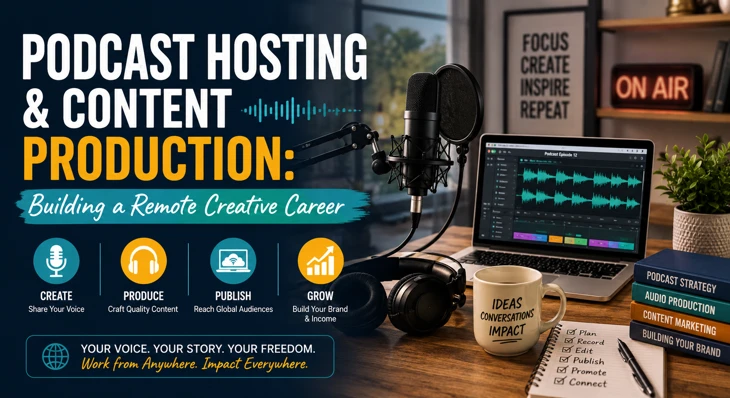
Podcast Hosting and Content Production: Building a Remote Creative Career
The podcast industry has changed dramatically over the last few years. What once felt like a hobby for a small group of creators has now become a serious digital media business. Independent creators, entrepreneurs, coaches, educators, and global companies are all investing in podcast content because audiences genuinely enjoy long-form conversations and authentic storytelling. At the same time, remote work has changed how creative professionals build careers. Today, someone can record interviews from a home office, edit episodes from a laptop, manage clients across different countries, and grow a profitable online brand without ever stepping into a traditional studio. This shift has created exciting opportunities in podcast hosting and content production. People with communication skills, creativity, and consistency can turn podcasting into a flexible, remote creative career with long-term growth potential. Whether your goal is to become a podcast host, offer podcast production services, or create branded audio content for businesses, the industry offers multiple ways to build income while working remotely.Why Podcasting Has Become a Powerful Career Opportunity
Podcasting continues to grow because listeners enjoy content that feels personal and easy to consume. Unlike videos or written content that demand full attention, podcasts fit naturally into daily life. People listen while commuting, cooking, exercising, walking, or even during work. For businesses and creators alike, podcasts build stronger relationships with audiences. Hearing someone speak regularly builds familiarity and trust in a way traditional ads often cannot. As demand increases, companies are hiring remote professionals to support podcast creation and management. This has opened the door for remote podcast jobs and freelance opportunities in areas such as:- Podcast hosting
- Audio editing
- Podcast content production
- Show note writing
- Video podcast editing
- Podcast marketing
- Guest outreach
- Social media content creation
Understanding Podcast Hosting and Content Production
Podcast hosting and content production involve much more than speaking into a microphone. A successful podcast requires planning, technical management, audience research, storytelling, editing, branding, and distribution.What Does a Podcast Host Do?
A podcast host leads conversations, interviews guests, shares stories, and keeps listeners engaged. Good hosts know how to communicate naturally while creating a comfortable listening experience. The role often includes:- Researching episode topics
- Preparing interview questions
- Managing guest communication
- Recording episodes
- Improving delivery and speaking skills
- Maintaining audience engagement
- Building a consistent show identity
What Does a Podcast Producer Do?
A podcast producer handles the technical and creative side of production. In many remote podcast careers, the producer is the person ensuring the show sounds polished and professional. Podcast production tasks may include:- Editing audio files
- Removing background noise
- Adding intro music and transitions
- Creating episode schedules
- Writing show notes
- Uploading episodes to podcast hosting platforms
- Managing remote recording sessions
- Repurposing podcast content for social media
Skills Needed to Build a Remote Podcast Career
You do not need a media degree or radio background to succeed in podcast hosting and content production. Most professionals in the industry learn by creating, experimenting, and improving over time. Still, there are several important skills that can make building a remote podcast career much easier.Communication Skills
Strong communication sits at the center of successful podcast hosting. Listeners enjoy podcasts that sound natural rather than scripted or overly polished. A good podcast host knows how to guide conversations without making them feel forced. That includes:- Asking thoughtful questions
- Responding naturally during interviews
- Keeping discussions organized
- Explaining ideas clearly
- Making guests feel comfortable
Audio Editing Skills
Good audio quality matters because poor sound can quickly push listeners away. Thankfully, modern editing tools make podcast production much more beginner-friendly. Popular podcast editing software includes:- Audacity
- Adobe Audition
- Descript
- GarageBand
- Riverside
Storytelling and Content Structure
Even informational podcasts need structure. Episodes that jump randomly between topics often lose audience attention. Strong podcast content production usually includes:- A clear introduction
- Organized talking points
- Practical examples
- Smooth transitions
- Memorable conclusions
Marketing and Branding Skills
Creating a great podcast is only part of the process. People also need to discover it. That is why many remote podcast creators spend time learning:- Podcast SEO
- Social media marketing
- Email newsletters
- YouTube podcast distribution
- Content repurposing
- Audience engagement strategies
Best Equipment for Starting a Podcast From Home
One of the biggest myths about podcasting is that you need expensive equipment. In reality, many successful podcasts started with simple setups.Essential Podcast Equipment
Here are the basic tools needed for a home podcast studio:Microphone
A quality USB microphone can dramatically improve sound quality. Popular beginner-friendly options include the Blue Yeti and Audio-Technica ATR2100.Headphones
Good headphones help you monitor audio quality and avoid echo during interviews.Recording Software
Free and affordable software options make podcast recording accessible for beginners.Quiet Recording Space
A quiet room with soft surfaces often matters more than expensive gear. Blankets, curtains, carpets, and cushions help reduce echo naturally.How to Start a Remote Podcast Hosting Career
Starting a remote creative career in podcasting does not happen overnight, but the process is more accessible than many people realize.Choose a Niche You Enjoy
The most successful podcasts focus on clear topics and target audiences. Choosing a niche helps attract loyal listeners. Popular podcast niches include:- Business and entrepreneurship
- Mental health and wellness
- Technology
- Personal finance
- Career advice
- Fitness and health
- Parenting
- Gaming
- Storytelling and true crime
Build a Consistent Publishing Schedule
Consistency matters more than perfection. Many new podcasters quit because they expect immediate results. Publishing weekly or biweekly episodes helps build listener trust and improves long-term growth. For example, a freelance marketer who launched a weekly marketing podcast may initially reach only a few hundred listeners. However, after a year of consistent publishing, that same show could attract sponsorship deals, client inquiries, and speaking opportunities.Learn SEO for Podcasts
Podcast SEO is becoming increasingly important because search engines now index podcast content more effectively. To improve podcast visibility:- Use keyword-rich episode titles
- Write detailed show notes
- Create episode transcripts
- Optimize podcast website pages
- Use long-tail podcast keywords naturally
Monetization Opportunities in Podcasting
One reason podcasting has become a popular remote career is the variety of income opportunities available.Sponsorships and Advertisements
Brands pay podcasters to promote products and services to engaged audiences. Even smaller podcasts can secure sponsorships if they target niche communities with loyal listeners.Freelance Podcast Production Services
Many business owners want podcasts but do not have time to manage editing and production. Remote podcast producers often offer services such as:- Audio editing
- Podcast launching
- Guest management
- Content strategy
- Video podcast editing
- Podcast marketing
Affiliate Marketing
Podcast hosts often recommend tools, books, software, or services and earn commissions through affiliate partnerships.Digital Products and Courses
Experienced podcasters frequently create:- Online courses
- Membership communities
- Coaching programs
- Downloadable resources
- Premium podcast subscriptions
Challenges of Building a Podcast Career
Podcast hosting and content production can be rewarding, but the work also comes with challenges that new creators should understand early.Growing an Audience Requires Patience
One of the most common reasons people quit podcasting is slow growth. Many new podcasters expect fast results after publishing only a few episodes. In reality, podcast audiences usually grow gradually. Consistency matters more than quick success. A podcast that publishes valuable weekly episodes for an entire year will often outperform a podcast that uploads randomly and disappears for months.Competition Continues to Increase
There are millions of podcasts online today, which means standing out takes effort. However, competition is not always a bad thing. It also proves that podcast listeners are actively searching for content. The best approach is to focus on a specific audience instead of trying to appeal to everyone. For example:- A general business podcast may struggle.
- A podcast about remote freelancing for graphic designers may attract a highly loyal audience.
Creative Burnout Is Real
Producing weekly podcast episodes can become exhausting without proper systems in place. Many experienced creators reduce stress by:- Batch recording multiple episodes
- Planning monthly content calendars
- Outsourcing podcast editing
- Reusing podcast content for blogs and social media
- Setting realistic publishing schedules
Real-Life Example of a Remote Podcast Career
Consider a freelance writer who starts a podcast about remote work and digital freelancing. Initially, the podcast serves as a creative side project. Over time, the host begins:- Interviewing industry experts
- Sharing career advice
- Publishing SEO-friendly blog posts alongside episodes
- Creating short clips for social media
- Building an email newsletter
The Future of Podcast Hosting and Remote Content Production
The future of podcasting looks incredibly promising. Audio content continues to grow as people seek more flexible and personal forms of media consumption. Several trends are shaping the future of podcast careers:Video Podcasting
Many creators now publish video versions of podcasts on YouTube and streaming platforms. This creates additional opportunities for:- Video editors
- Thumbnail designers
- Social media managers
- YouTube SEO specialists