📚 Table of Contents
- Why More Companies Are Hiring Remote Voice Talent
- What Remote Voiceover Artists Actually Do
- Commercial Voiceovers
- Audiobook Narration
- E-Learning and Corporate Training
- Video Game and Animation Voice Acting
- Podcast Intros and YouTube Narration
- The Skills That Actually Matter in Remote Voiceover Work
- Clear Communication
- Acting Ability
- Audio Editing Skills
- Consistency
- Building a Professional Home Voiceover Studio
- Essential Equipment for Remote Voice Acting
- Internet and Remote Collaboration Tools
- How to Start a Remote Voiceover Career With No Experience
- Practice Daily
- Create a Simple Demo Reel
- Start With Freelance Platforms
- Take Voiceover Training Seriously
- How to Find Global Voiceover Clients
- Build an Online Presence
- Use Voiceover Casting Platforms
- Network With Content Creators and Agencies
- Optimize Your Portfolio for Search Engines
- Common Challenges in Remote Voiceover Work
- Inconsistent Income
- Time Zone Differences
- Vocal Fatigue
- A Realistic Example of How Remote Voiceover Careers Grow
- Practical Ways to Stand Out in a Competitive Industry
- Focus on Reliability
- Develop a Unique Style
- Keep Improving Your Audio Quality
- Learn Basic Business Skills
- How Much Can Remote Voiceover Artists Earn?
- Where the Remote Voiceover Industry Is Headed
- Frequently Asked Questions
- Can I start a remote voiceover career without professional acting experience?
- What is the best microphone for beginner voice actors?
- How do remote voice actors get paid internationally?
- Do I need a professional studio to work with global clients?
- How long does it take to become successful in voiceover work?
- Is remote voiceover work a good full-time career?
- Conclusion
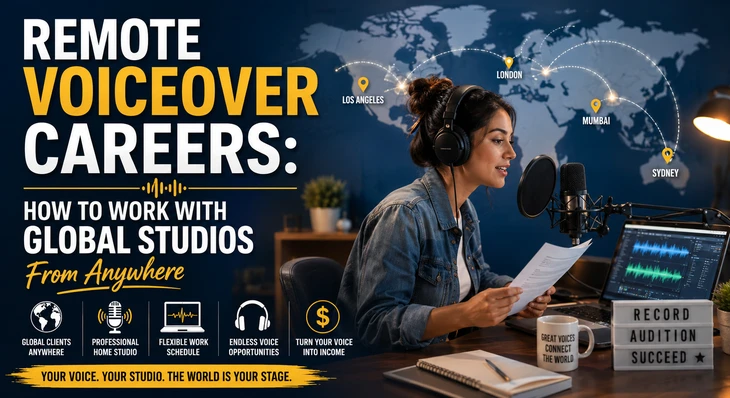
Remote Voiceover Careers: How to Work With Global Studios From Anywhere
Ten years ago, most aspiring voice actors believed they had to move to cities like Los Angeles, London, or Mumbai to find serious work. Today, that idea feels outdated. A growing number of voice artists record commercials, audiobooks, gaming dialogue, and training content from small home studios, spare bedrooms, or even converted closets. Remote voiceover careers are opening doors for talented people across the world, allowing artists to work with international studios, advertising agencies, gaming companies, audiobook publishers, and content creators without relocating. From animated films and YouTube narration to e-learning projects and video game characters, remote voice acting opportunities continue to grow every year. Businesses are constantly searching for authentic voices that connect with global audiences. As a result, skilled voiceover professionals can now build flexible careers from almost anywhere. If you are interested in starting or growing a remote voiceover career, this guide will help you understand how the industry works, how to attract global clients, and how to create a professional setup that helps you stand out.Why More Companies Are Hiring Remote Voice Talent
The demand for digital content has exploded. Streaming platforms, online learning, podcasts, mobile apps, social media ads, and gaming companies all require professional voice talent. At the same time, remote recording technology has become more accessible. Studios no longer need every voice actor to travel for recording sessions. Instead, many companies hire remote voiceover artists who can record high-quality audio from home. This shift benefits both clients and voice actors. For production companies, remote hiring means faster turnaround times and access to voices from different regions and accents. For voice actors, it means something equally valuable: the ability to build a creative career without uprooting their lives or commuting to studios every day. A voice actor in India, for example, can now work with a gaming studio in Canada, narrate an audiobook for a publisher in the UK, and record advertisements for a startup in Australia — all in the same week.What Remote Voiceover Artists Actually Do
Many people assume voiceover work only involves commercials or cartoon characters. In reality, the industry is much broader. Here are some of the most common remote voiceover jobs available today.Commercial Voiceovers
Brands need voice talent for TV ads, radio spots, YouTube ads, social media campaigns, and streaming content. Commercial work often requires a natural, conversational tone that sounds relatable rather than overly dramatic.Audiobook Narration
Audiobook platforms continue to grow globally. Narrators are hired to bring stories, biographies, self-help books, and educational content to life. This type of work requires strong pacing, consistency, and the ability to maintain energy over long recording sessions.E-Learning and Corporate Training
Companies and educational institutions regularly produce training materials and online courses. Clear pronunciation and professional delivery are essential in this category. E-learning projects are especially popular among remote voiceover freelancers because they often offer recurring work.Video Game and Animation Voice Acting
Gaming studios and animation companies frequently hire remote talent for character voices. This area can be highly creative and rewarding, though it also demands vocal flexibility and acting skills.Podcast Intros and YouTube Narration
Content creators need voiceovers for intros, storytelling videos, documentary channels, tutorials, and branded content. Many YouTube creators prefer working with remote voice artists because it allows faster turnaround times.The Skills That Actually Matter in Remote Voiceover Work
People often assume voiceover work is all about having a deep or “radio-friendly” voice. In reality, clients care far more about clarity, personality, consistency, and professionalism. Some of the busiest voice actors today sound completely natural and conversational rather than theatrical.Clear Communication
Clients value voice actors who understand instructions, communicate professionally, and deliver projects on time. A friendly attitude and reliable communication can often lead to repeat work.Acting Ability
Voiceover work is still performance-based. Whether you are narrating a documentary or voicing a video game character, emotion and delivery matter. The best voice actors know how to make scripts sound natural and believable.Audio Editing Skills
Most remote voiceover jobs require basic audio editing. You should know how to remove background noise, cut mistakes, and deliver clean recordings. Programs like Audacity, Adobe Audition, and Reaper are commonly used in the industry.Consistency
Global studios expect consistent audio quality and performance. If a client hires you for a 20-part e-learning course, your voice and recording quality should remain steady throughout the project.Building a Professional Home Voiceover Studio
One of the biggest advantages of remote voiceover work is that you do not need a massive production studio to get started. However, you do need a quiet recording environment and decent equipment.Essential Equipment for Remote Voice Acting
A beginner setup can still sound professional if it is used correctly. Here are the basics:- A quality condenser or dynamic microphone
- Audio interface
- Closed-back headphones
- Pop filter
- Recording software
- Sound-treated recording space
Internet and Remote Collaboration Tools
Global studios frequently conduct live remote recording sessions. Platforms like Zoom, Google Meet, Source-Connect, and Riverside are commonly used for directing voice actors remotely. A stable internet connection is essential if you want to work consistently with international clients.How to Start a Remote Voiceover Career With No Experience
Many successful voice actors started with zero industry connections. The key is building experience gradually while improving your skills and portfolio.Practice Daily
Read scripts aloud regularly. Commercials, documentaries, and YouTube narrations are all useful practice materials. Recording yourself helps identify pacing issues, pronunciation problems, and unnatural delivery patterns.Create a Simple Demo Reel
Your demo reel is your voiceover resume. Even beginners should create a short demo that showcases different styles. Include a few samples, such as:- Commercial read
- Narration sample
- Corporate voiceover
- Character voice
Start With Freelance Platforms
Freelance marketplaces can help beginners find their first clients. Many new voice actors begin with smaller projects before moving into larger studio work. Smaller jobs also help you learn client communication, revisions, and project delivery.Take Voiceover Training Seriously
Professional coaching can significantly improve your performance. Working with a coach helps you understand script interpretation, microphone technique, breathing control, and industry expectations. Even experienced voice actors continue training throughout their careers.How to Find Global Voiceover Clients
Finding international clients requires more than simply uploading a demo online. Consistent networking and visibility are important.Build an Online Presence
A professional website or portfolio page helps studios quickly view your demos. Include:- Demo reels
- Contact information
- Studio setup details
- Client testimonials
- Languages or accents you offer