📚 Table of Contents
- Why Travel Blogging and Influencer Careers Continue to Grow
- What Travel Bloggers and Influencers Actually Do
- What a Travel Blogger Does
- What a Travel Influencer Does
- Ways Travel Bloggers and Influencers Earn Remotely
- Affiliate Marketing
- Sponsored Brand Deals
- Display Advertising
- Selling Digital Products
- Freelance Remote Work
- YouTube Monetization
- Important Skills for Travel Blogging and Influencer Careers
- Writing and Storytelling
- Photography and Video Skills
- Search Engine Optimization
- Social Media Strategy
- Communication and Networking
- Best Platforms for Travel Creators
- Personal Blogs
- YouTube
- TikTok
- Challenges of Travel Blogging and Influencer Careers
- Income Can Fluctuate
- Competition Is Strong
- Burnout Is Common
- Platform Dependence
- How to Start a Travel Blogging or Influencer Career
- Choose a Clear Niche
- Build Your Main Platform
- Learn SEO and Content Marketing
- Stay Consistent
- Focus on Community
- Start Monetizing Slowly
- A Practical Example of Remote Travel Income
- The Future of Travel Blogging and Influencer Careers
- FAQs About Travel Blogging and Influencer Careers
- Can travel blogging become a full-time career?
- Do travel influencers need expensive equipment?
- How long does it take to make money from travel blogging?
- Is travel blogging still profitable today?
- Which platform is best for beginner travel influencers?
- Conclusion
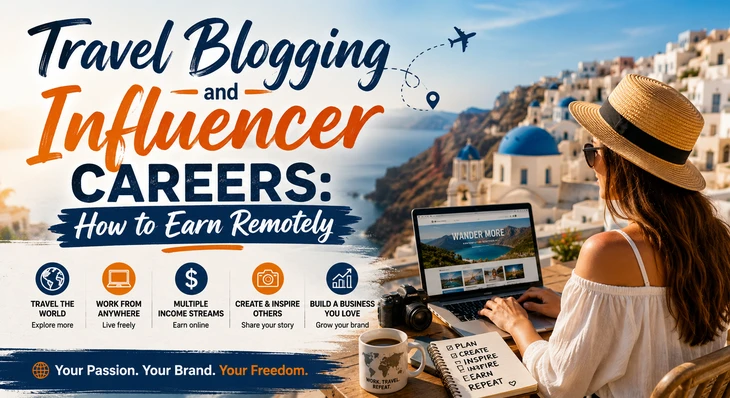
Travel Blogging and Influencer Careers: How to Earn Remotely
Not long ago, the idea of earning money while traveling sounded unrealistic for most people. Today, things look very different. A growing number of creators are building remote careers by sharing travel stories, destination advice, hotel reviews, and everyday experiences online. Some run successful travel blogs that attract thousands of readers every month. Others build audiences on platforms like Instagram, YouTube, TikTok, and Pinterest. Many combine several platforms and turn their content into full-time businesses. The best part is that travel blogging and influencer careers are no longer limited to celebrities or professional photographers. People with useful experiences, honest storytelling, and consistent content can create income opportunities from almost anywhere. Whether you dream about becoming a digital nomad, creating travel content part-time, or building a long-term online business, understanding how this industry works is the first step.Why Travel Blogging and Influencer Careers Continue to Grow
Travel content has become one of the most searched categories online. Before booking flights, choosing hotels, or planning itineraries, travelers often look for advice from creators they trust. Instead of reading traditional brochures, people now prefer watching real experiences shared by bloggers and influencers. They want practical tips, realistic budgets, hidden destinations, and honest recommendations. This shift has created massive opportunities for content creators. Several factors are driving the growth of remote travel careers:- More people are working remotely
- Social media platforms continue expanding
- Brands increasingly invest in influencer marketing
- Digital nomad lifestyles are becoming mainstream
- Audiences prefer authentic travel experiences
- Online content is easier to create than ever before
What Travel Bloggers and Influencers Actually Do
A common misconception is that travel influencers spend their days taking photos and relaxing at beaches. In reality, most successful creators manage demanding schedules involving writing, editing, marketing, networking, and audience engagement.What a Travel Blogger Does
Travel bloggers mainly focus on website content. Their work usually includes:- Writing detailed travel guides
- Publishing itinerary ideas
- Reviewing accommodations and travel services
- Creating SEO-focused articles
- Managing blog performance
- Building email audiences
- Researching keywords and search trends
What a Travel Influencer Does
Travel influencers focus more on visual storytelling across social media platforms. Their responsibilities may include:- Filming short-form videos
- Editing travel reels
- Posting destination photography
- Creating sponsored content
- Collaborating with tourism brands
- Sharing travel tips through stories and live sessions
- Interacting with followers daily
Ways Travel Bloggers and Influencers Earn Remotely
One reason these careers attract so many people is income flexibility. Instead of relying on a traditional salary, creators build multiple revenue streams that continue generating income online.Affiliate Marketing
Affiliate marketing remains one of the most effective sources of income for travel bloggers. In simple terms, creators recommend products or services using referral links. When someone makes a purchase through those links, the creator earns a commission. Popular affiliate partnerships include:- Hotel booking platforms
- Flight comparison websites
- Travel insurance companies
- Camera and tech brands
- Travel backpacks and gear
- Online travel tools
Sponsored Brand Deals
Sponsored partnerships are another major source of income for influencers. Hotels, tourism boards, travel apps, and outdoor brands often pay creators to feature their products or destinations. Examples of sponsored collaborations include:- Resort reviews
- Destination campaigns
- Sponsored travel videos
- Promotional Instagram reels
- Travel gear partnerships
- Airline collaborations
Display Advertising
Travel blogs with steady traffic can earn through display ads. Advertising networks place ads throughout blog content, and creators receive payment based on impressions or clicks. Common advertising platforms include:- Google AdSense
- Mediavine
- Raptive
Selling Digital Products
Many travel creators eventually develop their own digital products. Digital products are attractive because they require no physical inventory and can be sold repeatedly. Popular travel creator products include:- Destination guides
- Travel planning templates
- Budget calculators
- Photography presets
- E-books
- Online courses
- Packing checklists
Freelance Remote Work
Many travel bloggers start by freelancing as they grow their audience. Freelance opportunities often include:- Travel writing
- Content marketing
- SEO services
- Photography
- Video editing
- Social media management
- Copywriting
YouTube Monetization
YouTube continues to be one of the strongest platforms for long-term travel content. Travel vloggers can earn money through:- Ad revenue
- Brand sponsorships
- Affiliate marketing
- Membership programs
- Product promotions
Important Skills for Travel Blogging and Influencer Careers
Success in travel content creation involves far more than posting beautiful photos. Creators who build sustainable businesses usually develop a wide range of digital skills.Writing and Storytelling
Strong writing remains one of the most valuable skills in travel blogging. Readers stay engaged when content feels helpful, personal, and easy to understand. Good storytelling also improves audience trust and search engine performance.Photography and Video Skills
Travel content is highly visual. Creators should understand:- Basic composition
- Lighting techniques
- Video framing
- Mobile editing apps
- Content editing basics
Search Engine Optimization
SEO helps travel blogs rank on Google and attract long-term traffic. Understanding long-tail keywords, user intent, and search optimization can dramatically increase blog visibility. For example, targeting phrases such as “best countries for remote workers” or “cheap digital nomad destinations” helps attract highly specific audiences.Social Media Strategy
Every social media platform works differently. Instagram focuses heavily on visuals and engagement. TikTok rewards creativity and trends. YouTube values watch time and consistency. Creators who understand platform behavior usually grow faster.Communication and Networking
Travel influencers regularly communicate with brands, tourism boards, hotels, and followers. Professional communication skills become essential when negotiating sponsorships or long-term collaborations.Best Platforms for Travel Creators
Different platforms serve different purposes, and many creators use several together.Personal Blogs
A blog gives creators complete control over content and monetization. Unlike social media accounts, a website is an owned platform that is not fully dependent on changing algorithms. WordPress remains one of the most popular blogging platforms for travel creators.YouTube
YouTube works especially well for travel storytelling and educational content. Travel vloggers often build loyal audiences because video creates a more personal experience.TikTok
TikTok allows creators to grow quickly through short-form content. Travel hacks, destination recommendations, and budget tips often perform well on the platform.Challenges of Travel Blogging and Influencer Careers
Although remote travel careers look exciting online, they also come with challenges.Income Can Fluctuate
Creator income is not always predictable. Traffic drops, algorithm changes, or fewer brand partnerships can affect earnings. This is why experienced creators diversify their income sources.Competition Is Strong
Travel is a competitive niche. Creators who stand out usually focus on a clear niche instead of trying to cover everything. Popular specialized niches include:- Budget travel
- Luxury travel
- Sustainable tourism
- Solo travel
- Adventure travel
- Digital nomad lifestyle
- Family travel
Burnout Is Common
Creating content while constantly traveling can become exhausting. Editing videos, managing deadlines, and staying active online often reduce personal downtime. Many creators eventually build slower and more sustainable travel schedules.Platform Dependence
Relying entirely on one social media platform is risky. Algorithm changes can reduce visibility overnight. That is why many creators focus on growing email newsletters and websites alongside social channels.How to Start a Travel Blogging or Influencer Career
Starting a travel content career does not require expensive equipment or perfect conditions. Most successful creators began with limited experience and learned gradually.Choose a Clear Niche
A focused niche helps attract a specific audience. Instead of publishing general travel content, narrow your expertise. Examples include:- Budget backpacking
- Luxury hotels
- Food travel
- Weekend travel guides
- Remote work travel
- Solo female travel