📚 Table of Contents
- What Remote Motion Graphics Work Actually Looks Like
- Motion Graphics Designer
- Explainer Video Animator
- Social Media Motion Designer
- UI Motion Designer
- Video Editor With Motion Graphics Skills
- Skills You Need to Work With International Clients
- Learn the Core Motion Graphics Tools
- Adobe After Effects
- Adobe Premiere Pro
- Blender or Cinema 4D
- Illustrator, Photoshop, and Figma
- Storytelling Matters More Than Effects
- Professional Communication Is a Career Skill
- How to Build a Motion Graphics Portfolio That Gets Global Clients
- Focus on Quality Over Quantity
- Create Portfolio Projects for Real Industries
- Make Your Portfolio Easy to View
- Best Platforms to Find Remote Motion, Graphics Jobs
- Upwork
- Behance
- Remote Job Boards
- Networking and Referrals
- How Beginners Can Land Their First Remote Motion Graphics Projects
- Start Small and Build Momentum
- Reach Out to Businesses Directly
- Share Your Work Publicly
- Time Management for Remote Motion Graphics Professionals
- Common Challenges in Remote Motion Graphics Careers
- Managing Different Time Zones
- Handling Creative Feedback
- Avoiding Burnout
- How Much Can Remote Motion Graphics Designers Earn?
- Real-World Example of a Remote Motion Graphics Career Path
- Tips to Stand Out in the Global Motion Graphics Industry
- Develop a Signature Style
- Learn Business Thinking
- Keep Learning Continuously
- Build Long-Term Relationships
- Future of Remote Motion Graphics Careers
- Conclusion
- FAQs
- What qualifications do you need for remote motion graphics jobs?
- Is motion graphics a good remote career?
- Which software is most important for motion graphics designers?
- How can beginners get international motion graphics clients?
- How much do freelance motion graphics designers earn remotely?
- Can motion graphics designers work fully remotely?
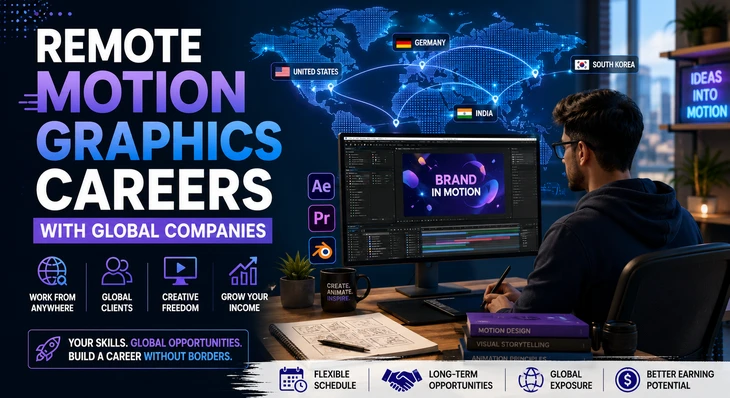
Remote Motion Graphics Careers With Global Companies
A few years ago, most motion graphics professionals had to live near creative agencies or production studios to build a serious career. That is no longer true. Today, companies hire talented motion designers from all over the world. A designer working from India can collaborate with a startup in Germany, an ecommerce brand in the United States, or a gaming studio in South Korea without relocating. Remote work has completely reshaped the creative industry. Businesses now care far more about skill, reliability, and creative thinking than physical office location. For motion graphics artists, this shift has created access to better projects, global clients, flexible schedules, and stronger earning potential. At the same time, brands are investing more money into video content than ever before. Companies need animated explainers, product launch videos, social media reels, motion ads, UI animations, and branded visual storytelling. That growing demand has opened the door for:- Remote motion graphics designers
- Freelance motion designers
- Video editors with animation skills
- UI motion designers
- Social media animation specialists
- 2D and 3D animators
- Visual effects creators
What Remote Motion Graphics Work Actually Looks Like
A remote motion graphics career can take several forms. Some designers work full-time with international companies, while others build freelance businesses serving multiple clients. Common remote motion graphics roles include:Motion Graphics Designer
Creates animated visual content for advertisements, websites, mobile apps, and digital campaigns.Explainer Video Animator
Builds animated videos that explain products, services, or business concepts in a simple way.Social Media Motion Designer
Designs short-form animations for Instagram, TikTok, YouTube Shorts, and paid advertising campaigns.UI Motion Designer
Adds animations and transitions to mobile apps and websites to improve user experience.Video Editor With Motion Graphics Skills
Combines editing and animation to create engaging branded videos. Many professionals combine multiple skills to increase their earning potential.Skills You Need to Work With International Clients
Creative talent is important, but remote companies usually look for more than impressive visuals. They want professionals who can deliver quality work consistently, communicate clearly, and solve problems without constant supervision. That combination is what separates hobby-level designers from professionals who build long-term remote careers.Learn the Core Motion Graphics Tools
Most global teams expect designers to understand industry-standard software.Adobe After Effects
After Effects remains the backbone of modern motion graphics work. If you want serious remote opportunities, this is the first tool you should master. Important areas include:- Text animation
- Motion tracking
- Shape layer animation
- Timing and easing
- Composition setup
- Transitions
- Masking
- Expressions
Adobe Premiere Pro
Many clients prefer motion designers who can also edit video efficiently. Being able to combine editing and animation makes you far more versatile.Blender or Cinema 4D
3D motion graphics are becoming increasingly popular, especially in advertising, SaaS marketing, and product visualization. Even beginner-level 3D skills can help you access better-paying projects.Illustrator, Photoshop, and Figma
Motion work often starts with design assets. Understanding design layout, typography, and interface structure helps create cleaner animations.Storytelling Matters More Than Effects
One of the biggest mistakes beginners make is focusing only on transitions and visual tricks. Strong motion graphics are not just visually impressive. They communicate ideas clearly. For example:- A tech company may need onboarding animations to help users quickly understand its features.
- An ecommerce brand may want motion ads that increase click-through rates.
- A healthcare company may need animated educational content that feels simple and approachable.
Professional Communication Is a Career Skill
Remote work depends heavily on trust. International clients want people who:- Reply professionally
- Meet deadlines consistently
- Understand feedback
- Handle revisions calmly
- Communicate project progress clearly
How to Build a Motion Graphics Portfolio That Gets Global Clients
Your portfolio is the single most important factor in landing remote motion graphics jobs. Companies rarely care about certificates. They care about what you can create. A strong portfolio should immediately show:- Animation quality
- Design sense
- Editing ability
- Creative thinking
- Industry relevance
- Professional presentation
Focus on Quality Over Quantity
Many beginners upload every project they create. That approach usually weakens the portfolio. Instead, showcase 5–8 strong projects that demonstrate a range of skills. For example:- Brand animation
- Explainer videos
- UI motion design
- Product advertisements
- Social media reels
- Typography animation
- 3D motion graphics
Create Portfolio Projects for Real Industries
If you do not have client work yet, create self-initiated projects. This is extremely common in the creative industry. For example, you can create:- A fake product advertisement for a skincare brand
- An animated app onboarding sequence
- A cryptocurrency explainer video
- Motion graphics for a sportswear campaign
- Animated YouTube intro concepts
Make Your Portfolio Easy to View
Global companies often review portfolios quickly. Your portfolio should:- Load fast
- Be mobile-friendly
- Include short project descriptions
- Highlight your role in each project
- Show clear thumbnails
- Include contact information
- Behance
- Dribbble
- Vimeo
- Personal portfolio websites
Best Platforms to Find Remote Motion, Graphics Jobs
Finding remote creative work becomes easier when you use the right platforms strategically.- Motion designers
- Video editors
- Creative animators
- Multimedia designers
- Visual storytellers
- Remote motion graphics designer
- After Effects specialist
- 2D animator
- Brand animation designer
- Video motion designer
Upwork
Upwork can help beginners gain international clients and real project experience. The key is positioning yourself correctly. Instead of offering generic services like “I make animations,” create focused service positioning such as:- SaaS explainer video animation
- Ecommerce ad motion graphics
- YouTube motion design packages
- Social media animation editing
Behance
Many agencies and creative directors discover talent directly through Behance. Well-presented case studies can attract inbound opportunities.Remote Job Boards
Popular remote job websites include:- We Work Remotely
- Remote OK
- Working Nomads
- Wellfound
- FlexJobs
Networking and Referrals
A surprising number of remote creative jobs come through referrals. Building relationships with:- Video editors
- Graphic designers
- Creative directors
- Marketing agencies
- Content creators
How Beginners Can Land Their First Remote Motion Graphics Projects
Getting started can feel overwhelming at first, especially when you see experienced designers with massive portfolios. But most successful motion graphics professionals started with small projects and gradually improved over time. The goal in the beginning is simple: gain experience, build confidence, and create strong portfolio material.Start Small and Build Momentum
Your first projects may involve:- Small business advertisements
- Instagram animations
- YouTube intro videos
- Short explainer edits
- Freelance social media content
- Client communication
- Revision handling
- Workflow management
- File organization
- Deadline planning
Reach Out to Businesses Directly
Many companies need motion graphics support, but never publish formal job openings. Instead of waiting for opportunities, contact businesses directly. Potential clients include:- SaaS startups
- Marketing agencies
- Ecommerce brands
- Content creators
- Online education companies
Share Your Work Publicly
A lot of remote designers get discovered simply because they post consistently. Platforms like LinkedIn, Behance, Instagram, and X can help attract:- Recruiters
- Startup founders
- Creative directors
- Agencies
- Content creators
Time Management for Remote Motion Graphics Professionals
Creative freedom is exciting, but remote work also requires discipline. Without structure, deadlines can quickly become stressful. Successful remote motion designers usually create systems for:- File organization
- Client communication
- Revision tracking
- Time blocking
- Backup management
- Project scheduling
Common Challenges in Remote Motion Graphics Careers
Remote creative careers offer flexibility, but they also come with challenges. Understanding these issues early can help you avoid frustration.Managing Different Time Zones
Working with global companies means that meetings and deadlines may not always align with your local schedule. Clear communication helps avoid confusion. Always confirm:- Deadline timing
- Revision windows
- Delivery format
- Meeting schedules
Handling Creative Feedback
Not every revision request will feel exciting. Sometimes clients want changes that differ from your creative vision. The key is balancing professionalism with creative expertise. Strong designers learn how to:- Explain design choices calmly
- Offer better alternatives
- Accept constructive feedback
- Stay solution-focused
Avoiding Burnout
Creative work can become exhausting when projects pile up. Many remote designers make the mistake of accepting too many clients simultaneously. Building sustainable systems matters. Take breaks, maintain realistic deadlines, and avoid constant overtime whenever possible. Long-term consistency is more valuable than short bursts of overwork.How Much Can Remote Motion Graphics Designers Earn?
Income varies based on skill level, specialization, portfolio quality, and client type. Beginners may start with smaller freelance projects, while experienced designers working with international brands can earn significantly more. Typical earning models include:- Hourly freelance rates
- Monthly retainers
- Per-project pricing
- Full-time remote salaries
Real-World Example of a Remote Motion Graphics Career Path
Imagine a designer named Aarav. He started by creating short Instagram animations for local businesses while learning After Effects online. After building a small portfolio, he consistently uploaded projects to Behance and LinkedIn. A startup founder from Singapore discovered his work and hired him for product explainer animations. That single project led to:- Referral clients
- Higher-paying SaaS work
- Long-term monthly contracts
- International agency collaborations
Tips to Stand Out in the Global Motion Graphics Industry
Competition is growing, which means differentiation matters. Here are practical ways to stand out:Develop a Signature Style
You do not need to constantly copy trending animation styles. Many successful motion designers become recognizable because of their unique approach.Learn Business Thinking
Clients care about results. Understanding marketing, conversion, engagement, and audience psychology makes your work more valuable.Keep Learning Continuously
Motion graphics trends evolve quickly. Stay updated with:- New animation techniques
- Editing styles
- AI-assisted workflows
- 3D motion trends
- Social media content formats
Build Long-Term Relationships
Repeat clients are often more valuable than constantly finding new ones. Reliable communication and consistent quality can turn one project into years of work.Future of Remote Motion Graphics Careers
The demand for motion-based content continues to grow across industries. Businesses increasingly rely on:- Video marketing
- Interactive product demos
- Animated social content
- Virtual presentations
- Mobile-first advertising
- Digital education platforms