📚 Table of Contents
- Why Video Game Story Writing Is Growing Fast
- Understanding the Role of a Video Game Writer
- Writing Character Dialogue
- Building Lore and World Design
- Designing Interactive Narratives
- Collaborating With Developers and Designers
- Skills Needed for a Remote Career in Video Game Writing
- Strong Storytelling Fundamentals
- Understanding Interactive Storytelling
- Basic Knowledge of Game Development
- Adaptability and Feedback Handling
- Remote Communication Skills
- How to Start a Career in Video Game Story Writing
- Build a Writing Portfolio
- Learn Narrative Design Tools
- Join Indie Game Projects
- Participate in Game Jams
- Best Remote Career Paths in Gaming for Writers
- Narrative Designer
- Dialogue Writer
- Quest Writer
- Lore Writer
- Scriptwriter for Cinematics
- Where to Find Remote Video Game Writing Jobs
- Gaming Industry Job Boards
- Indie Development Communities
- Freelance Platforms
- Common Challenges Remote Game Writers Face
- Inconsistent Freelance Income
- Creative Revisions
- Competition in the Industry
- Practical Tips to Grow Faster in the Gaming Industry
- Study Story-Driven Games Actively
- Build an Online Presence
- Network With Developers
- Keep Improving Your Craft
- Real-World Example of a Remote Game Writing Journey
- The Future of Remote Careers in Gaming
- FAQs About Video Game Story Writing Careers
- Do you need a degree to become a video game writer?
- Can beginners get remote gaming jobs?
- What games are best for learning narrative design?
- How much do remote game writers earn?
- Is video game writing competitive?
- What is the difference between a game writer and a narrative designer?
- Conclusion
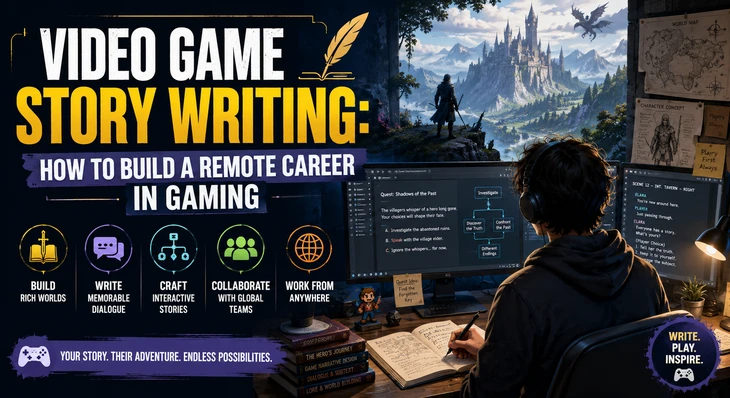
Video Game Story Writing: How to Build a Remote Career in Gaming
The gaming industry has changed dramatically over the last decade. What was once limited to large studios and in-office creative teams has evolved into a global, remote-friendly ecosystem where talented writers can contribute from almost anywhere. Today, video game story writing is no longer reserved for people living in gaming hubs like Tokyo, Los Angeles, or Montreal. Writers from different backgrounds now collaborate remotely on indie titles, mobile games, RPGs, narrative adventures, and even AAA productions. For aspiring storytellers, this shift has created exciting opportunities. If you love writing compelling characters, building immersive worlds, and shaping emotional player experiences, a remote career in gaming may be closer than you think. This guide explores how to become a video game writer, what skills matter most, where remote opportunities exist, and how you can build a sustainable career in the gaming industry.Why Video Game Story Writing Is Growing Fast
Gaming is no longer a niche form of entertainment. Modern games rival movies and television in storytelling quality, emotional depth, and production scale. Players now expect strong narratives, memorable dialogue, and meaningful character arcs. As games become more story-driven, studios need skilled writers who understand both narrative structure and interactive storytelling. Remote work has further accelerated this demand. Many gaming companies now hire freelance and remote narrative designers, scriptwriters, quest writers, and dialogue specialists. Smaller indie studios, in particular, rely on distributed creative teams because remote collaboration reduces overhead costs and enables them to hire global talent. This creates opportunities for:- Freelance writers
- Creative storytellers
- Screenwriters
- Novelists transitioning into gaming
- Content writers interested in interactive media
- Narrative designers
- Dialogue specialists
Understanding the Role of a Video Game Writer
A video game writer does far more than create dialogue. In many projects, writers help shape the entire player experience. Depending on the studio and game type, responsibilities may include:Writing Character Dialogue
Characters drive emotional engagement in games. Writers create believable conversations, emotional scenes, humor, tension, and memorable personalities. For example, a role-playing game may require hundreds of branching dialogue options depending on player choices.Building Lore and World Design
Many games require deep fictional worlds. Writers create:- Historical timelines
- Factions and cultures
- Political systems
- Mythology
- In-game books and documents
- Environmental storytelling elements
Designing Interactive Narratives
Unlike films or novels, games are interactive. Players influence outcomes. A narrative writer often creates:- Multiple endings
- Branching storylines
- Choice-based conversations
- Dynamic missions
- Side quests
Collaborating With Developers and Designers
Game writing is collaborative. Writers work closely with:- Game designers
- Level designers
- Animators
- Audio teams
- Developers
- Voice actors
Skills Needed for a Remote Career in Video Game Writing
Breaking into game writing requires a mix of storytelling talent, technical understanding, and collaboration skills. Here are the most important abilities to develop.Strong Storytelling Fundamentals
At its core, game writing is still storytelling. You need to understand:- Character development
- Pacing
- Dialogue flow
- Conflict and tension
- Emotional payoff
- Narrative structure
Understanding Interactive Storytelling
Interactive narratives differ from traditional storytelling. Players expect agency. That means your story must adapt to choices while still maintaining narrative consistency. Games like:- The Witcher 3
- Detroit: Become Human
- Life Is Strange
- Mass Effect
Basic Knowledge of Game Development
You do not need to become a programmer, but understanding game development workflows helps tremendously. Learn basic concepts like:- Quest systems
- Gameplay loops
- UI text writing
- Cutscene scripting
- Narrative tools
- Game production pipelines
Adaptability and Feedback Handling
Game writing is highly iterative. A scene you spent hours writing may be shortened, redesigned, or removed due to gameplay constraints. Successful writers stay flexible and collaborative instead of emotionally attached to every draft.Remote Communication Skills
Remote gaming teams rely heavily on digital collaboration. You should feel comfortable using:- Slack
- Discord
- Trello
- Notion
- Google Docs
- Zoom
- Project management tools
How to Start a Career in Video Game Story Writing
Starting from scratch may feel overwhelming, but most successful game writers began with small projects and personal portfolios.Build a Writing Portfolio
Your portfolio matters more than your resume. A strong portfolio should showcase:- Dialogue samples
- Quest writing
- Character bios
- Interactive scripts
- Short game scenes
- Branching conversations
- Worldbuilding examples
- Rewrite dialogue from an existing game scene
- Create a fictional questline
- Design an original game universe
- Write branching dialogue trees
Learn Narrative Design Tools
Several tools are commonly used in game narrative development. Learning them can improve your employability. Popular options include:- Twine
- Ink by Inkle
- Articy Draft
- Celtx
- Final Draft
Join Indie Game Projects
Indie projects are one of the best entry points into gaming. Many indie developers actively search for volunteer or freelance writers through online communities. These projects help you:- Gain real-world experience
- Build portfolio pieces
- Learn collaboration workflows
- Make industry connections
- Understand production timelines
Participate in Game Jams
Game jams are short collaborative competitions where teams create games within limited timeframes. They are incredibly valuable for aspiring writers. You learn how to:- Work under deadlines
- Collaborate remotely
- Write quickly
- Adapt to changing ideas
- Build playable narrative content
Best Remote Career Paths in Gaming for Writers
Video game writing includes several specialized career paths.Narrative Designer
Narrative designers blend storytelling with gameplay systems. They often:- Design story structure
- Manage player choices
- Integrate narrative into gameplay
- Coordinate with level designers
Dialogue Writer
Dialogue writers focus specifically on character conversations. Strong dialogue writing requires:- Unique character voices
- Natural conversation flow
- Emotional nuance
- Timing and pacing
Quest Writer
Quest writers create missions, objectives, and side stories. In open-world games, side quests are often what make the world memorable. A good quest writer understands:- Player motivation
- Reward systems
- Story pacing
- Worldbuilding
Lore Writer
Lore writers focus on world history and universe consistency. This includes:- Fictional religions
- Political conflicts
- Character histories
- Historical timelines
- In-game codex entries
Scriptwriter for Cinematics
Some games include movie-style cutscenes. Scriptwriters help craft cinematic storytelling experiences that align with gameplay. This role often overlaps with screenwriting.Where to Find Remote Video Game Writing Jobs
Remote opportunities exist across freelance platforms, indie communities, and major gaming studios.Gaming Industry Job Boards
Several websites regularly post remote game writing jobs. Popular platforms include:- Work With Indies
- Hitmarker
- GameJobs.co
- Remote Game Jobs
- LinkedIn gaming jobs
Indie Development Communities
Many indie developers recruit directly from online communities. Useful spaces include:- Discord servers
- Reddit gaming communities
- Indie DB forums
- TIGSource
- GameDev.net
Freelance Platforms
Freelance marketplaces sometimes include narrative writing projects for mobile games, visual novels, and indie RPGs. Examples include:- Upwork
- Fiverr
- Freelancer
Common Challenges Remote Game Writers Face
A gaming career sounds exciting, but it also comes with challenges. Understanding them early can help you prepare.Inconsistent Freelance Income
Many writers start with contract work. Income may fluctuate during the early stages. Building multiple income streams through:- Freelance projects
- Long-term clients
- Portfolio work
- Networking
Creative Revisions
Game narratives often change during development. Writers must revise scenes frequently due to:- Gameplay changes
- Technical limitations
- Budget constraints
- Production timelines
Competition in the Industry
Gaming attracts passionate creatives from around the world. Standing out requires:- Consistent portfolio improvement
- Networking
- Specialized storytelling skills
- Reliability
- Strong collaboration habits
Practical Tips to Grow Faster in the Gaming Industry
Small habits often create the biggest long-term results.Study Story-Driven Games Actively
Do not just play games casually. Analyze them. Ask questions like:- Why does this dialogue work?
- How are choices structured?
- What creates emotional impact?
- How does gameplay support the narrative?
Build an Online Presence
A professional online presence helps recruiters discover your work. Consider creating:- A portfolio website
- LinkedIn profile
- Writing samples on Medium
- Narrative design breakdowns
- Social media focused on game writing
Network With Developers
Many remote opportunities happen through referrals. Engaging respectfully in gaming communities can open unexpected doors. Instead of aggressively promoting yourself, focus on:- Helping others
- Joining discussions
- Sharing useful insights
- Participating in collaborative projects
Keep Improving Your Craft
The strongest writers never stop learning. Study:- Screenwriting
- Film dialogue
- Character psychology
- Narrative design
- Interactive fiction
- Player behavior
Real-World Example of a Remote Game Writing Journey
Imagine a freelance content writer who loves fantasy RPGs. They begin by creating a small portfolio featuring:- Character dialogue
- Quest concepts
- Branching story scenes
- Worldbuilding documents
The Future of Remote Careers in Gaming
Remote collaboration is becoming normal across the gaming industry. Studios increasingly hire talent globally rather than limiting recruitment to local offices. This trend benefits writers because storytelling talent exists everywhere. Emerging areas creating new opportunities include:- Mobile gaming narratives
- Interactive streaming experiences
- AI-assisted dialogue systems
- Virtual reality storytelling
- Live-service game content
- Narrative-driven indie games