📚 Table of Contents
- Why More People Are Choosing 3D Animation Online Careers
- Digital Content Is Dominating the Internet
- Gaming and Streaming Industries Keep Expanding
- Remote Work Changed the Creative Industry
- What Does a Remote 3D Animator Really Do?
- Skills That Actually Matter in Remote 3D Animation
- Learning Animation Fundamentals
- Technical Skills Matter Too
- Communication Is a Major Part of Remote Work
- Time Management Becomes Extremely Important
- Best Software for Learning 3D Animation Online
- Blender
- Autodesk Maya
- Cinema 4D
- Houdini
- Unreal Engine
- Learning 3D Animation Online Without Feeling Stuck
- Start with Small Projects
- Follow Structured Courses
- Practice While Studying
- Study Professional Animation Closely
- Why Clients Care More About Portfolios Than Degrees
- Quality Always Beats Quantity
- Show Different Types of Projects
- Demo Reels Are Extremely Important
- Share Your Work Online Consistently
- Finding Remote 3D Animation Jobs Online
- Freelance Platforms
- Remote Job Boards
- Creative Communities
- Direct Outreach Still Works
- Freelancing vs Full-Time Remote Animation Jobs
- Freelancing in 3D Animation
- Full-Time Remote Animation Careers
- The Less Glamorous Side of Remote Animation Work
- Creative Burnout
- Revisions and Feedback
- Competition in Online Markets
- Income Can Be Unpredictable at First
- How Much Can Remote 3D Animators Earn?
- Future Trends in 3D Animation Online Careers
- Virtual Reality and Augmented Reality
- Real-Time Production Workflows
- AI-Assisted Animation Tools
- Interactive Content Is Growing
- Smart Ways to Grow a Long-Term Animation Career
- Practice Regularly
- Develop a Specialty Over Time
- Build a Strong Online Presence
- Keep Learning
- FAQs About Building a Remote Career in 3D Animation
- Can beginners successfully learn 3D animation online?
- Is remote 3D animation a stable career?
- Which software is best for beginners?
- Do I need a degree to become a 3D animator?
- Can freelance animators work with international clients?
- How long does it take to become job-ready?
- Conclusion
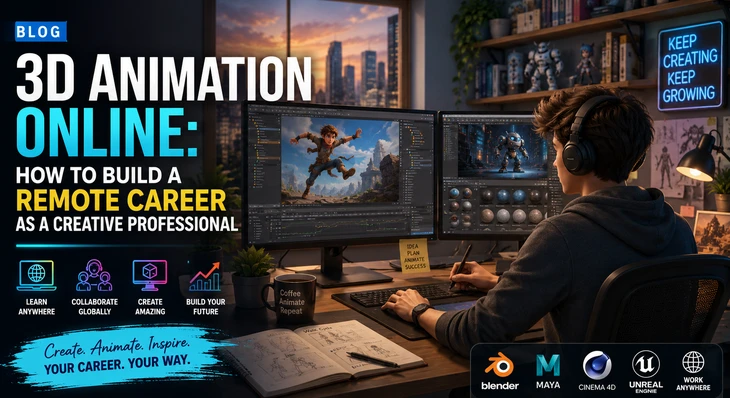
3D Animation Online: How to Build a Remote Career as a Creative Professional
For a long time, animation felt like a career reserved for people living near major studios in cities like Los Angeles, Tokyo, or Vancouver. Breaking into the industry usually meant relocating, building connections in person, and competing for limited studio positions. That is no longer the reality. Today, talented artists are building careers in 3D animation online from bedrooms, home offices, co-working spaces, and even small towns far away from traditional entertainment hubs. The growth of remote work, cloud-based collaboration, and digital content has completely changed how creative professionals work. Businesses now need animated content for almost everything. Game companies need cinematic sequences, startups want product animations, brands rely on motion graphics for marketing, and online education platforms use 3D visuals to explain complex ideas. As a result, remote animation jobs are becoming more common every year. For creative people who enjoy storytelling, design, movement, or digital art, online 3D animation offers something rare: the chance to build a flexible career while doing highly creative work. This guide explains how to start building a remote career in 3D animation online, which skills actually matter, which tools are worth learning, and how professionals find work in today’s digital economy.Why More People Are Choosing 3D Animation Online Careers
A lot of people still associate animation with blockbuster films or big gaming studios. In reality, animation now appears almost everywhere online. Almost every industry now uses some form of digital animation to communicate with audiences. Brands compete heavily for online attention, and animated visuals usually perform better than static content. People are more likely to watch a short animated video than read a long block of text. That shift has created a huge demand for skilled animators.Digital Content Is Dominating the Internet
Businesses invest heavily in visual content because it keeps audiences engaged longer. Animation is now used for:- Product demonstrations
- Social media marketing
- Website experiences
- Mobile applications
- Online courses
- Explainer videos
- Gaming cinematics
- Virtual events
- Advertising campaigns
Gaming and Streaming Industries Keep Expanding
Gaming companies continue hiring character animators, cinematic artists, environment designers, and motion graphics professionals. Streaming platforms also rely on animation for promotional content, title sequences, visual effects, and digital storytelling. Because projects are often collaborative and cloud-based, many companies now hire remote artists rather than relying solely on local teams.Remote Work Changed the Creative Industry
A few years ago, many studios hesitated to hire remote creative professionals. Now remote production pipelines are normal. Teams share files online, communicate through video calls, and manage projects across multiple time zones. For animators, that means opportunities are no longer limited by location.What Does a Remote 3D Animator Really Do?
A remote 3D animator creates digital animations using specialized software while collaborating with clients or production teams online. The exact work depends on the type of projects involved. One animator may spend the week working on realistic game cinematics, while another creates animated advertisements for a skincare brand. Some professionals focus heavily on character movement, while others specialize in visual effects or motion graphics. Daily tasks often include:- Creating 3D models
- Animating objects and characters
- Designing environments
- Setting up lighting
- Applying textures and materials
- Rendering final scenes
- Revising projects after feedback
- Collaborating remotely with teams
Skills That Actually Matter in Remote 3D Animation
Many beginners assume animation is only about learning software. In reality, strong animation comes from combining technical knowledge with creativity and observation.Learning Animation Fundamentals
Before creating advanced cinematic scenes, it helps to understand the basics of movement. Professional animation feels believable because it follows principles like timing, weight, spacing, rhythm, and exaggeration. Even a simple bouncing ball exercise teaches valuable lessons about physics and motion.Technical Skills Matter Too
Most remote animators gradually learn several production skills over time. Important areas include:- 3D modeling
- Rigging
- Character animation
- Lighting
- Rendering
- Texturing
- Motion graphics
- Scene composition
Communication Is a Major Part of Remote Work
Freelancers and remote employees spend a surprising amount of time communicating. Artists discuss revisions, timelines, creative direction, and project goals through online meetings and messaging tools. Clear communication often leads to smoother projects and stronger professional relationships.Time Management Becomes Extremely Important
Working from home sounds flexible, but it also requires discipline. Without structure, deadlines can quickly become stressful. Successful animators usually develop routines that help them stay productive without overworking themselves.Best Software for Learning 3D Animation Online
Software choice can influence both your learning experience and career direction. Fortunately, beginners now have access to powerful professional tools.Blender
Blender has become one of the most popular choices for learning 3D animation online. It is free, versatile, and supported by a massive creative community. Artists use Blender for:- Modeling
- Character animation
- Product rendering
- Motion graphics
- Environment design
- Visual effects
Autodesk Maya
Maya remains widely used in film production, television, and AAA gaming studios. It is especially respected for advanced character animation workflows.Cinema 4D
Cinema 4D is popular among motion designers and advertising agencies because of its smooth workflow and beginner-friendly interface.Houdini
Houdini is known for advanced visual effects and procedural simulations. Professionals working on explosions, smoke, destruction, and large-scale cinematic effects often rely on it.Unreal Engine
Real-time production continues to grow rapidly. Learning Unreal Engine can create opportunities in gaming, architecture visualization, virtual production, and cinematic storytelling. Trying to master every tool immediately usually creates frustration. It is smarter to focus on one main software first and expand gradually.Learning 3D Animation Online Without Feeling Stuck
Many people quit animation because they expect fast results. In reality, animation improves through repetition, patience, and practice.Start with Small Projects
Beginners often try creating movie-quality scenes too early. Smaller projects are usually more effective for learning. Simple exercises like walk cycles, object animation, or lighting studies help build stronger foundations.Follow Structured Courses
Jumping randomly between tutorials often leads to confusion. Structured online courses help organize learning into manageable steps.Practice While Studying
Watching tutorials alone rarely builds confidence. The fastest improvement usually comes from creating projects while learning. For example, beginners might experiment with:- Animated product videos
- Stylized environments
- Short cinematic clips
- Social media animations
- Character movement practice
Study Professional Animation Closely
Carefully watching animated films or game cinematics can improve your artistic instincts. Notice how professionals handle:- Camera angles
- Lighting
- Character acting
- Scene pacing
- Visual storytelling
Why Clients Care More About Portfolios Than Degrees
In the animation industry, portfolios usually matter more than formal education. Studios and clients want proof that you can create quality work.Quality Always Beats Quantity
A small portfolio filled with strong work is more effective than dozens of unfinished projects. Focus on showcasing:- Animation quality
- Creativity
- Technical skills
- Attention to detail
- Visual storytelling
Show Different Types of Projects
A balanced portfolio might include:- Character animation
- Motion graphics
- Product visualization
- Environment scenes
- Visual effects work
Demo Reels Are Extremely Important
A demo reel is one of the first things recruiters watch. Most professionals keep demo reels short, polished, and visually engaging. The strongest work should appear near the beginning.Share Your Work Online Consistently
Many remote animators attract opportunities simply by posting their work online. A single well-made animation clip can unexpectedly attract clients, recruiters, or collaborations.Finding Remote 3D Animation Jobs Online
Remote opportunities exist across many platforms and industries. Finding work becomes easier as your portfolio improves.Freelance Platforms
Freelancing websites help beginners gain practical experience and build a client base and reviews. Smaller projects often lead to bigger opportunities later.Remote Job Boards
Many companies now advertise fully remote creative roles for:- 3D animators
- Motion designers
- Visual effects artists
- Game artists
- Multimedia creators
Creative Communities
Online creative communities can be surprisingly valuable. Artists frequently share feedback, job openings, and collaboration opportunities. Building relationships in these spaces sometimes leads to long-term work.Direct Outreach Still Works
Some freelancers contact studios or agencies directly. A professional introduction paired with a strong portfolio can open doors.Freelancing vs Full-Time Remote Animation Jobs
Both career paths offer advantages.Freelancing in 3D Animation
Freelancers usually work independently with multiple clients. Benefits often include:- Flexible schedules
- International projects
- Creative freedom
- Diverse work
- Higher earning potential
Full-Time Remote Animation Careers
Remote employees typically work with one studio or company. Advantages may include:- Stable income
- Long-term projects
- Predictable workload
- Team collaboration
- Fewer administrative responsibilities
The Less Glamorous Side of Remote Animation Work
Remote creative work can be rewarding, but it also comes with challenges.Creative Burnout
Animation requires patience and concentration. Long projects can become mentally exhausting without proper balance. Healthy routines and regular breaks help protect creativity over time.Revisions and Feedback
Revisions are a normal part of professional animation work. Successful animators learn how to accept feedback professionally and communicate clearly.Competition in Online Markets
Remote work increases global competition. Strong portfolios, specialization, and consistency help artists stand out.Income Can Be Unpredictable at First
Freelancers sometimes experience inconsistent workloads during the early stages of their careers. Building repeat clients usually improves stability.How Much Can Remote 3D Animators Earn?
Income depends heavily on experience, specialization, and industry. Beginners often start with smaller freelance projects while developing skills and building credibility. As portfolios improve, opportunities often expand into industries such as:- Gaming
- Advertising
- Film production
- Virtual reality
- Product visualization
- Architectural rendering
- Freelance contracts
- Remote studio work
- Online teaching
- Content creation
- Digital asset marketplaces
Future Trends in 3D Animation Online Careers
Animation is changing quickly, and new technology keeps creating different types of creative work. Technology continues to create new opportunities for digital artists.Virtual Reality and Augmented Reality
Immersive experiences require talented artists who can create believable 3D environments.Real-Time Production Workflows
Real-time rendering tools are becoming more important in gaming and filmmaking. Artists familiar with these systems are increasingly valuable.AI-Assisted Animation Tools
Artificial intelligence tools are helping automate repetitive production tasks. Many artists use them to speed up workflows while focusing more on creativity.Interactive Content Is Growing
Businesses are investing heavily in interactive digital experiences for education, entertainment, and marketing. That demand is likely to continue increasing.Smart Ways to Grow a Long-Term Animation Career
Most animation careers develop slowly. People improve project by project, client by client, and mistake by mistake.Practice Regularly
Consistent practice matters more than occasional long sessions. Even short daily exercises can improve movement quality and technical confidence.Develop a Specialty Over Time
General skills are useful, but specialization often increases opportunities. Popular niches include:- Character animation
- Motion graphics
- Game cinematics
- Product visualization
- Visual effects
- Architectural animation