📚 Table of Contents
- Understanding Remote HR Recruiting in the Modern Workforce
- Why Remote HR Recruiting Is a High-Growth Career Path
- Key Reasons Behind Its Growth
- Essential Skills for a Successful Remote HR Recruiting Career
- 1. Strong Communication Skills
- 2. Understanding of Global Hiring Practices
- 3. Talent Sourcing Expertise
- 4. Familiarity with HR Tools
- 5. Cultural Awareness
- How to Start a Career in Remote HR Recruiting
- Step 1: Build a Strong HR Foundation
- Step 2: Learn Remote Recruitment Tools
- Step 3: Gain Practical Experience
- Step 4: Build a Professional Portfolio
- Step 5: Apply for Remote Recruiter Jobs
- Tools That Power Remote HR Recruiting
- Applicant Tracking Systems (ATS)
- Video Interview Platforms
- LinkedIn and Talent Platforms
- Assessment Tools
- Challenges in International Hiring and How to Overcome Them
- Time Zone Differences
- Cultural Differences
- Legal and Compliance Issues
- Competition for Talent
- Career Opportunities in Remote HR Recruiting
- Real-Life Example: A Global Recruiting Journey
- Tips to Stand Out as a Remote HR Recruiter
- Future of Remote HR Recruiting
- Frequently Asked Questions (FAQs)
- 1. What is remote HR recruiting?
- 2. Do I need experience to start a career in international hiring?
- 3. What skills are most important for remote recruiters?
- 4. Can I work as a freelance remote recruiter?
- 5. Which industries hire remote recruiters the most?
- Conclusion
Remote HR Recruiting: How to Build a Global Career in International Hiring
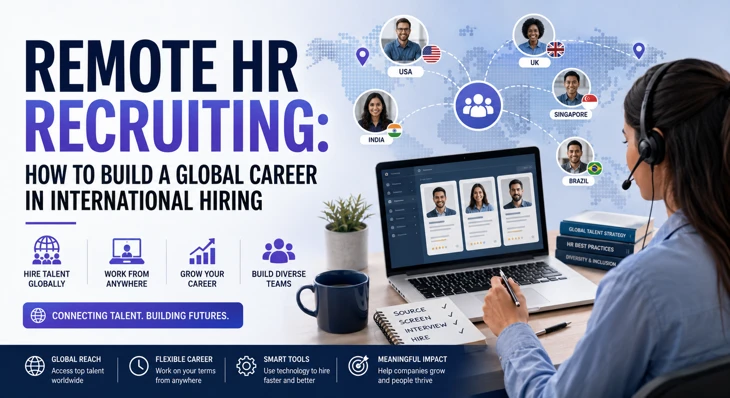
Remote work has reshaped how companies hire, build teams, and expand across borders. One of the fastest-growing opportunities in this space is remote HR recruiting—a career path that allows professionals to hire talent globally without being tied to a physical office. Whether you're just starting in HR or looking to transition into global talent acquisition, this field offers flexible work, international exposure, and long-term career growth. This guide breaks down everything you need to know to build a successful career in remote HR recruiting, including the required skills, tools, career paths, and real-world strategies to stand out in the global hiring market.Understanding Remote HR Recruiting in the Modern Workforce
Remote HR recruiting refers to the process of sourcing, screening, interviewing, and hiring candidates for companies while working from anywhere in the world. Instead of being restricted to local talent pools, recruiters can now access global candidates across multiple time zones and industries. The rise of virtual HR recruitment has been driven by:- Remote-first companies expanding globally
- Increased demand for specialized talent
- Advancements in recruitment technology
- Cost efficiency in international hiring
Why Remote HR Recruiting Is a High-Growth Career Path
The demand for global talent acquisition professionals has never been higher. Organizations are no longer hiring just locally—they’re competing globally for top talent.Key Reasons Behind Its Growth
- Businesses are expanding into international markets
- Startups and enterprises prefer remote hiring models
- Talent shortages in tech, healthcare, and digital roles
- Increased reliance on freelance and contract professionals
Essential Skills for a Successful Remote HR Recruiting Career
To succeed in international hiring, recruiters need a mix of technical, communication, and strategic skills.1. Strong Communication Skills
Clear and effective communication is critical when working across cultures and time zones. You must be able to write job descriptions, conduct interviews, and manage expectations professionally.2. Understanding of Global Hiring Practices
Different countries have different labor laws, hiring norms, and salary expectations. A strong remote recruiter understands these variations and adapts accordingly.3. Talent Sourcing Expertise
You should be skilled in finding candidates through:- LinkedIn recruiting
- Job boards
- Talent databases
- Social media platforms
- Referral networks
4. Familiarity with HR Tools
Modern recruitment relies heavily on technology. Common tools include:- Applicant Tracking Systems (ATS)
- Video interview platforms
- HR analytics tools
- CRM systems for candidate management
5. Cultural Awareness
Working in global talent acquisition requires sensitivity to cultural differences in communication, negotiation, and workplace expectations.How to Start a Career in Remote HR Recruiting
Starting your journey doesn’t require decades of experience, but it does require a strategic approach.Step 1: Build a Strong HR Foundation
Begin with basic HR knowledge, such as recruitment processes, the employee lifecycle, and interview techniques. Online HR certifications can be helpful here.Step 2: Learn Remote Recruitment Tools
Familiarize yourself with ATS platforms, LinkedIn Recruiter, and communication tools like Slack, Zoom, and Microsoft Teams.Step 3: Gain Practical Experience
Look for internships, freelance recruitment projects, or entry-level HR roles. Even small projects can help you understand real-world hiring dynamics.Step 4: Build a Professional Portfolio
Showcase:- Roles you have hired for
- Industries you have worked in
- Metrics like time-to-hire or placement success
Step 5: Apply for Remote Recruiter Jobs
Start applying to companies that offer virtual HR recruitment roles. Highlight your adaptability, communication skills, and global mindset.Tools That Power Remote HR Recruiting
Technology plays a major role in international hiring. The right tools can significantly improve efficiency and candidate experience.Applicant Tracking Systems (ATS)
Helps manage candidate pipelines, track applications, and streamline recruitment workflows.Video Interview Platforms
Tools like Zoom or specialized hiring platforms make remote interviews seamless across time zones.LinkedIn and Talent Platforms
LinkedIn remains the most powerful sourcing platform for global talent acquisition.Assessment Tools
These help evaluate candidate skills through tests, coding challenges, or behavioral assessments. Using the right combination of tools helps recruiters stay organized and efficient while managing global hiring demands.Challenges in International Hiring and How to Overcome Them
While remote HR recruiting offers flexibility and growth, it also comes with challenges.Time Zone Differences
Coordinating interviews across regions can be complex. Solution: Use scheduling tools and flexible communication windows.Cultural Differences
Miscommunication can occur due to cultural variations. Solution: Invest time in understanding cultural norms.Legal and Compliance Issues
Hiring internationally involves labor laws and visa considerations. Solution: Work closely with HR compliance teams or legal advisors.Competition for Talent
Global candidates often receive multiple offers. Solution: Improve employer branding and candidate experience.Career Opportunities in Remote HR Recruiting
Once you gain experience, several career paths open up in global hiring:- Remote HR Recruiter
- Talent Acquisition Specialist
- Global Recruitment Consultant
- HR Business Partner (Remote)
- Employer Branding Specialist
Real-Life Example: A Global Recruiting Journey
Consider a recruiter based in India working for a US-based startup. Instead of relocating, they manage the entire hiring process remotely—from sourcing developers in Europe to onboarding designers in South America. Within a year, they build a strong global network, improve hiring speed for the company, and position themselves as a key contributor in the international hiring strategy. This is a real example of how remote HR recruiting transforms careers.Tips to Stand Out as a Remote HR Recruiter
- Develop a strong LinkedIn presence focused on recruitment insights
- Stay updated with global hiring trends
- Improve negotiation and candidate engagement skills
- Focus on building long-term relationships with candidates
- Continuously learn new HR technologies