📚 Table of Contents
- Introduction
- Understanding Renewable Energy Consulting in Simple Terms
- Why Remote Work Fits This Industry So Well
- Skills You Actually Need to Get Started
- Technical Skills That Matter
- Soft Skills That Make a Big Difference
- How to Build a Remote Career in Renewable Energy Consulting
- Start With the Right Educational Background
- Certifications That Help You Stand Out
- Build a Portfolio That Shows Real Thinking
- Start Small With Freelance Projects
- Career Paths You Can Explore
- ESG Consultant
- Energy Efficiency Analyst
- Solar and Wind Energy Consultant
- Sustainability Strategist
- How to Find Remote Jobs in This Field
- Use the Right Search Terms
- Networking Still Matters More Than You Think
- Keep Your Online Profile Clean and Clear
- Challenges You Should Be Ready For
- High Competition
- Fast-Changing Industry
- Trust in Remote Work
- The Future of Remote Renewable Energy Consulting
- FAQs
- 1. Do I need an engineering degree for this career?
- 2. Is remote renewable energy consulting stable?
- 3. What tools do consultants use remotely?
- 4. How do beginners start in green tech consulting?
- 5. Are ESG consulting jobs growing?
- Conclusion
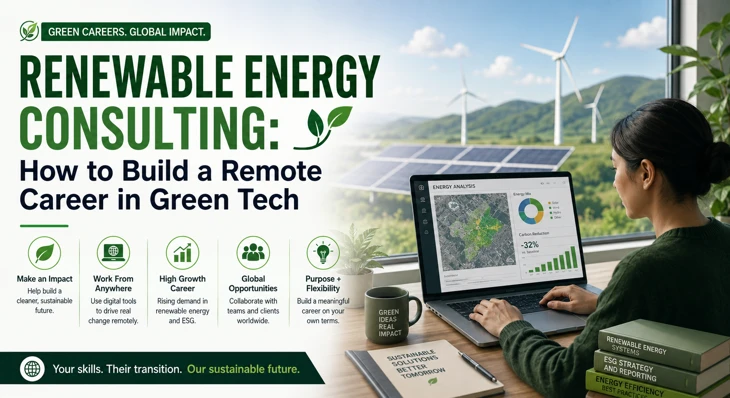
Renewable Energy Consulting: How to Build a Remote Career in Green Tech
Introduction
The shift toward clean energy isn’t something coming in the future anymore—it’s already here. Solar panels are covering rooftops, wind farms are expanding across landscapes, and companies are being pushed to cut emissions faster than ever. In the middle of all this change, one career path is quietly becoming powerful: remote renewable energy consulting. What makes it interesting is simple. You don’t always need to be on-site to make an impact. With the right skills and tools, you can analyze energy systems, guide sustainability plans, and support global green projects—all from your laptop. This is why remote renewable energy consulting is becoming one of the most flexible and meaningful career options in the green tech space today.Understanding Renewable Energy Consulting in Simple Terms
At its core, renewable energy consulting is about helping businesses and organizations transition to cleaner energy more effectively. Instead of guessing what works, consultants study data, evaluate systems, and suggest practical solutions. You might work on things like:- Improving energy efficiency in buildings
- Helping companies move to solar or wind energy
- Reducing carbon emissions through better planning
- Supporting ESG reporting and compliance
Why Remote Work Fits This Industry So Well
A few years ago, this kind of work was mostly on-site. Today, things are different. Most analysis happens digitally, using advanced software and cloud-based tools. That shift has opened doors for remote renewable energy consultant roles across the world. Here’s why remote works so well:- Energy data can be analyzed online
- Reports are shared digitally
- Meetings happen over video calls
- Tools like GIS and simulation software are cloud-based
Skills You Actually Need to Get Started
You don’t need to know everything on day one, but you do need a solid foundation.Technical Skills That Matter
These are the core areas that help you stand out:- Understanding solar, wind, and other renewable systems
- Energy efficiency consulting basics
- Data interpretation and simple modeling
- ESG frameworks and sustainability reporting
- Basic knowledge of carbon accounting
Soft Skills That Make a Big Difference
Technical knowledge alone won’t carry your career. Communication and thinking skills matter just as much. You should be comfortable with:- Explaining technical ideas in simple language
- Managing deadlines without supervision
- Working with global teams remotely
- Solving problems with a practical mindset
How to Build a Remote Career in Renewable Energy Consulting
Start With the Right Educational Background
Many professionals come from:- Environmental science
- Mechanical or electrical engineering
- Sustainability or climate studies
- Data-related fields
Certifications That Help You Stand Out
If you want to enter remote renewable energy consulting seriously, certifications make a big difference:- LEED certification for green buildings
- Certified Energy Manager (CEM)
- ESG and sustainability courses
- Renewable energy fundamentals programs
Build a Portfolio That Shows Real Thinking
Employers and clients don’t just want theory. They want proof that you can solve problems. Your portfolio can include:- Energy audit sample reports
- Small solar or wind feasibility studies
- Carbon reduction strategies for a mock company
- Simple dashboards showing energy savings
Start Small With Freelance Projects
Many people begin their journey through freelance work. You’ll find opportunities like:- ESG reporting support
- Energy efficiency analysis
- Sustainability research projects
Career Paths You Can Explore
Remote renewable energy consulting is not just one job. It opens multiple directions.ESG Consultant
Companies need help tracking environmental and social impact. ESG consultants guide reporting and strategy.Energy Efficiency Analyst
This role focuses on reducing energy waste in buildings and industries. Even small improvements can save huge costs.Solar and Wind Energy Consultant
These specialists evaluate sites, assess feasibility, and support planning for renewable projects.Sustainability Strategist
A broader role focused on long-term green planning for organizations. Each path can be done remotely, depending on the company and project type.How to Find Remote Jobs in This Field
Use the Right Search Terms
Instead of general job searches, try focused keywords like:- remote renewable energy consulting jobs
- ESG consulting remote roles
- green tech sustainability analyst
- energy efficiency consultant remote
Networking Still Matters More Than You Think
Most opportunities don’t come from job boards alone. Try:- Joining sustainability groups on LinkedIn
- Attending online green energy webinars
- Connecting with professionals in clean tech spaces
Keep Your Online Profile Clean and Clear
Your LinkedIn profile should clearly show:- What you specialize in
- Tools and skills you use
- Projects you’ve worked on
- Interest in remote renewable energy consulting