Civil Engineering Consulting Online: How to Build a Global Remote Career
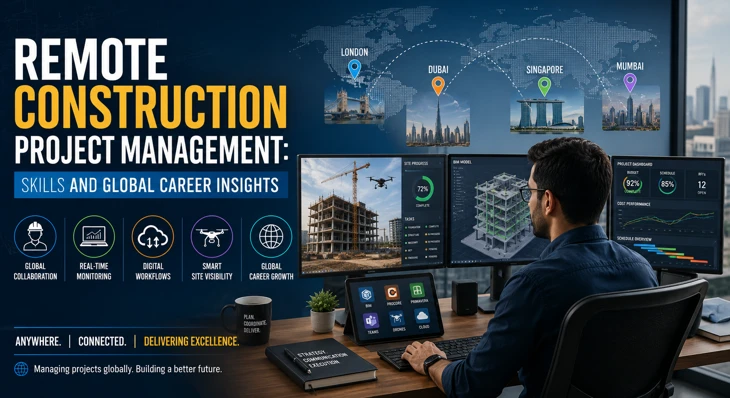
Civil engineering is no longer confined to drawing boards, construction sites, or long on-site inspections. Today, a growing number of engineers are building meaningful careers from home, collaborating with international clients, and contributing to real infrastructure projects without ever stepping onto a job site.
This shift didn’t happen overnight. It evolved quietly through better software, faster communication tools, and a global demand for cost-effective engineering expertise. What once required physical presence can now be handled through a laptop, a stable internet connection, and strong technical judgment.
If you are exploring civil engineering consulting online as a career path, this guide walks through how it actually works in practice, what skills matter most, and how engineers are building sustainable global income streams from remote work.
How Online Civil Engineering Consulting Actually Works
At its core, online civil engineering consulting is about solving engineering problems remotely. Instead of being physically present at a construction site, consultants receive drawings, project requirements, soil reports, or design briefs digitally and deliver solutions using engineering software.
In many cases, clients never meet the consultant in person. Everything moves through email, cloud storage, and video calls.
A typical workflow might look like this:
A client shares architectural plans → the engineer reviews structural feasibility → calculations are performed → design drawings are created → revisions are discussed online → final files are delivered digitally.
It sounds simple on paper, but behind each step lies serious technical responsibility. One miscalculation can affect safety, cost, and compliance.
Why This Career Path Is Growing So Fast
There was a time when civil engineering was considered strictly field-based. That mindset is changing quickly, and several real-world shifts are driving it.
One of the biggest reasons is software. Tools like AutoCAD, Revit, and structural analysis platforms have made it possible to design and test structures virtually before anything is built.
Another factor is global outsourcing. Engineering firms in countries with high operational costs often rely on skilled consultants from other regions to handle drafting, modeling, and analysis work.
Then there’s the way people work today. Remote collaboration is no longer unusual—it’s expected in many industries. Civil engineering is simply catching up.
And finally, freelance platforms have made it easier than ever to access clients. An engineer sitting in one country can now support a project halfway across the world without a complicated setup.
Skills That Actually Make You Hireable Online
Technical knowledge alone is not enough to succeed in remote civil engineering consulting. Clients are not just hiring an engineer—they are trusting someone to deliver work without supervision.
So yes, structural fundamentals matter. You need to understand load paths, material behavior, foundation design, and stability principles. But what really changes your career trajectory is how well you combine that knowledge with digital fluency.
For example, being comfortable in AutoCAD is expected. But being able to quickly interpret client feedback over email, revise drawings without confusion, and manage deadlines across time zones—that’s where professionals stand out.
There’s also a communication layer most engineers underestimate. Explaining a structural decision to someone who is not technical requires clarity, not jargon. Clients value engineers who can simplify complexity without losing accuracy.
The software stack used in online civil engineering consulting is surprisingly accessible. Most engineers already know at least part of it.
AutoCAD is still the backbone for drafting. Revit has become essential for BIM-based coordination, especially in larger projects where architecture and structure must align closely. STAAD Pro or similar tools are commonly used for structural analysis, especially in commercial projects.
But tools alone are not enough.
The real shift happens in how you use collaboration platforms. Instead of site meetings, you rely on Zoom calls. Instead of physical markups, you annotate PDFs. Instead of handing over printed drawings, you manage version control through cloud storage.
Google Drive, Dropbox, and project management tools quietly become part of your daily engineering workflow.
How Engineers Start Building a Remote Career
Most people don’t begin with big international contracts. It usually starts much smaller.
A common entry point is freelance platforms, where engineers take up drafting or basic analysis tasks. These early projects may not be highly paid, but they build something more important: proof of reliability.
Over time, a pattern emerges. Clients begin returning. Recommendations start circulating. A portfolio slowly forms—not just of designs, but of trust.
At some point, specialization becomes important. Generalists struggle to scale, but engineers who focus on specific areas like residential structural design, BIM modeling, or infrastructure planning tend to grow faster.
And then there is visibility. A strong LinkedIn profile or a simple portfolio website can quietly bring inbound opportunities without constant bidding or pitching.
A Simple Real-World Scenario
Imagine a small architectural firm in Canada working on a housing project. They have the design ready but need structural support.
Instead of hiring a full-time engineer locally, they reach out to a remote consultant.
The architect sends drawings and specifications. The consultant reviews load requirements, suggests beam placements, runs calculations, and prepares structural drawings.
A few revisions happen over video calls. Everything is shared digitally. The construction eventually moves forward based on those remote inputs.
No physical meeting ever takes place, yet the engineering work is very real and directly impacts the built structure.
Challenges That Most People Don’t Talk About
Remote civil engineering consulting is not without friction.
One of the first challenges is timing. Working with clients across different time zones can slow down feedback loops. A simple clarification might take a full day.
Another issue is inconsistency in standards. Building codes differ from country to country, and adapting to those requirements takes effort.
There’s also the trust factor. Clients are often cautious when hiring someone they have never met. Early communication and delivery consistency become critical.
And sometimes, file compatibility creates unexpected delays. A model created in one software version may not open correctly in another.
These are small issues individually, but together they shape the reality of remote work.
How Professionals Overcome These Barriers
Experienced consultants don’t try to eliminate these challenges—they manage them.
They document everything clearly, so misunderstandings are reduced. They set realistic timelines instead of rushing commitments. They confirm design assumptions early instead of assuming alignment.
Most importantly, they communicate more than they think is necessary. In remote engineering work, silence often creates more problems than mistakes.
Consistency builds trust faster than any portfolio ever can.
Where This Career Is Heading Next
Civil engineering is gradually merging with digital technologies. BIM is becoming standard practice in many regions. AI-assisted design tools are starting to reduce repetitive drafting work. Digital twin models are being used for infrastructure monitoring.
All of these points in one direction: engineering work will become more remote, more collaborative, and more data-driven.
Engineers who adapt early will naturally find themselves ahead—not because they worked harder, but because they aligned with the industryis evolution.
FAQs
Can civil engineers really work remotely on real projects?
Yes. Many engineers already handle design, drafting, and analysis work entirely online using professional software and cloud collaboration tools.
Do I need advanced software skills to start?
You don’t need to know everything at once, but a strong working knowledge of AutoCAD and at least one structural analysis tool is important.
Is freelance civil engineering work stable?
It can be, but stability usually comes after building long-term client relationships rather than one-time projects.
How do I find international clients?
Most engineers start on freelance platforms, but long-term growth usually comes from networking on LinkedIn and referrals.
Is this field suitable for beginners?
Yes, but beginners should focus on small tasks first, such as drafting or basic modeling, before moving into more complex structural consulting.
Conclusion
Civil engineering consulting online is not a trend that will fade away. It is becoming a normal part of how the industry operates. The combination of digital tools, global collaboration, and flexible work structures has permanently changed what an engineering career can look like.
You don’t need to abandon traditional engineering paths to explore this space. You just need to gradually build digital capability alongside technical knowledge.
Over time, small remote projects can turn into consistent global work, and consistent work can turn into a fully independent consulting career.
The opportunity is already here. The real question is how quickly you choose to step into it.