📚 Table of Contents
- Introduction: A Career That Moves With the World
- Understanding Maritime and Shipping Consulting in Real Terms
- Why This Career Is Now Possible Remotely
- Shipping Systems Are Now Digital
- Global Trade Is More Complex Than Ever
- Businesses Prefer Flexible Expertise
- Collaboration Tools Have Changed Everything
- Skills That Shape a Strong Maritime Consultant
- Understanding the Shipping World
- Thinking in Systems and Patterns
- Comfort With Digital Tools
- Clear Communication
- How People Actually Start This Career
- Learning the Industry Step by Step
- Building Real Experience
- Finding a Focus Area
- Creating Visibility
- Taking Small Consulting Projects
- Expanding Globally
- Setting Up for Remote Maritime Consulting Work
- How Income Works in Maritime Consulting
- A Simple Real-World Scenario
- Challenges You Should Expect
- What Helps You Succeed Long-Term
- The Direction This Industry Is Heading
- FAQs
- Is maritime consulting suitable for beginners?
- Can this work really be done remotely?
- Do I need formal certification?
- How do consultants typically find clients?
- Is this a stable long-term career?
- Conclusion: Turning Knowledge Into a Global Career
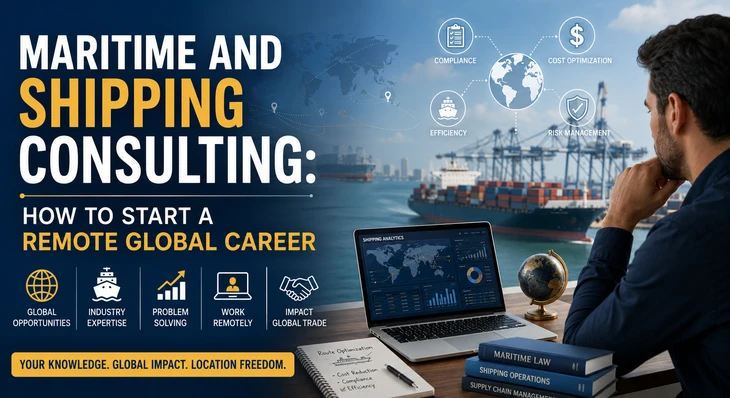
Maritime and Shipping Consulting: How to Start a Remote Global Career
Introduction: A Career That Moves With the World
If you look closely at how the world actually runs, almost everything depends on shipping. The phone in your hand, the clothes you’re wearing, even everyday food items—most of it has spent time on a ship at some point. Yet the people who make this system work are often invisible. For a long time, maritime work was associated with physical presence—ports, vessels, paperwork in offices near harbors, and long travel schedules. That picture is still true in parts, but it no longer tells the full story. A quiet shift has been taking place. Maritime and shipping consulting has become one of those rare careers in which deep industry knowledge can now be applied remotely, across borders, and often from home. Companies no longer just need people on the ground; they need thinkers who can understand data, improve systems, and solve logistics problems from anywhere in the world. This shift has opened a new path: a remote global career in maritime and shipping consulting.Understanding Maritime and Shipping Consulting in Real Terms
At its core, maritime and shipping consulting is about improving the way goods move around the world. It sounds simple, but in reality, it touches everything from fuel efficiency to international regulations. A consultant in this space is not handling cargo directly. Instead, they step back, study the entire shipping process, and ask questions like:- Why are shipments delayed on this route?
- How can fuel consumption be reduced without affecting delivery timelines?
- Are we compliant with international maritime regulations?
- Where is money being lost in the logistics chain?
Why This Career Is Now Possible Remotely
The idea of working in maritime consulting from home would have sounded unrealistic a decade ago. Today, it is becoming normal, and several changes explain why.Shipping Systems Are Now Digital
Modern shipping relies heavily on software systems. Cargo tracking, fleet monitoring, fuel data, and route planning are all stored digitally. This allows consultants to access insights without being physically present at ports or ships.Global Trade Is More Complex Than Ever
International trade has grown in both size and complexity. Weather disruptions, fuel price fluctuations, geopolitical issues, and regulatory changes all affect shipping timelines. Companies constantly need external expertise to stay efficient.Businesses Prefer Flexible Expertise
Instead of hiring full-time specialists, many companies now prefer experienced consultants who can step in for specific problems or projects. This makes consulting naturally remote-friendly.Collaboration Tools Have Changed Everything
With video calls, cloud dashboards, and real-time communication tools, working with teams across continents has become smooth and efficient. Geography is no longer a limitation.Skills That Shape a Strong Maritime Consultant
There is no single path into this field, but successful consultants tend to build a combination of industry knowledge, analytical ability, and communication skills over time.Understanding the Shipping World
Before anything else, you need to understand how global shipping actually works. This includes cargo movement, port operations, documentation, and compliance requirements under international maritime laws. Even a basic understanding of how goods move from one country to another builds a strong foundation.Thinking in Systems and Patterns
Shipping is not random. It follows systems—routes, schedules, demand cycles, and cost structures. A good consultant learns to see patterns in delays, inefficiencies, and expenses. This is where analytical thinking becomes valuable. You start identifying small issues that create large downstream problems.Comfort With Digital Tools
You don’t need to be highly technical, but you should be comfortable working with spreadsheets, dashboards, and logistics software. Much of the work today revolves around interpreting data rather than collecting it.Clear Communication
One of the most underrated skills in consulting is clarity. Clients often come from different countries and industries. Explaining complex shipping issues in simple, actionable language is what builds trust.How People Actually Start This Career
Most professionals don’t enter maritime consulting directly. It usually evolves over time through experience and specialization. A realistic path often looks like this.Learning the Industry Step by Step
Many start in logistics, shipping operations, or freight forwarding roles. Others take structured courses in supply chain management or maritime studies. The goal at this stage is simple: understand how global trade functions in practice.Building Real Experience
Hands-on exposure matters. Working with shipping schedules, cargo coordination, or port operations gives you insights that no textbook can fully teach.Finding a Focus Area
Instead of trying to cover everything, successful consultants usually specialize. Some focus on freight optimization, others on compliance, and others on cost-reduction strategies in shipping operations.Creating Visibility
At some point, professionals begin sharing insights online or building a presence on platforms like LinkedIn. This is where opportunities often start to appear naturally.Taking Small Consulting Projects
Initial projects are usually small—helping exporters solve shipping delays or assisting logistics firms with cost issues. These projects build credibility over time.Expanding Globally
As experience grows, consultants start working with international clients. This is where the remote aspect becomes more structured and sustainable.Setting Up for Remote Maritime Consulting Work
The setup for this kind of work is surprisingly simple. What matters more is consistency and discipline. A typical remote consultant usually works with:- A reliable laptop
- Stable internet connection
- Spreadsheet tools for analysis
- Communication platforms for client interaction
How Income Works in Maritime Consulting
Earnings in this field vary widely depending on experience and expertise. Some consultants charge hourly rates for short-term advice, while others work on fixed project fees. More experienced professionals often move toward monthly retainers or long-term advisory roles. High-value consulting areas usually include:- Shipping cost optimization
- Risk assessment in global logistics
- Compliance audits for international trade
- Supply chain restructuring projects
A Simple Real-World Scenario
Imagine someone who spent several years working in a shipping company, handling route planning and cargo coordination. Over time, they begin to notice recurring inefficiencies—delays in specific ports, unnecessary fuel costs, or avoidable documentation errors. Instead of staying in the same role, they start advising small exporters who struggle with international shipping. At first, it is occasional guidance. Then it becomes structured consulting work. As results improve for clients, referrals increase. Eventually, they are working with companies across multiple countries, all while operating remotely. This kind of transition is no longer rare. It is becoming a natural evolution in the logistics industry.Challenges You Should Expect
Like any global consulting career, this path comes with its own set of challenges. Regulations differ from country to country and change frequently. Staying updated is not optional. There is also a high level of responsibility. Decisions in shipping can have a significant financial impact and involve tight deadlines. Competition is increasing as more professionals enter remote consulting roles. Standing out requires consistency and specialization. Finally, working across time zones demands flexibility and careful planning.What Helps You Succeed Long-Term
Success in maritime and shipping consulting is rarely sudden. It builds gradually through experience and reputation. Professionals who do well tend to:- Stay updated with global shipping trends
- Focus on solving real operational problems
- Build long-term client relationships
- Develop expertise in a specific niche
- Improve communication and reporting skills continuously