📚 Table of Contents
- Understanding International Relations Consulting in Today’s Global Economy
- Why Remote Work Fits Naturally Into This Field
- The world runs on digital communication now
- Clients care about insight, not location
- Global demand keeps increasing
- Core Skills That Actually Make a Difference
- Analytical thinking
- Writing and communication
- Awareness of global affairs
- Cultural intelligence
- Digital comfort
- How People Actually Start in This Career
- Step 1: Build a foundation of knowledge
- Step 2: Start reading with purpose
- Step 3: Work on small research projects
- Step 4: Gain exposure through internships or volunteering
- Step 5: Start offering freelance consulting support
- Popular Remote Roles in International Relations Consulting
- Global risk consultant
- Policy researcher
- International development advisor
- Trade and market analyst
- Cross-border communication advisor
- Real Challenges You Should Be Ready For
- Information overload is real
- Trust takes time
- Time zones can be tricky
- Staying relevant requires effort
- Practical Ways to Build a Strong Remote Career
- Develop a niche
- Build an online presence
- Write regularly
- Follow global experts
- Keep improving communication skills
- The Future of International Relations Consulting
- FAQs
- Is international relations consulting a good remote career option?
- Do I need a degree to enter this field?
- How do consultants find international clients?
- Can beginners start freelancing in this field?
- What is the most important skill in this career?
- Conclusion
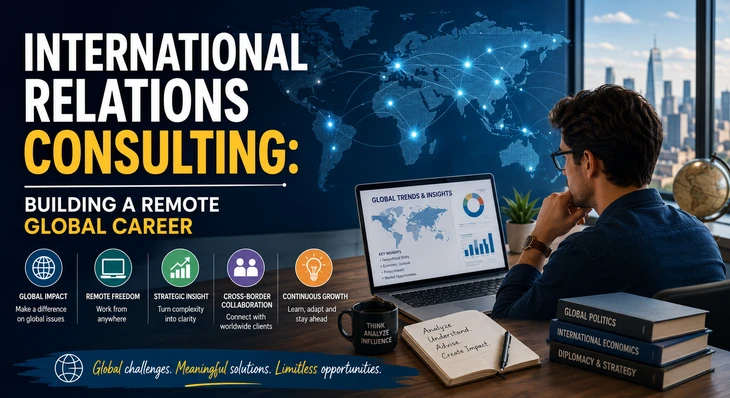
International Relations Consulting: Building a Remote Global Career
The idea of working in international relations used to feel tied to government offices, embassies, and high-level diplomatic missions. But things have changed dramatically. Today, international relations consulting has become a flexible, remote-friendly career path where professionals can work with global organizations, NGOs, research firms, and even private companies—without ever setting foot in a physical office. What makes this field exciting is not just the global exposure, but the ability to contribute meaningfully to real-world decisions while working from anywhere. Whether you’re in a small town or a major city, the digital world has opened doors that simply didn’t exist a decade ago. This blog takes a practical look at how international relations consulting works today, what skills actually matter, and how you can build a sustainable remote global career in this space.Understanding International Relations Consulting in Today’s Global Economy
International relations consulting is essentially about helping organizations understand and navigate the complexities of global politics, economics, and cross-border relationships. Instead of working as a diplomat, a consultant acts as an external advisor. They analyze international developments and translate them into practical insights for decision-makers. For example, a company planning to expand into Southeast Asia might hire a consultant to understand:- Political stability in the region
- Trade regulations and import/export laws
- Cultural expectations in business environments
- Potential risks due to policy changes or elections
Why Remote Work Fits Naturally Into This Field
Unlike traditional roles that require physical presence, international relations consulting is highly knowledge-based. That makes it ideal for remote work.The world runs on digital communication now
Most consulting work happens through video calls, research reports, and digital collaboration tools. You don’t need to be in Washington, London, or Geneva to contribute to global discussions anymore.Clients care about insight, not location
A business or NGO doesn’t hire a consultant for their address. They hire them for clarity, analysis, and strategic thinking. If you can deliver that, your location becomes irrelevant.Global demand keeps increasing
From climate policy to international trade disputes, organizations are constantly looking for guidance. The demand for remote experts who can interpret global trends is only growing stronger.Core Skills That Actually Make a Difference
Many people assume this field is only about academic knowledge. In reality, success depends on a combination of practical skills that develop over time.Analytical thinking
At the heart of this profession is the ability to analyze global events and understand what they mean for businesses, governments, and other organizations. For example, if a country changes its import tariffs, a consultant should quickly interpret how that impacts supply chains or market entry strategies.Writing and communication
Most of your work will be delivered in written form—reports, briefs, summaries, and recommendations. Clear, structured writing is essential. You don’t need complicated language. In fact, simplicity is more powerful in this field.Awareness of global affairs
A good consultant follows international news regularly. Not casually, but with a focus on patterns, shifts, and long-term implications.Cultural intelligence
Working across borders means understanding how communication styles, business expectations, and decision-making vary across cultures.Digital comfort
Since this is a remote career, you’ll rely heavily on tools like research databases, collaboration platforms, and communication apps.How People Actually Start in This Career
There is no single entry path into international relations consulting. People enter from different backgrounds—political science, economics, journalism, law, or even business. Here’s a realistic step-by-step approach that works for most beginners.Step 1: Build a foundation of knowledge
Formal education helps, but it’s not the only way. Online courses in international relations, global economics, or geopolitics can also build strong foundations. What matters most is understanding how global systems interact.Step 2: Start reading with purpose
Instead of randomly scrolling through news, start analyzing it. Ask questions like:- Why is this happening?
- Who is affected?
- What could happen next?