📚 Table of Contents
- The Rise of Remote Oil and Gas Consulting in Modern Energy Projects
- Why Engineers Are Moving Toward Remote Oil and Gas Engineering Careers
- Core Roles in Remote Oil and Gas Consulting Careers
- Reservoir and Subsurface Engineers
- Production Optimization Engineers
- Petroleum Data Specialists
- Remote Drilling Consultants
- Sustainability and Energy Transition Experts
- Skills That Matter in Remote Oil and Gas Consulting
- Strong Engineering Foundation
- Comfort With Digital Tools
- Clear Communication Skills
- Analytical Thinking
- How Engineers Can Start a Global Remote Career in Oil and Gas
- Build Strong Technical Depth First
- Get Hands-On With Industry Software
- Create a Work Portfolio
- Start With Contract-Based Work
- Build Industry Connections
- Advantages of Remote Oil and Gas Consulting Careers
- Work From Anywhere
- Exposure to Global Projects
- Better Work Flexibility
- Strong Earning Potential
- Challenges You Should Be Aware Of
- Limited Physical Context
- Time Zone Coordination
- Dependence on Data Quality
- The Future of Remote Oil and Gas Engineering Careers
- Real-World Example of a Remote Engineering Role
- FAQs
- What is remote oil and gas consulting?
- Can engineers really work remotely in the oil and gas industry?
- What skills are most important for remote oil and gas engineering jobs?
- Is remote consulting a stable career option in this industry?
- How can someone start a remote career in this field?
- Conclusion
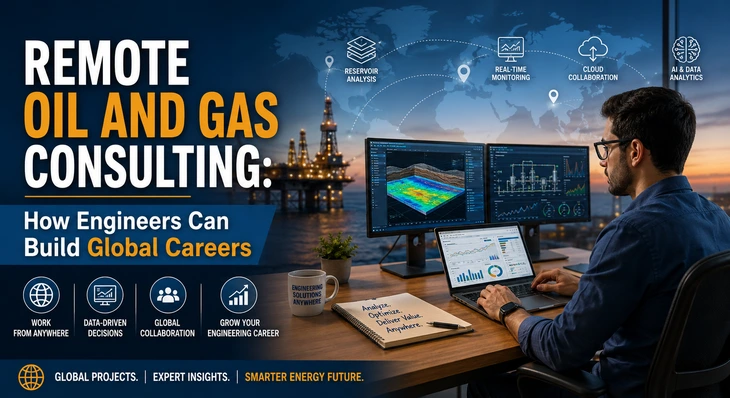
Remote Oil and Gas Consulting: How Engineers Can Build Global Careers
The oil and gas sector isn’t what it was a decade ago. The work that once demanded constant field presence, long offshore rotations, and strict on-site supervision has now shifted into a far more flexible and digitally connected space. Today, engineers can contribute to complex energy projects from anywhere in the world without stepping onto a rig or relocating across continents. That shift is what we now call remote oil and gas consulting—and it is quietly reshaping global engineering careers. What makes this change interesting is not just the technology behind it, but the way it is redefining how engineers work, collaborate, and grow professionally. Instead of being tied to a physical location, expertise has become the real currency.The Rise of Remote Oil and Gas Consulting in Modern Energy Projects
Remote oil and gas consulting is essentially engineering support delivered through digital systems, real-time data platforms, and virtual collaboration tools. Engineers analyze production data, monitor reservoir performance, and guide operational decisions without being physically present at the site. This approach is no longer experimental. It is widely used across upstream, midstream, and downstream operations, especially by companies that manage assets in multiple countries. A big reason behind this shift is efficiency. When decisions are based on live data and expert analysis rather than physical presence alone, companies can respond faster and reduce operational costs. Another driving factor is the digital oilfield concept, where sensors, cloud systems, and AI-driven analytics work together to create a connected operational environment.Why Engineers Are Moving Toward Remote Oil and Gas Engineering Careers
There’s a growing demand for remote oil and gas engineering careers because the industry faces a unique challenge: experienced talent is scarce, while global operations are expanding rapidly. Instead of relocating engineers to every site, companies now prefer centralized experts who can manage multiple assets remotely. Some of the key reasons include:- Widespread adoption of digital monitoring systems
- Rising operational costs of field-based teams
- Increased reliability of cloud-based engineering tools
- Demand for faster, data-driven decision-making
- Global shortage of specialized petroleum engineers
Core Roles in Remote Oil and Gas Consulting Careers
Remote opportunities in this industry are surprisingly diverse. It’s not limited to one type of engineering job. Instead, multiple disciplines now support global operations remotely.Reservoir and Subsurface Engineers
These engineers study underground formations and estimate how much oil or gas can be extracted. Using simulation software and geological data, they build models that guide drilling decisions and production strategies. Even from a home office, they play a critical role in determining whether a project is profitable.Production Optimization Engineers
Production engineers focus on improving output and reducing inefficiencies. They track well performance and recommend adjustments that can significantly increase production rates. Much of their work involves analyzing real-time dashboards and collaborating with field teams via video calls and shared systems.Petroleum Data Specialists
Data is now the backbone of modern energy operations. Engineers in this role interpret large datasets from sensors, drilling logs, and production systems. They help companies understand patterns that are not visible at the surface level.Remote Drilling Consultants
These professionals support drilling operations by designing well plans, reviewing execution strategies, and monitoring performance remotely. Their input often helps avoid costly mistakes during drilling.Sustainability and Energy Transition Experts
With the industry slowly moving toward cleaner energy practices, many engineers now work on emissions tracking, carbon-reduction strategies, and hybrid energy system integration—all remotely.Skills That Matter in Remote Oil and Gas Consulting
Technical knowledge alone is no longer enough. Engineers who succeed in remote oil and gas consulting usually combine engineering expertise with digital fluency and strong communication skills.Strong Engineering Foundation
A solid understanding of petroleum, chemical, or mechanical engineering is still the starting point. Without this, remote analysis lacks depth and accuracy.Comfort With Digital Tools
Modern consulting depends heavily on technology. Engineers often work with:- Reservoir simulation platforms
- Cloud-based monitoring systems
- Data visualization dashboards
- Predictive analytics tools
Clear Communication Skills
Since teams are spread across countries, communication becomes essential. Engineers must be able to explain technical insights in a way that non-technical stakeholders can understand.Analytical Thinking
Remote work means you don’t see the physical site. So your ability to interpret data and make logical decisions becomes extremely important.How Engineers Can Start a Global Remote Career in Oil and Gas
Moving into remote consulting doesn’t happen overnight. It usually takes a structured approach and a bit of strategic planning.Build Strong Technical Depth First
Before anything else, engineers need to be confident in their core subject. Whether it’s reservoir engineering or drilling systems, depth matters more than surface-level knowledge.Get Hands-On With Industry Software
Companies prefer engineers who can immediately contribute. Learning simulation and data tools early makes a big difference when applying for remote roles.Create a Work Portfolio
A simple but well-organized portfolio can set you apart. It can include:- Academic projects
- Simulation results
- Case study breakdowns
- Personal analysis reports