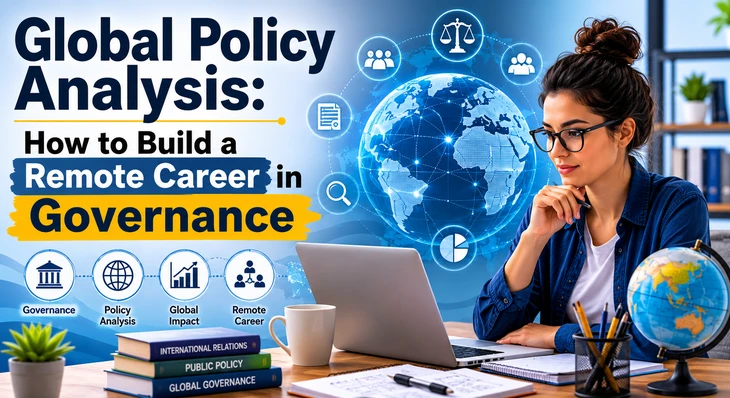
Global Policy Analysis: How to Build a Remote Career in Governance
Introduction
There was a time when working in governance or global policy analysis meant sitting inside government buildings, research offices, or international organizations in major capital cities. That picture has changed quite a bit.
Today, policy work has quietly moved into laptops, shared dashboards, and virtual meetings that connect professionals across continents. If you’re someone interested in how decisions are made at a global level—whether it’s climate agreements, economic reforms, or education systems—there’s a real possibility to build a remote career in governance without relocating to a major hub.
What makes this shift interesting is not just the flexibility, but the reach. A single policy analyst working from home in one country can contribute to research that influences decisions on the other side of the world. That kind of access didn’t exist at this scale a decade ago.
This guide breaks down how global policy analysis works in a remote setting, what skills actually matter in real-world roles, and how people are building meaningful careers in this space today.
What Global Policy Analysis Looks Like Today
At its core, global policy analysis is about understanding how rules, systems, and decisions affect people and economies. It could involve studying healthcare systems in developing countries, analyzing trade policies between regions, or reviewing climate action plans adopted by governments.
In a remote setup, the work doesn’t change in purpose—it changes in delivery.
Instead of sitting in an office, professionals now:
- Break down policy reports using online databases
- Work with international teams through digital collaboration tools
- Write research briefs and policy summaries
- Analyze datasets shared across cloud platforms
- Participate in virtual discussions with stakeholders
The interesting part is that geography has become less important than clarity of thinking. If you can analyze information well and communicate it clearly, you can contribute from almost anywhere.
Why Remote Careers in Governance Are Growing
This shift didn’t happen overnight. It’s the result of several global changes occurring simultaneously.
Governments and institutions are now heavily dependent on digital systems. Data is stored online, meetings are held virtually, and research is often shared across platforms rather than in printed reports. Naturally, this opens the door for remote collaboration.
Another factor is the way organizations think about talent. Think tanks, NGOs, and international agencies increasingly prefer diverse perspectives. Hiring people from different regions brings in a real-world context that improves policy research.
Cost also plays a role, though it’s not the only reason. Remote roles allow organizations to access skilled professionals without being limited to specific cities, significantly expanding the talent pool.
And then there’s the rise of independent consultants. Many policy analysts now work project to project—supporting research papers, evaluations, and advisory work for multiple organizations instead of staying in one fixed role.
Skills That Actually Matter in Policy Analysis
One thing becomes clear quickly in this field: degrees help, but skills keep you relevant.
The most important skill is the ability to think clearly. Policy work often involves messy, real-world problems with no single correct answer. You need to break down complexity into something structured and understandable.
Writing comes next. A large part of policy analysis is translating data and research into something decision-makers can actually use. That means reports, briefs, and summaries that are simple without losing meaning.
Then there’s digital comfort. Remote policy work depends on tools more than people expect. You’ll likely use:
- Online research libraries
- Data visualization platforms
- Spreadsheet tools for analysis
- Collaboration apps for team communication
Beyond tools, understanding global systems matters. Knowing how international relations, economics, and governance structures interact gives your analysis depth.
And finally, there’s critical thinking—the ability to question assumptions, compare perspectives, and avoid jumping to easy conclusions.
Education and Learning Pathways
People often assume there is one fixed route into global policy analysis, but that’s not really true.
Yes, many professionals come from political science, public policy, economics, or international relations. These backgrounds provide a helpful foundation. But they are not the only entry point.
A growing number of professionals enter the field through online learning, research internships, and writing-based experience. What matters more than the label of your degree is how well you understand real policy problems.
Online certifications in governance, data analysis, and development studies can also help bridge gaps. They’re especially useful for building credibility early on.
In many cases, what gets someone hired is not their academic background alone, but how they think on paper.
How People Actually Start a Remote Career in Governance
Most people don’t enter this field through a single job posting. It’s usually a gradual build.
It often starts with curiosity—reading reports from organizations such as the UN, the World Bank, or regional development agencies. Over time, patterns start to make sense. You begin to understand how policies are structured and evaluated.
Then comes practice. Writing small policy summaries or breaking down global issues into simple explanations helps build confidence. These samples slowly become a personal portfolio.
Experience usually follows in smaller steps. That could be volunteer research, internships with NGOs, or freelance support for academic projects. These roles might not feel big at first, but they teach how real policy work functions.
At some point, professionals begin sharing their work online or networking with others in the field. This is often where opportunities begin to appear—through conversations, referrals, or project collaborations.
Eventually, remote roles such as research associate or policy analyst become realistic options.
Where Remote Policy Work Opportunities Come From
Remote roles in governance are not always listed in one place. They are spread across different ecosystems.
International organizations often hire researchers and analysts for global projects, especially in development and sustainability.
Think tanks regularly bring in remote contributors for reports and policy evaluations.
NGOs also play a major role, particularly in areas like education, health, and environmental policy.
On the other hand, freelance platforms and consulting networks are becoming an increasingly popular entry point for independent policy analysts who prefer project-based work.
The key is consistency in searching and building visibility, rather than waiting for a single perfect opportunity.
Challenges You Should Be Prepared For
A remote career in governance sounds flexible, and it is, but it also comes with real challenges.
The first is competition. Since roles are open globally, you’re not just competing locally—you’re competing with applicants from around the world.
The second is discipline. Remote work gives freedom, but it also demands structure. You need to manage your time without external pressure.
There’s also the issue of entry barriers. Some roles expect prior experience, which can feel discouraging for beginners. This is why smaller projects and volunteer work matter early on.
And finally, communication across time zones can sometimes slow down collaboration. It requires patience and adaptability.
How to Stand Out in Global Policy Analysis
What makes someone noticeable in this field is rarely just one factor.
Specialization helps a lot. Instead of trying to cover everything, focusing on areas such as climate policy, digital governance, or economic development can strengthen your profile.
Writing samples are equally important. A well-written policy brief can often say more about your ability than a resume ever will.
Staying informed also matters. Global policy changes constantly, and professionals who stay up to date naturally produce better insights.
Networking plays a quiet but powerful role. Conversations in webinars, online forums, or professional groups often lead to unexpected opportunities.
A Realistic Example of Career Growth
Consider someone who starts with an interest in international development. They begin by reading policy papers and writing short summaries to understand how global systems work.
Later, they volunteer for a small NGO, helping with research on education programs. This experience teaches them how data is used in real decision-making.
Over time, they build a portfolio of writing samples and connect with professionals in the field through online platforms.
Eventually, they land a remote role supporting policy research for an international project. The transition doesn’t happen overnight, but through steady progress.
This is a fairly common path in global policy analysis today.
The Future of Remote Governance Work
The direction is fairly clear—policy work is becoming more digital, more distributed, and more collaborative.
Governments are investing in data-driven decision systems. International organizations are expanding remote teams. Even advisory work is moving into virtual formats.
This means more opportunities for remote policy analysts, not fewer.
We’re also likely to see stronger integration of technology in governance research, including data modeling and AI-supported analysis tools.
For professionals entering today, this creates a long-term opportunity space that continues to evolve.
FAQs
Can someone start a career in global policy analysis without prior experience?
Yes. Many professionals start with writing samples, small research projects, and internships before moving into formal roles.
What is the most important skill in policy analysis?
Clear thinking and the ability to translate complex information into simple, structured insights.
Do remote governance jobs require advanced degrees?
Not always. While degrees help, demonstrated skills and practical experience often matter just as much.
Where can remote policy roles be found?
They are commonly found in international organizations, think tanks, NGOs, and consulting networks.
Is this a stable career path?
Yes, especially as digital governance and remote collaboration continue to expand globally.
Conclusion
A remote career in global policy analysis is no longer an unusual path—it’s becoming part of how modern governance works.
The field rewards curiosity, consistency, and the ability to think clearly about complex global issues. While the journey takes time, it is accessible to those willing to build skills step by step.
As organizations continue to move toward digital-first operations, opportunities in governance and policy analysis will only expand further. The real advantage lies in starting early, building steadily, and staying engaged with global conversations that shape real-world decisions.