📚 Table of Contents
- Understanding Big Data Analytics in Simple Terms
- Why It Matters Today
- Why Big Data Analytics is Perfect for Remote Careers
- Key Reasons Remote Work Fits This Field
- Essential Skills Needed for a Remote Big Data Analytics Career
- 1. Programming Skills
- 2. Data Visualization
- 3. Big Data Tools
- 4. Cloud Platforms
- 5. Soft Skills
- Career Paths in Big Data Analytics
- Data Analyst
- Data Scientist
- Data Engineer
- Business Intelligence Analyst
- How to Start Your Remote Career in Big Data Analytics
- Step 1: Build the Basics
- Step 2: Learn Data Visualization
- Step 3: Work on Real Projects
- Step 4: Learn Big Data Tools
- Step 5: Understand Cloud Platforms
- Step 6: Build a Strong Portfolio
- Real-Life Example of a Remote Big Data Career
- Challenges in Remote Big Data Analytics Careers
- Communication Barriers
- Time Zone Differences
- Continuous Learning
- Data Security
- How to Stand Out in the Job Market
- Build a Strong Online Presence
- Contribute to Open Source Projects
- Earn Relevant Certifications
- Practice Problem-Solving
- Future of Big Data Analytics Careers
- FAQs
- 1. Can I start a big data analytics career without a technical degree?
- 2. How long does it take to become job-ready?
- 3. Is big data analytics a good remote career option?
- 4. What salary can I expect in this field?
- 5. Do I need advanced math skills?
- Conclusion
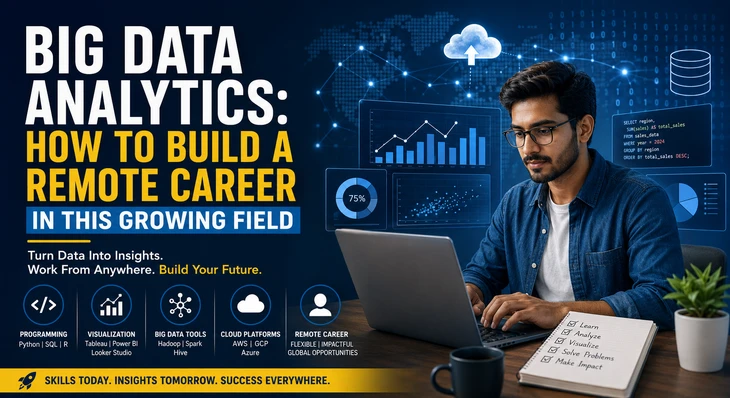
Big Data Analytics: How to Build a Remote Career in This Growing Field
Big data analytics has become one of the most powerful drivers of modern business decisions. From personalized recommendations on streaming platforms to fraud detection in banking systems, data is shaping how the world works behind the scenes. And the exciting part? You don’t need to be tied to a physical office to be part of this revolution. A remote career in big data analytics is not just possible—it’s becoming increasingly common. Companies across the globe are actively hiring data professionals who can work from anywhere, as long as they can turn raw data into meaningful insights. In this guide, we’ll break down how you can build a successful remote career in big data analytics, the skills you need, the tools to learn, and how to stand out in this highly competitive but rewarding field.Understanding Big Data Analytics in Simple Terms
Big data analytics is the process of analyzing large, complex datasets to uncover patterns, trends, and insights that help businesses make better decisions. Think of it like this: every time you browse online, shop, or use an app, you generate data. Big data analytics takes all that scattered information and turns it into something useful—such as predicting which product you might buy next or identifying potential risks in a system.Why It Matters Today
Companies rely heavily on data-driven decisions. Instead of guessing, they now analyze customer behavior, market trends, and operational performance. This shift has created massive demand for skilled professionals who understand data analytics tools and techniques. Some of the industries actively using big data analytics include:- E-commerce
- Healthcare
- Banking and finance
- Marketing and advertising
- Technology and SaaS companies
Why Big Data Analytics is Perfect for Remote Careers
One of the biggest advantages of big data analytics is that it is naturally digital. You don’t need to be physically present in a lab or office to analyze data—you just need a computer, the right tools, and a strong internet connection.Key Reasons Remote Work Fits This Field
- Data is stored in cloud platforms like AWS, Google Cloud, and Azure
- Collaboration happens through dashboards and reporting tools
- Communication is mostly virtual via meetings and messaging platforms
- Work output is measurable and results-driven
Essential Skills Needed for a Remote Big Data Analytics Career
To build a strong foundation, you need both technical and soft skills. Let’s break them down in a practical way.1. Programming Skills
Most big data roles require knowledge of programming languages such as:- Python (most widely used)
- SQL (essential for database management)
- R (used for statistical analysis)
2. Data Visualization
Being able to present data in a clear and visual format is crucial. Tools you should learn include:- Tableau
- Power BI
- Google Data Studio
3. Big Data Tools
For handling large datasets, familiarity with tools like these is a plus:- Hadoop
- Apache Spark
- Apache Hive
4. Cloud Platforms
Since most remote jobs rely on cloud infrastructure, understanding platforms like:- AWS (Amazon Web Services)
- Google Cloud Platform (GCP)
- Microsoft Azure
5. Soft Skills
Remote work requires more than technical ability. You also need:- Strong communication skills
- Time management
- Problem-solving mindset
- Self-discipline
Career Paths in Big Data Analytics
The field offers multiple career opportunities depending on your interests and skill level. Here are some common roles:Data Analyst
A data analyst focuses on interpreting data and creating reports that help businesses make decisions.Data Scientist
Data scientists build predictive models and use advanced algorithms to forecast trends and behavior.Data Engineer
Data engineers design and maintain systems that efficiently collect, store, and process data.Business Intelligence Analyst
These professionals focus on turning data into business insights using dashboards and reports. Each role can be performed remotely, depending on the company’s structure.How to Start Your Remote Career in Big Data Analytics
Starting from scratch can feel overwhelming, but breaking it into steps makes it easier.Step 1: Build the Basics
Start with Python and SQL. These are non-negotiable skills in the data world.Step 2: Learn Data Visualization
Practice creating dashboards and charts using real datasets. This helps you communicate insights effectively.Step 3: Work on Real Projects
Hands-on experience is key. Try:- Analyzing public datasets
- Building small predictive models
- Creating dashboards for mock businesses
Step 4: Learn Big Data Tools
Once you're comfortable with the basics, move to Hadoop and Spark.Step 5: Understand Cloud Platforms
Get familiar with cloud services used in real-world companies.Step 6: Build a Strong Portfolio
A portfolio is your ticket to remote jobs. Include:- GitHub projects
- Case studies
- Dashboards and reports
Real-Life Example of a Remote Big Data Career
Consider a marketing analyst working for a US-based e-commerce company while living in India. Every day, they analyze customer purchase behavior using SQL queries and Python scripts. They then create dashboards in Power BI and share insights during virtual meetings. Despite working across time zones, their insights directly impact marketing campaigns and sales strategies. This is the reality of remote big data careers today.Challenges in Remote Big Data Analytics Careers
While the opportunities are huge, there are also challenges you should be aware of.Communication Barriers
Working remotely can sometimes lead to misunderstandings if communication is not clear.Time Zone Differences
You may need to collaborate with global teams working in different time zones.Continuous Learning
The field evolves quickly, so staying up to date is necessary.Data Security
Handling sensitive data remotely requires strong security practices.How to Stand Out in the Job Market
To succeed in this competitive field, you need more than just technical skills.Build a Strong Online Presence
- Maintain a professional LinkedIn profile
- Share projects and insights regularly
Contribute to Open Source Projects
This helps you gain visibility and real-world experience.Earn Relevant Certifications
Certifications from platforms like Google, Microsoft, or Coursera can strengthen your profile.Practice Problem-Solving
Many interviews include data-related problem-solving tasks.Future of Big Data Analytics Careers
The future looks extremely promising. With the rise of AI, machine learning, and automation, big data analytics is becoming even more powerful. Companies will continue to rely on data-driven decision-making, increasing demand for skilled professionals who can work remotely. Emerging trends include:- AI-powered analytics
- Real-time data processing
- Cloud-native data solutions
- Increased automation in reporting