📚 Table of Contents
- What Is Smart Contract Development?
- Why Remote Blockchain Careers Are Growing Fast
- Global Talent Shortage
- Decentralized Nature of Web3
- Flexible Work Culture
- High Salary Potential
- Essential Skills Needed for Smart Contract Development
- Learn Blockchain Fundamentals
- Master Solidity Programming
- Variables and Data Types
- Functions and Modifiers
- Inheritance and Libraries
- Events and Error Handling
- Security Best Practices
- Understand Blockchain Development Tools
- Remix IDE
- Hardhat
- Truffle
- MetaMask
- Ganache
- Ethers.js and Web3.js
- Learn Basic Front-End Integration
- Build Real Smart Contract Projects
- NFT Marketplace Smart Contract
- Decentralized Voting App
- Token Creation Project
- Crypto Wallet Dashboard
- Staking Smart Contract
- Create a Strong Blockchain Developer Portfolio
- Contribute to Open Source Blockchain Projects
- Learn Smart Contract Security and Auditing
- How to Find Remote Smart Contract Developer Jobs
- Use Blockchain Job Platforms
- Build Your Presence on GitHub and LinkedIn
- Participate in Hackathons
- Join Blockchain Communities
- Common Challenges Beginners Face
- Information Overload
- Lack of Real Practice
- Security Mistakes
- Unrealistic Expectations
- Real-Life Example of a Remote Blockchain Career Path
- Best Learning Resources for Smart Contract Development
- Free Learning Platforms
- YouTube Channels
- Documentation
- Tips to Succeed as a Remote Blockchain Developer
- Focus on Consistency
- Learn Publicly
- Improve Communication Skills
- Stay Updated
- Never Ignore Security
- Future Scope of Remote Smart Contract Development
- FAQs
- How long does it take to become a smart contract developer?
- Do I need a computer science degree for blockchain development?
- Which programming language is best for smart contract development?
- Can beginners get remote blockchain jobs?
- Is blockchain development a good career in 2026?
- Conclusion
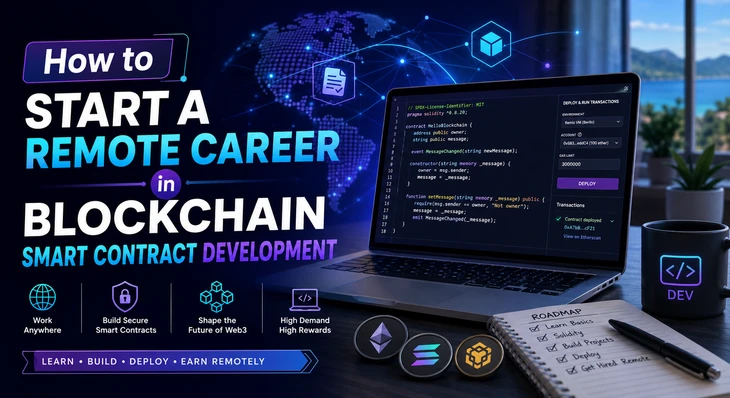
How to Start a Remote Career in Blockchain Smart Contract Development
The demand for blockchain professionals has grown rapidly over the last few years, and smart contract developers are now among the most sought-after remote tech specialists worldwide. From decentralized finance platforms to NFT marketplaces to enterprise blockchain systems, companies are actively hiring developers to build secure, automated smart contracts. The best part? You do not need to relocate to a major tech city to build a successful blockchain career. Many blockchain startups, Web3 companies, and global tech firms hire remote smart contract developers worldwide. If you are wondering how to start a remote career in blockchain smart contract development, this guide will walk you through the skills, tools, learning paths, job opportunities, and practical steps you need to enter the industry with confidence.What Is Smart Contract Development?
Smart contract development involves creating self-executing digital contracts on blockchain networks. These contracts automatically execute actions when predefined conditions are met. Unlike traditional software systems that rely on centralized servers, smart contracts run on decentralized blockchain networks like Ethereum, Solana, Binance Smart Chain, and Polygon. For example:- A decentralized finance app can automatically release loan funds when collateral is deposited.
- An NFT marketplace can transfer ownership instantly after payment.
- A blockchain gaming platform can automatically reward players for completing tasks.
Why Remote Blockchain Careers Are Growing Fast
Remote work has become standard in the blockchain industry. Most blockchain companies are globally distributed and operate remotely by default. There are several reasons why remote blockchain jobs continue to grow:Global Talent Shortage
There are fewer skilled blockchain developers than available job openings. Companies often hire internationally to access a wider talent pool.Decentralized Nature of Web3
Blockchain projects are built around decentralization, making remote collaboration a natural fit.Flexible Work Culture
Many Web3 startups prioritize flexible schedules, asynchronous communication, and remote-first operations.High Salary Potential
Remote blockchain developers often earn competitive salaries compared to traditional software roles. Even junior smart contract developers can secure freelance or entry-level remote projects with strong practical skills.Essential Skills Needed for Smart Contract Development
Starting a blockchain development career requires a combination of programming, blockchain fundamentals, and security knowledge. Here are the most important skills to focus on.Learn Blockchain Fundamentals
Before writing smart contracts, you need to understand how blockchain systems work. Important concepts include:- Distributed ledger technology
- Consensus mechanisms
- Cryptographic hashing
- Gas fees
- Wallets and transactions
- Decentralization
- Nodes and validators
- Token standards
Master Solidity Programming
Solidity is the most popular smart contract programming language used for Ethereum and EVM-compatible blockchains. If your goal is to become a remote Ethereum smart contract developer, Solidity should be your first priority. Key Solidity topics include:Variables and Data Types
Learn how blockchain stores and manages data.Functions and Modifiers
Understand how smart contracts execute logic securely.Inheritance and Libraries
These help developers write reusable and efficient smart contracts.Events and Error Handling
Important for debugging and monitoring contract activity.Security Best Practices
Smart contract vulnerabilities can cause major financial losses. You must understand:- Reentrancy attacks
- Integer overflows
- Access control vulnerabilities
- Front-running attacks
- Flash loan exploits
Understand Blockchain Development Tools
Professional smart contract developers use various tools to build, test, and deploy contracts. Important tools include:Remix IDE
A browser-based development environment ideal for beginners.Hardhat
A professional Ethereum development environment for testing and deployment.Truffle
A blockchain development framework commonly used in Web3 projects.MetaMask
A crypto wallet is used to interact with blockchain applications.Ganache
A local blockchain simulator used for testing.Ethers.js and Web3.js
Libraries used to connect smart contracts with front-end applications. Learning these tools gives you practical experience that employers expect.Learn Basic Front-End Integration
Many remote blockchain developer jobs require at least basic front-end knowledge. You do not need to become a full-stack designer, but understanding these technologies is helpful:- HTML
- CSS
- JavaScript
- React.js
- A smart contract backend
- A user-friendly interface
Build Real Smart Contract Projects
One of the fastest ways to enter the blockchain industry is by building projects. Employers care less about certificates and more about practical skills. Instead of only watching tutorials, create projects such as:NFT Marketplace Smart Contract
Build a simple NFT minting system using Solidity.Decentralized Voting App
Create a transparent blockchain-based voting mechanism.Token Creation Project
Develop your own ERC-20 token.Crypto Wallet Dashboard
Build a dashboard that displays blockchain transactions.Staking Smart Contract
Create a contract that rewards users for staking tokens. These projects demonstrate real-world understanding and help you build a strong portfolio.Create a Strong Blockchain Developer Portfolio
A portfolio is essential for landing remote blockchain jobs. Your portfolio should include:- GitHub repositories
- Smart contract projects
- Technical explanations
- Deployment links
- Screenshots or demos
- Security considerations
- Testing documentation
Contribute to Open Source Blockchain Projects
Open source contributions can significantly improve your visibility. Many blockchain ecosystems actively encourage community contributions. You can contribute by:- Fixing bugs
- Improving documentation
- Writing tests
- Adding features
- Reviewing pull requests
- Work with professional developers
- Learn industry standards
- Build networking connections
- Improve coding quality
Learn Smart Contract Security and Auditing
Security is one of the biggest concerns in blockchain development. A single vulnerability can lead to millions of dollars in losses. That is why companies highly value developers who understand smart contract auditing. Important security practices include:- Writing unit tests
- Using automated security tools
- Following audited contract standards
- Minimizing external calls
- Applying proper access control
- Ethernaut
- Damn Vulnerable DeFi
- Capture the Ether
How to Find Remote Smart Contract Developer Jobs
Once you have practical skills and projects, the next step is finding remote opportunities.Use Blockchain Job Platforms
Several job boards specialize in Web3 and blockchain hiring. Popular platforms include:- CryptoJobsList
- Web3 Jobs
- Remote3
- AngelList
- Wellfound
- Junior blockchain developer
- Solidity developer
- Smart contract engineer
- Web3 developer
- Ethereum developer
Build Your Presence on GitHub and LinkedIn
Blockchain recruiters frequently review GitHub profiles before scheduling interviews. Keep your repositories organized and active. On LinkedIn:- Share project updates
- Write about blockchain topics
- Showcase your portfolio
- Connect with Web3 professionals
Participate in Hackathons
Blockchain hackathons are excellent for beginners. They help you:- Gain practical experience
- Build team collaboration skills
- Meet founders and recruiters
- Win prizes
- Improve your portfolio
- Ethereum
- Solana
- Polygon
- Chainlink
- Avalanche
Join Blockchain Communities
Networking matters heavily in Web3. Many remote opportunities are shared privately inside communities before appearing on public job boards. Join communities on:- Discord
- Telegram
- Twitter/X
- GitHub
- Stay updated on industry trends
- Discover job opportunities
- Learn from experienced developers
- Find collaboration partners
Common Challenges Beginners Face
Starting a remote blockchain development career is rewarding, but it also comes with challenges.Information Overload
Blockchain technology evolves quickly. Many beginners feel overwhelmed by:- Multiple blockchain ecosystems
- Constantly changing tools
- Complex technical concepts
- Security terminology
Lack of Real Practice
Watching tutorials alone is not enough. You need hands-on project experience to develop confidence.Security Mistakes
New developers often underestimate blockchain security. Always test thoroughly before deploying smart contracts.Unrealistic Expectations
Some beginners expect high-paying remote jobs immediately. In reality, consistent learning and practical work matter more than shortcuts.Real-Life Example of a Remote Blockchain Career Path
Imagine a self-taught developer named Rahul. He started learning Solidity through free online tutorials while working a regular support job. Instead of endlessly consuming courses, he built small projects every week. First, he created a basic token contract. Then he developed a decentralized voting app. After that, he joined a blockchain hackathon and collaborated with other developers. He uploaded every project to GitHub and regularly posted updates on LinkedIn. After several months of consistent effort, Rahul secured freelance smart contract work for a startup. That freelance experience eventually helped him land a full-time remote blockchain developer role. This path is common in Web3. Practical experience, visibility, and persistence often matter more than formal degrees.Best Learning Resources for Smart Contract Development
There are many excellent resources available online. Some beginner-friendly options include:Free Learning Platforms
- CryptoZombies
- Solidity by Example
- LearnWeb3
- Alchemy University
- Chainshot
YouTube Channels
Many blockchain developers share tutorials, audits, and project walkthroughs.Documentation
Always read official documentation for:- Ethereum
- Solidity
- Hardhat
- OpenZeppelin
Tips to Succeed as a Remote Blockchain Developer
Building a long-term blockchain career requires more than technical skills. Here are practical tips that can help.Focus on Consistency
Even one hour of daily coding practice compounds over time.Learn Publicly
Share your learning journey online. This attracts networking opportunities and potential recruiters.Improve Communication Skills
Remote teams rely heavily on written communication. Being able to explain technical ideas clearly is valuable.Stay Updated
Blockchain technology changes rapidly. Follow:- Web3 newsletters
- Developer blogs
- Blockchain podcasts
- Industry leaders
Never Ignore Security
Security awareness can separate average developers from highly trusted professionals.Future Scope of Remote Smart Contract Development
The future of blockchain development looks promising. As decentralized applications expand into finance, gaming, identity systems, healthcare, and digital ownership, demand for skilled smart contract developers is expected to grow further. Emerging areas include:- Decentralized finance (DeFi)
- Web3 gaming
- Real-world asset tokenization
- DAO development
- Cross-chain infrastructure
- Blockchain cybersecurity
- AI and blockchain integration