📚 Table of Contents
- What Virtual Reality Design Really Means Today
- Why Virtual Reality Design Is Becoming a Remote Career Favorite
- Skills You Actually Need to Start a VR Design Career
- 1. 3D Thinking and Modeling
- 2. Game Engines Like Unity and Unreal
- 3. Designing for User Experience in 3D Spaces
- 4. Light Technical Skills
- 5. Creativity and Storytelling
- Tools That Make VR Design Possible
- How People Actually Build a Remote VR Design Career
- Industries Actively Hiring VR Designers
- Gaming and Interactive Media
- Education and Training
- Healthcare
- Real Estate and Architecture
- Marketing and Retail
- What Career Growth Looks Like in VR Design
- Challenges You Should Be Ready For
- The Future of Remote VR Design Careers
- FAQs
- Is virtual reality design a good remote career option?
- Do I need coding skills to start VR design?
- How long does it take to learn VR design?
- Can I get freelance work in VR design as a beginner?
- What is the best software to begin with?
- Conclusion
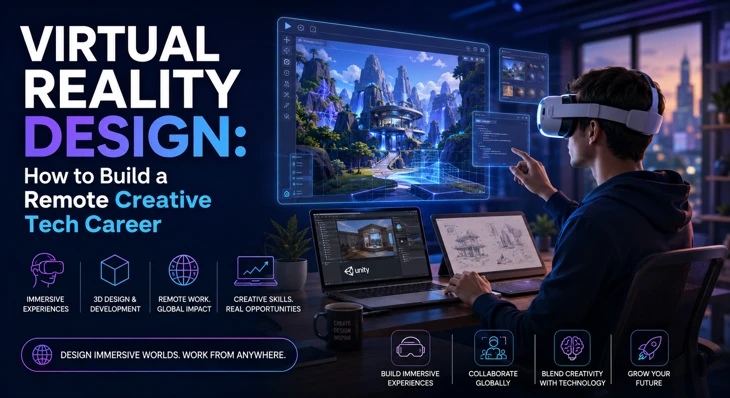
Virtual Reality Design: How to Build a Remote Creative Tech Career
Virtual reality isn’t just a futuristic idea anymore. It’s already shaping how people learn, work, shop, and even socialize. What once felt like something out of a sci-fi movie is now a real, fast-growing career space—especially for creative professionals who want to work remotely while building immersive digital worlds. If you’ve been exploring ways to break into a creative tech career that offers flexibility, global opportunities, and long-term growth, virtual reality design is one of the most exciting paths right now. The demand for VR designers, 3D artists, and immersive experience creators is rising across industries like gaming, education, healthcare, real estate, and corporate training. This guide breaks everything down in a simple, practical way—what VR design really is, what skills you need, how people actually get started, and how you can build a remote career step by step without getting overwhelmed.What Virtual Reality Design Really Means Today
At its core, virtual reality design is about creating digital spaces that feel real enough for people to step inside and interact with. Instead of designing flat screens or static visuals, you’re building environments—rooms, cities, simulations, and interactive experiences that users can explore in 3D. Think of it this way: instead of watching a training video, a user experiences the training in a simulated environment. Instead of scrolling through product images, they walk through a virtual showroom. That’s the shift VR is bringing. And because these experiences live in digital environments, they can be built and managed remotely from anywhere in the world. That’s one of the biggest reasons remote VR design careers are becoming so popular.Why Virtual Reality Design Is Becoming a Remote Career Favorite
Companies are investing heavily in immersive technology because it actually works. People remember experiences better than information. VR helps businesses create stronger engagement, better training results, and more interactive customer journeys. For creative professionals, this opens up a huge opportunity. You don’t need to be tied to a physical studio. Most VR work is done using cloud tools, collaborative platforms, and game engines that support remote teamwork. Many designers now work with international teams on projects like:- Virtual training simulations
- Interactive educational environments
- Virtual real estate tours
- Gaming and entertainment worlds
- Brand experience spaces
Skills You Actually Need to Start a VR Design Career
You don’t need to know everything on day one. Most people enter VR design gradually by building skills step by step. But there are a few core areas you’ll eventually need to become comfortable with.1. 3D Thinking and Modeling
VR design is built in three dimensions, so you’ll need to understand how objects exist in space. Tools like Blender or Maya help you create environments, objects, and characters. At first, it may feel technical, but it becomes intuitive with practice. You start thinking in depth, scale, and movement instead of just flat visuals.2. Game Engines Like Unity and Unreal
Most VR experiences are built using engines like Unity or Unreal Engine. These tools allow you to turn static 3D models into interactive environments. Unity is often easier for beginners, while Unreal Engine is known for highly realistic visuals. Both are widely used in professional VR development.3. Designing for User Experience in 3D Spaces
This is where things get interesting. In VR, users don’t click around like on websites. They move, look, and interact naturally. That means you need to design for comfort, clarity, and ease of movement. If something feels confusing or overwhelming in VR, users will feel it instantly.4. Light Technical Skills
You don’t need to be a hardcore programmer, but understanding basic scripting (like C# in Unity) helps a lot. It allows you to add interactivity—like opening doors, triggering animations, or building simple logic.5. Creativity and Storytelling
This is what ties everything together. VR design is not just technical work—it’s experience design. You’re guiding users through a story or journey. Whether it’s a virtual museum or a training simulation, the experience needs flow, purpose, and emotional connection.Tools That Make VR Design Possible
Getting started doesn’t require expensive setups. In fact, many beginners begin with just a laptop and free software. Some widely used tools include:- Blender for 3D modeling and animation
- Unity for building VR experiences
- Unreal Engine for high-end visuals
- Adobe Substance Painter for realistic textures
- Figma for planning UI layouts
How People Actually Build a Remote VR Design Career
There’s no single path into VR design, but most successful designers follow a similar progression. Instead of trying to build complex worlds immediately, start with simple projects. A small room, a basic interaction, or a simple object animation is enough to begin. What matters most is understanding how everything connects in a 3D environment. Your portfolio is everything in this field. Employers and clients care more about what you can build than what certificates you have. A strong VR portfolio might include:- A walkable 3D environment
- A simple interactive simulation
- A virtual product showcase
- A small storytelling experience
- A virtual classroom where users can interact with objects
- A digital showroom for a product
- A guided museum experience
Industries Actively Hiring VR Designers
VR design isn’t limited to gaming anymore. It has spread into many industries that rely on immersive experiences.Gaming and Interactive Media
Still, the biggest space for VR designers is focused on building immersive worlds and gameplay experiences.Education and Training
Schools and companies use VR to simulate real-life scenarios for learning and skill development.Healthcare
VR is used for therapy, surgical training, and patient rehabilitation programs.Real Estate and Architecture
Virtual walkthroughs allow clients to explore spaces before construction is completed.Marketing and Retail
Brands use VR to create interactive product experiences and virtual stores.What Career Growth Looks Like in VR Design
As you grow in this field, your opportunities expand quickly. Entry-level roles focus on basic modeling and environment creation, but advanced roles involve designing full immersive systems. You may eventually move into roles like:- VR Experience Designer
- XR Developer
- Immersive Content Creator
- 3D Interaction Designer
Challenges You Should Be Ready For
Like any creative tech field, VR design comes with challenges. Some of the common ones include:- Learning curve for tools like Unity or Unreal
- Performance optimization for smooth VR experiences
- Designing comfortable user interactions
- Constantly evolving technology