📚 Table of Contents
- Why Remote Data Privacy Consulting Is Growing Rapidly
- What Does a Remote Data Privacy Consultant Do?
- Common Responsibilities
- Essential Skills for Remote Data Privacy Consulting
- Knowledge of Privacy Regulations
- Cybersecurity Awareness
- Risk Assessment Skills
- Communication and Client Management
- Research and Adaptability
- Best Industries for Remote Data Privacy Consultants
- Healthcare
- Financial Services
- SaaS and Technology Companies
- eCommerce Businesses
- Education and EdTech
- Remote Data Privacy Consulting Career Paths
- Freelance Privacy Consultant
- Remote Compliance Specialist
- Privacy Program Manager
- Legal and Regulatory Consulting
- Certifications That Can Strengthen Your Career
- Tools Commonly Used in Remote Privacy Consulting
- Project Management Tools
- Communication Platforms
- Privacy and Compliance Software
- Documentation and Collaboration Tools
- How to Start a Career in Remote Data Privacy Consulting
- Build Foundational Knowledge
- Gain Practical Experience
- Create a Professional Online Presence
- Network With Industry Professionals
- Start With Smaller Projects
- Income Potential for Remote Data Privacy Consultants
- Challenges in Remote Data Privacy Consulting
- Constant Regulatory Changes
- Managing Remote Communication
- Balancing Security and Business Goals
- Building Trust as a Freelancer
- Future Trends in Data Privacy Consulting
- Practical Example of a Remote Privacy Consulting Project
- Frequently Asked Questions
- Is remote data privacy consulting a good career?
- Do I need a law degree to become a data privacy consultant?
- Which certifications are best for data privacy consulting?
- Can beginners start in remote privacy consulting?
- What industries hire remote privacy consultants?
- How much can remote privacy consultants earn?
- Conclusion
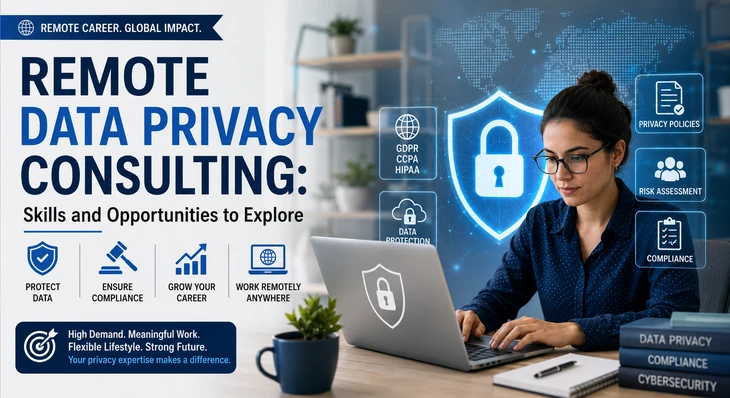
Remote Data Privacy Consulting: Skills and Opportunities to Explore
Remote work has transformed the way businesses operate, communicate, and handle sensitive information. As companies collect more customer data online, protecting that information has become a top priority. This shift has opened the door to one of today's fastest-growing career paths: remote data privacy consulting. From healthcare providers and financial institutions to SaaS startups and eCommerce brands, organizations are actively seeking experts to help them stay compliant, mitigate data risks, and build customer trust. The best part is that many of these consulting opportunities are fully remote, allowing professionals to work with global clients from virtually anywhere. If you are curious about data privacy careers, freelance consulting opportunities, or remote compliance jobs, this guide will help you understand the required skills, hiring industries, income potential, and practical ways to enter the field.Why Remote Data Privacy Consulting Is Growing Rapidly
Over the last few years, privacy regulations have become stricter worldwide. Governments now require businesses to be more transparent about how they collect, store, and use personal information. Laws such as the General Data Protection Regulation (GDPR) in Europe, the California Consumer Privacy Act (CCPA), and other regional privacy laws have forced companies to rethink their data handling practices. At the same time, remote work environments have created additional security concerns. Employees access company systems from home networks, cloud platforms store massive amounts of data, and cyber threats continue to increase. As a result, businesses need professionals who can:- Assess privacy risks
- Create compliance frameworks
- Train employees on data handling
- Develop privacy policies
- Conduct audits and assessments
- Respond to security incidents
- Guide organizations through legal compliance requirements
What Does a Remote Data Privacy Consultant Do?
A remote data privacy consultant helps organizations protect sensitive information while complying with privacy laws and industry standards. The role often combines legal knowledge, cybersecurity awareness, communication skills, and business strategy.Common Responsibilities
Depending on the client and industry, consultants may handle tasks such as:- Reviewing data collection practices
- Creating privacy policies and consent forms
- Conducting privacy impact assessments
- Advising on GDPR and CCPA compliance
- Evaluating third-party vendor risks
- Supporting incident response planning
- Training teams on privacy best practices
- Auditing company systems and workflows
- Managing cross-border data transfer concerns
Essential Skills for Remote Data Privacy Consulting
Success in this field requires more than understanding regulations. The strongest consultants combine technical awareness with strategic communication and problem-solving.Knowledge of Privacy Regulations
A solid understanding of major privacy laws is essential. Key regulations include:- GDPR
- CCPA and CPRA
- HIPAA
- PIPEDA
- LGPD
- ISO 27701
- Data Protection Act regulations in different regions
Cybersecurity Awareness
You do not necessarily need to become a cybersecurity engineer, but understanding how data breaches happen is extremely important. Remote privacy consultants should understand:- Data encryption basics
- Access control systems
- Cloud security risks
- Endpoint security
- Authentication practices
- Security monitoring concepts
- Incident response procedures
Risk Assessment Skills
Businesses rely on consultants to identify weaknesses before they become expensive problems. This involves evaluating:- Internal workflows
- Third-party vendors
- Employee data access
- Data retention practices
- Storage systems
- International data transfers
Communication and Client Management
Privacy regulations can feel overwhelming for non-technical teams. One of the most important skills is the ability to explain complex requirements in simple language. Clients appreciate consultants who can:- Simplify technical concepts
- Deliver clear reports
- Conduct engaging training sessions
- Build trust with leadership teams
- Communicate risks without causing panic
Research and Adaptability
Privacy laws constantly evolve. A consultant who stops learning can quickly fall behind. Successful professionals regularly:- Follow legal updates
- Monitor cybersecurity trends
- Attend webinars and conferences
- Earn certifications
- Study case studies from real-world breaches
Best Industries for Remote Data Privacy Consultants
Nearly every industry handles customer information today, but some sectors have especially strong demand for privacy expertise.Healthcare
Healthcare organizations store highly sensitive patient information. Remote consultants often help clinics, telehealth providers, and healthcare software companies comply with HIPAA and related regulations. For instance, a telemedicine startup may hire a consultant to ensure patient records remain secure during online appointments.Financial Services
Banks, fintech companies, and insurance providers manage massive amounts of financial data. Consultants may assist with:- Data governance frameworks
- Customer consent management
- Fraud prevention policies
- Vendor risk reviews
- Financial privacy compliance
SaaS and Technology Companies
Software companies collect user behavior data, customer profiles, and payment information. Many startups lack internal privacy teams, making remote consultants extremely valuable. A growing SaaS business expanding into European markets may need guidance on GDPR compliance before launching internationally.eCommerce Businesses
Online stores process customer names, addresses, payment details, and marketing preferences. Privacy consultants often help eCommerce brands:- Update cookie policies
- Improve customer consent practices
- Secure customer databases
- Create transparent privacy notices
Education and EdTech
Schools and educational platforms store student records and online learning data. With remote learning becoming more common, educational institutions increasingly need privacy guidance.Remote Data Privacy Consulting Career Paths
There is no single path into this field. Professionals come from legal, cybersecurity, IT, compliance, and business backgrounds.Freelance Privacy Consultant
Freelancers work independently with multiple clients. This path offers:- Flexible schedules
- Higher income potential
- Global client access
- Control over projects
Remote Compliance Specialist
Many companies hire full-time remote privacy and compliance specialists. These roles often include:- Stable salaries
- Long-term projects
- Benefits packages
- Internal collaboration opportunities
Privacy Program Manager
Experienced consultants may eventually oversee entire privacy programs. Responsibilities can include:- Managing privacy teams
- Coordinating audits
- Building governance frameworks
- Leading enterprise-wide compliance initiatives
Legal and Regulatory Consulting
Professionals with legal backgrounds sometimes specialize in privacy law consulting. They may support:- Contract reviews
- Regulatory investigations
- Data transfer agreements
- Policy development
Certifications That Can Strengthen Your Career
While certifications are not always required, they can improve credibility and help consultants stand out in competitive markets. Popular certifications include:- Certified Information Privacy Professional (CIPP)
- Certified Information Privacy Manager (CIPM)
- Certified Information Systems Security Professional (CISSP)
- Certified Information Privacy Technologist (CIPT)
- ISO 27001 Lead Implementer
- Certified Data Privacy Solutions Engineer (CDPSE)
Tools Commonly Used in Remote Privacy Consulting
Remote consultants rely heavily on digital collaboration and compliance tools. Some commonly used platforms include:Project Management Tools
- Trello
- Asana
- Monday.com
- Jira
Communication Platforms
- Slack
- Microsoft Teams
- Zoom
- Google Meet
Privacy and Compliance Software
- OneTrust
- TrustArc
- BigID
- Vanta
- Secureframe
Documentation and Collaboration Tools
- Google Workspace
- Notion
- Confluence
- Microsoft 365
How to Start a Career in Remote Data Privacy Consulting
Breaking into the industry may feel intimidating at first, but a structured approach makes the process much easier.Build Foundational Knowledge
Start by learning the basics of:- Data privacy laws
- Cybersecurity concepts
- Risk management
- Compliance frameworks
Gain Practical Experience
Hands-on experience matters. You can:- Volunteer for privacy-related projects
- Assist small businesses with policy reviews
- Intern with compliance teams
- Participate in cybersecurity communities
Create a Professional Online Presence
Remote consulting opportunities often come through online networking. A strong LinkedIn profile, professional website, or portfolio can showcase:- Certifications
- Case studies
- Industry knowledge
- Client results
- Privacy-related writing samples
Network With Industry Professionals
Connections play a major role in consulting careers. Attend:- Virtual conferences
- Privacy webinars
- Cybersecurity events
- Industry networking groups
Start With Smaller Projects
New consultants do not need enterprise clients immediately. Small businesses, startups, and local organizations often need affordable privacy guidance. For example, a growing online store may need help updating its privacy policy and cookie consent process. Small projects like this can become valuable portfolio pieces.Income Potential for Remote Data Privacy Consultants
Income varies depending on experience, certifications, specialization, and location. Entry-level professionals may begin with modest salaries, while experienced consultants can command premium rates. Freelance consultants often charge:- Hourly consulting fees
- Monthly retainers
- Project-based pricing
- Compliance audit packages
Challenges in Remote Data Privacy Consulting
Like any career path, this field also comes with challenges.Constant Regulatory Changes
Privacy laws evolve quickly. Consultants must continuously study new regulations and legal interpretations.Managing Remote Communication
Remote consulting requires strong communication discipline. Misunderstandings can happen more easily without face-to-face interaction, especially when discussing technical or legal risks.Balancing Security and Business Goals
Companies want strong security but also need operational efficiency. Consultants often help businesses find practical solutions that protect data without slowing down growth.Building Trust as a Freelancer
Independent consultants must establish credibility quickly. Strong testimonials, certifications, and professional communication can help overcome this challenge.Future Trends in Data Privacy Consulting
The future of remote data privacy consulting looks extremely promising. Several trends are driving continued demand:- Growth of remote and hybrid work
- Expansion of cloud computing
- Increased consumer awareness about privacy
- Rising cybersecurity threats
- AI and machine learning governance concerns
- Stricter international regulations
Practical Example of a Remote Privacy Consulting Project
Imagine a fast-growing online fitness platform expanding into international markets. The company collects:- Customer names
- Payment details
- Health information
- Workout history
- Mobile app usage data
- Review current data collection practices
- Identify GDPR compliance gaps
- Create updated privacy notices
- Develop consent management processes
- Train employees on secure data handling
- Recommend vendor security improvements
- Assist with cross-border data transfer requirements