📚 Table of Contents
- Why Global Startups Prefer Remote iOS Developers
- Essential Skills Required for Remote iOS Development
- Strong Knowledge of Swift and iOS Frameworks
- Understanding of Product Thinking
- Communication Skills
- Time Management and Self-Discipline
- How to Find Remote iOS Developer Jobs With Global Startups
- Build a Strong Portfolio
- Optimize Your LinkedIn Profile
- Use Remote Job Platforms
- Network in Developer Communities
- What Global Startups Expect From Remote iOS Developers
- Ability to Work in Agile Environments
- Problem-Solving Mindset
- Challenges of Remote iOS Development and How to Handle Them
- Managing Time Zone Differences
- Avoiding Communication Gaps
- Preventing Burnout
- How to Stand Out as a Remote iOS Developer
- Specialize in High-Demand Areas
- Contribute to Open Source Projects
- Build a Personal Brand
- Real-World Example of Remote Startup Collaboration
- Best Tools for Remote iOS Developers
- Communication Tools
- Project Management Tools
- Development and Collaboration Tools
- Salary Expectations for Remote iOS Developers
- Future of Remote iOS Development
- Tips for Long-Term Success in Remote Startup Jobs
- Keep Learning Continuously
- Improve Soft Skills
- Focus on Reliability
- Frequently Asked Questions
- Is remote iOS development a good career option?
- What skills are required for remote iOS developer jobs?
- How can beginners get started with remote iOS development?
- Do startups hire junior remote iOS developers?
- Which countries hire the most remote iOS developers?
- Can remote iOS developers earn high salaries?
- Conclusion
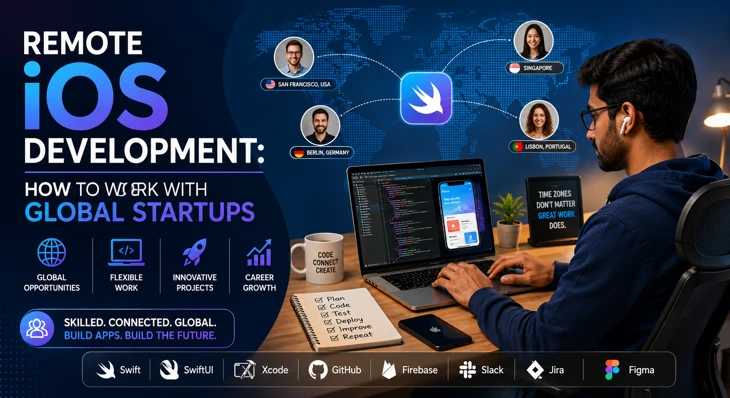
Remote iOS Development: How to Work With Global Startups
The demand for remote iOS developers has grown rapidly over the last few years. Startups around the world are building mobile-first products, and many of them prefer hiring remote talent instead of limiting themselves to local developers. For iOS developers, this shift has opened doors to exciting international opportunities, flexible work environments, and high-growth projects. Today, a skilled iOS developer in India can collaborate with a fintech startup in Singapore, a health-tech company in Germany, or an AI-driven app team in the United States without ever relocating. Remote work has changed how startups hire and how developers build their careers. But working with global startups is not just about writing Swift code or publishing apps on the App Store. It also requires strong communication, collaboration, adaptability, and the ability to work across time zones. In this guide, you’ll learn how remote iOS development works, how to find global startup opportunities, what skills startups look for, and how to succeed while working remotely with international teams.Why Global Startups Prefer Remote iOS Developers
Startups move fast. They need developers who can build, test, and improve products quickly without increasing overhead costs. Hiring remote iOS developers gives startups access to a much larger talent pool while reducing office expenses. For developers, remote opportunities offer several advantages:- Access to international startup projects
- Better earning potential
- Flexible working schedules
- Exposure to global products and technologies
- Faster career growth through diverse experience
Essential Skills Required for Remote iOS Development
Technical skills matter, but global startups also value developers who can work independently and solve problems without constant supervision.Strong Knowledge of Swift and iOS Frameworks
Most startups expect developers to be comfortable with:- Swift programming
- SwiftUI
- UIKit
- Core Data
- Combine
- REST APIs
- Push notifications
- Firebase integration
- Git version control
Understanding of Product Thinking
Startup teams usually work closely together. Developers are often involved in product discussions instead of simply following technical instructions. You should understand:- User experience basics
- Feature prioritization
- MVP development
- User retention strategies
- Mobile app analytics
Communication Skills
Remote work depends heavily on communication. Global startup teams use tools like:- Slack
- Zoom
- Jira
- Trello
- Notion
- GitHub
Time Management and Self-Discipline
Remote teams often work across multiple time zones. You may not always receive instant responses. Successful remote iOS developers:- Plan tasks independently
- Meet deadlines consistently
- Handle asynchronous communication well
- Stay organized without micromanagement
How to Find Remote iOS Developer Jobs With Global Startups
Finding remote startup opportunities requires more than randomly applying on job boards. The most successful developers build strong online visibility and position themselves strategically.Build a Strong Portfolio
Your portfolio is often the first thing startups review. A strong iOS developer portfolio should include:- Live App Store applications
- GitHub repositories
- Screenshots and feature explanations
- Technical challenges solved
- Case studies or project summaries
- A fitness tracker app
- A finance budgeting app
- A habit-building app
- A travel booking prototype
Optimize Your LinkedIn Profile
Many startup founders actively search LinkedIn for remote iOS developers. Your profile should clearly mention:- Remote iOS developer
- Swift developer
- iOS app development expertise
- Startup collaboration experience
- Mobile app technologies
Use Remote Job Platforms
Several platforms focus specifically on remote tech jobs and startup hiring. Popular platforms include:- Remote OK
- We Work Remotely
- Wellfound
- Turing
- Arc
- FlexJobs
Network in Developer Communities
Many startup opportunities come through networking. You can connect with founders and developers through:- GitHub communities
- Reddit developer groups
- LinkedIn tech communities
- Discord channels
- Indie hacker forums
- iOS development communities on X
What Global Startups Expect From Remote iOS Developers
Startup environments are very different from those of large corporations. In startups, developers often wear multiple hats. You may be responsible for:- Feature development
- Bug fixing
- App optimization
- User feedback implementation
- App Store updates
- Testing and deployment
Ability to Work in Agile Environments
Most startups work in short development cycles. You may participate in:- Weekly sprint planning
- Daily standups
- Rapid feature releases
- Continuous iteration
Problem-Solving Mindset
Startups frequently face limited resources, tight budgets, and fast deadlines. Instead of focusing only on technical perfection, startups value developers who can:- Suggest practical solutions
- Prioritize important tasks
- Balance speed with quality
- Troubleshoot independently
Challenges of Remote iOS Development and How to Handle Them
Remote work offers flexibility, but it also comes with challenges. Understanding these challenges early can help you build a sustainable remote career.Managing Time Zone Differences
One of the biggest challenges of remote work is coordinating across time zones. For example, if you are working with a startup in California, there could be a 12-hour time difference. To manage this effectively:- Set overlapping working hours
- Share daily progress updates
- Use async communication tools
- Clarify deadlines clearly
Avoiding Communication Gaps
Miscommunication can slow projects significantly. To avoid this:- Write clear updates
- Document technical decisions
- Confirm requirements early
- Ask questions before implementation
Preventing Burnout
Remote startup culture can sometimes become intense. Because startups move quickly, developers may feel pressure to remain constantly available. Maintaining healthy boundaries is essential. Helpful practices include:- Defining work hours
- Taking regular breaks
- Avoiding unnecessary overtime
- Maintaining work-life balance
How to Stand Out as a Remote iOS Developer
The remote tech market is competitive. To stand out, developers need both technical depth and professional branding.Specialize in High-Demand Areas
Developers with niche expertise often attract better startup opportunities. Examples include:- SwiftUI development
- AI-powered iOS apps
- ARKit development
- HealthKit integration
- Fintech app development
- Real-time app architecture
Contribute to Open Source Projects
Open-source contributions demonstrate:- Coding standards
- Collaboration ability
- Problem-solving skills
- Real-world development experience
Build a Personal Brand
Many successful remote developers build visibility online. You can:- Share iOS development tips
- Write technical blogs
- Publish Swift tutorials
- Post coding insights on LinkedIn
- Create GitHub projects
Real-World Example of Remote Startup Collaboration
Imagine a remote iOS developer in Bhopal working with a European startup building a mental wellness app. The startup has:- A product manager in London
- A backend developer in Poland
- A UI designer in Portugal
- A remote iOS developer in India
- SwiftUI interface development
- API integration
- App performance optimization
- TestFlight deployments
Best Tools for Remote iOS Developers
Remote work becomes easier when you use the right tools.Communication Tools
Popular communication platforms include:- Slack
- Microsoft Teams
- Zoom
- Google Meet
Project Management Tools
Startup teams commonly use:- Jira
- Trello
- ClickUp
- Notion
- Asana
Development and Collaboration Tools
Essential tools for remote iOS developers include:- Xcode
- GitHub
- Bitbucket
- Firebase
- Postman
- Figma
Salary Expectations for Remote iOS Developers
Remote startup salaries vary depending on:- Experience level
- Technical expertise
- Startup funding stage
- Geographic market
- Contract type
- Hourly contracts
- Full-time remote roles
- Equity-based compensation
- Performance bonuses
Future of Remote iOS Development
The future of remote iOS development looks extremely strong. Several trends continue driving demand:- Mobile-first startup growth
- Expansion of SaaS products
- Rise of AI-powered applications
- Growth of remote work culture
- Global hiring flexibility
Tips for Long-Term Success in Remote Startup Jobs
Building a successful remote career requires consistency. Here are some practical long-term strategies:Keep Learning Continuously
iOS development evolves quickly. Stay updated with:- New Swift features
- Apple frameworks
- WWDC announcements
- Mobile UI trends
- App performance optimization techniques
Improve Soft Skills
Technical expertise alone is not enough. Strong remote developers also improve:- Communication
- Leadership
- Collaboration
- Decision-making
- Problem-solving