📚 Table of Contents
- Why Remote PHP Development Is Growing Rapidly
- Skills That Actually Help Remote PHP Developers Get Hired
- Solid PHP Basics Still Matter Most
- Knowledge of PHP Frameworks
- Front-End Development Skills
- Database Management
- Version Control Systems
- Communication Can Make or Break Remote Work
- Best Platforms to Find Remote PHP Development Work
- Upwork: One of the Most Popular Starting Points
- Toptal
- Freelancer
- LinkedIn: Underrated but Extremely Powerful
- We Work Remotely
- Remote OK
- GitHub Jobs and Open Source Communities
- Different Remote PHP Career Paths You Can Choose
- Freelance PHP Developer
- Full-Time Remote PHP Developer
- Remote WordPress Developer
- Laravel Specialist
- How Much Can Remote PHP Developers Earn?
- Entry-Level PHP Developers
- Mid-Level Remote Developers
- Senior PHP Developers
- Common Problems Remote PHP Developers Face
- Communication Gaps
- Isolation and Burnout
- Client Competition
- Practical Ways to Build a Strong Remote PHP Career
- Create a Portfolio That Looks Real and Useful
- Learn Laravel and Modern PHP Tools
- Build Personal Projects Regularly
- Improve Communication Skills
- Build a Professional Online Presence
- What the Future Looks Like for Remote PHP Developers
- A Simple Example of How Remote PHP Careers Grow
- Frequently Asked Questions
- Is PHP still a good career choice for remote work?
- Which PHP framework is best for remote jobs?
- Can beginners get remote PHP jobs?
- How can I get my first remote PHP client?
- Do remote PHP developers need frontend skills?
- What industries hire remote PHP developers?
- Final Thoughts
Remote PHP Development: Best Platforms and Career Insights
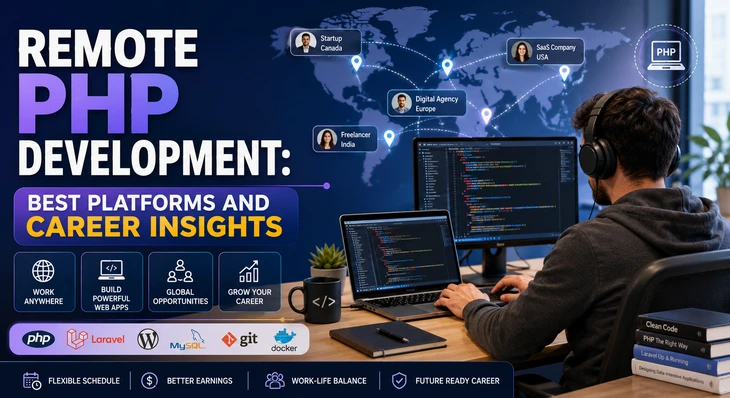
Remote jobs are no longer limited to designers, marketers, or customer support teams. Developers have become a major part of the global remote workforce, and PHP developers are right in the middle of that shift. Companies now hire talent from different countries, time zones, and backgrounds because skilled developers are easier to find online than through traditional local hiring. For PHP developers, this change has created numerous opportunities. A freelancer in India can work with a startup in Canada. A Laravel developer in Europe can collaborate with a U.S.-based SaaS company without ever stepping into a physical office. What mattered years ago was location. What matters now is skill, reliability, and the ability to deliver quality work remotely. PHP still powers a large portion of the internet. From WordPress websites and eCommerce stores to custom web applications and enterprise dashboards, businesses continue to depend on PHP frameworks for scalable development. As a result, remote PHP development jobs continue to grow across freelance marketplaces, remote hiring platforms, and full-time distributed companies. The good part is that remote PHP careers are not limited to senior developers. Beginners can start with small projects, improve their portfolios, and gradually move toward better-paying international opportunities. Developers who understand modern PHP frameworks, communicate clearly, and stay consistent often build long-term remote careers that offer both flexibility and financial stability. This guide explores the best platforms for remote PHP development jobs, the key skills employers expect, career paths, earning potential, and practical strategies to help developers stand out in a competitive remote market.Why Remote PHP Development Is Growing Rapidly
PHP has stayed relevant for years because businesses still rely heavily on it for websites, content management systems, online stores, and backend applications. WordPress alone keeps PHP in constant demand, while frameworks like Laravel continue attracting startups and software companies that want fast and efficient web development. Another reason remote PHP development is growing is cost efficiency. Hiring remote developers allows companies to scale teams without investing heavily in office infrastructure. For developers, remote work removes location barriers and opens access to international clients who may pay far better than local companies. The rise of cloud collaboration tools has also made remote software development easier than ever. Teams now manage projects using Slack, Trello, Jira, GitHub, Zoom, and Notion without needing physical offices. For many developers, remote PHP jobs provide advantages such as:- Flexible schedules
- Better work-life balance
- Access to global clients
- Freelance freedom
- Long-term remote employment opportunities
- Higher earning potential
Skills That Actually Help Remote PHP Developers Get Hired
Before exploring the best remote job platforms, it is important to understand the skills companies expect from remote PHP developers.Solid PHP Basics Still Matter Most
Even with modern frameworks doing a lot of the heavy lifting, companies still expect developers to understand how PHP works under the hood. Strong fundamentals make debugging easier and help developers write cleaner, faster applications.- Core PHP syntax
- Object-oriented programming (OOP)
- MVC architecture
- Error handling
- Session management
- API integration
- Security best practices
Knowledge of PHP Frameworks
Most remote companies prefer developers experienced with modern PHP frameworks. Popular frameworks include:- Laravel
- Symfony
- CodeIgniter
- CakePHP
- Yii
Front-End Development Skills
Remote PHP developers often work on full-stack projects. Basic knowledge of front-end technologies can significantly improve job opportunities. Useful front-end skills include:- HTML5
- CSS3
- JavaScript
- Bootstrap
- Vue.js
- React
Database Management
Most PHP applications depend heavily on databases. Remote developers should understand:- MySQL
- PostgreSQL
- Database optimization
- Query performance
- Data migration
Version Control Systems
Remote collaboration depends heavily on version control. Git is considered mandatory for remote development roles. Companies expect developers to understand:- GitHub
- GitLab
- Branching workflows
- Pull requests
- Code reviews
Communication Can Make or Break Remote Work
A developer may write excellent code, but remote work depends heavily on trust and communication. Clients want updates, quick responses, and clarity when problems appear. Remote PHP developers must communicate clearly, manage deadlines, and work independently. Strong communication often becomes the deciding factor when clients choose between developers with similar technical expertise.Best Platforms to Find Remote PHP Development Work
Finding quality remote opportunities becomes much easier when you use the right platforms.Upwork: One of the Most Popular Starting Points
Upwork remains one of the largest freelance marketplaces for PHP developers. It offers projects ranging from:- WordPress customization
- Laravel web applications
- E-commerce development
- API integration
- Website maintenance
Advantages of Upwork
- Large number of remote PHP jobs
- Secure payment system
- Opportunity to build long-term client relationships
- Suitable for beginners and experienced developers
Challenges
- High competition
- Need for strong proposals
- Service fees
Toptal
Toptal focuses on connecting top developers with premium clients. The platform has a strict screening process, but approved developers often gain access to high-paying remote projects. This platform works well for experienced PHP developers with strong portfolios and advanced knowledge of frameworks.Best For
- Senior Laravel developers
- Full-stack PHP engineers
- Developers with enterprise experience
Freelancer
Freelancer offers a wide range of PHP development projects. Many beginners start here because it lets developers bid on smaller projects while building their ratings and client trust. Projects often include:- PHP bug fixing
- CMS development
- WordPress plugin creation
- Custom website development
LinkedIn: Underrated but Extremely Powerful
LinkedIn has evolved into one of the strongest platforms for remote tech hiring. Many companies now post fully remote PHP developer positions directly on LinkedIn. A strong LinkedIn profile should include:- Technical skills
- Portfolio links
- GitHub projects
- Client testimonials
- Framework expertise
We Work Remotely
We Work Remotely specializes in remote-only jobs. Unlike freelance platforms, most opportunities here are:- Full-time remote roles
- Startup positions
- Long-term development jobs
Remote OK
Remote OK is another excellent platform for remote developers. It features jobs from companies worldwide and frequently includes positions for:- Laravel developers
- Backend engineers
- WordPress developers
- Full-stack PHP developers
GitHub Jobs and Open Source Communities
Although traditional GitHub Jobs listings have changed over time, open-source contributions on GitHub still help developers attract remote opportunities. Many companies hire developers after reviewing:- Open-source contributions
- Laravel packages
- WordPress plugins
- PHP libraries
Different Remote PHP Career Paths You Can Choose
Remote PHP development offers multiple career directions.Freelance PHP Developer
Freelancers work independently with multiple clients. This path offers:- Flexible working hours
- Project variety
- Unlimited earning potential
- Location independence
- Client communication
- Invoicing
- Marketing
- Proposal writing
- Laravel development
- WordPress customization
- E-commerce development
- SaaS backend systems
Full-Time Remote PHP Developer
Many companies now hire full-time remote developers. These roles usually provide:- Stable monthly income
- Employee benefits
- Long-term projects
- Team collaboration
Remote WordPress Developer
WordPress continues to dominate website development globally. PHP developers with WordPress expertise often work on:- Theme development
- Plugin customization
- WooCommerce integration
- Website optimization
Laravel Specialist
Laravel developers are among the most sought-after PHP professionals. Modern startups frequently use Laravel because it accelerates web application development. Laravel specialists often work on:- SaaS applications
- CRM systems
- REST APIs
- Enterprise dashboards
- Subscription platforms
How Much Can Remote PHP Developers Earn?
Remote PHP developer salaries vary widely depending on technical skills, specialization, project complexity, and communication ability. A beginner working on simple WordPress fixes may charge far less than a senior Laravel developer building large SaaS applications. The gap widens further when developers specialize in high-demand areas such as API architecture, payment integration, or performance optimization.Entry-Level PHP Developers
Most beginners start with:- Small freelance projects
- Website fixes
- WordPress customization
- Junior remote developer roles
Mid-Level Remote Developers
After a few years of practical experience, developers often move into larger backend systems and long-term projects. At this level, companies usually expect:- Laravel framework expertise
- API integration knowledge
- Database optimization skills
- Git collaboration experience
- Strong communication habits
Senior PHP Developers
Experienced remote PHP developers can command premium rates, especially when they specialize. Companies frequently pay higher salaries for developers who can:- Architect scalable applications
- Optimize server performance
- Build SaaS platforms
- Handle cloud deployment
- Lead remote engineering teams
Common Problems Remote PHP Developers Face
Remote work provides flexibility, but it also comes with challenges.Communication Gaps
Working across time zones can create delays and misunderstandings. Successful remote developers:- Provide regular updates
- Ask clear questions
- Document project changes
- Use collaboration tools effectively
Isolation and Burnout
Many remote developers struggle with work-life balance. Setting structured work hours and maintaining healthy routines helps improve long-term productivity.Client Competition
Freelance platforms can be highly competitive. Developers who specialize in a niche often perform better than generalists. For example:- Laravel API expert
- WooCommerce performance specialist
- PHP SaaS backend engineer
Practical Ways to Build a Strong Remote PHP Career
Create a Portfolio That Looks Real and Useful
A portfolio should not feel like a collection of random screenshots. Clients want proof that a developer can solve actual business problems. Instead of simply listing projects, explain:- What the project was about
- Which PHP framework was used
- What problem was solved
- How performance or functionality improved
Learn Laravel and Modern PHP Tools
Developers who still rely only on older PHP practices often struggle in the current remote market. Modern companies usually prefer developers comfortable with:- Laravel
- REST APIs
- Composer
- Docker
- Git workflows
- Automated testing
Build Personal Projects Regularly
One of the fastest ways to improve as a PHP developer is to build projects outside paid work. Simple ideas include:- Inventory management systems
- Booking applications
- Task management tools
- Blog platforms
- Subscription dashboards
Improve Communication Skills
Remote development is not only about writing code. Clients often choose developers who communicate clearly over developers with slightly better technical skills but poor responsiveness. Good communication includes:- Sending regular updates
- Explaining technical problems simply
- Responding professionally
- Managing expectations honestly
Build a Professional Online Presence
Many remote opportunities come through visibility rather than direct applications. A professional LinkedIn profile, active GitHub account, or technical blog can help developers attract recruiters and clients naturally. Even writing short tutorials about Laravel, APIs, or PHP troubleshooting can help build credibility over time.What the Future Looks Like for Remote PHP Developers
Despite the rise of newer programming languages, PHP remains highly relevant. Large platforms, e-commerce systems, and content management solutions still rely heavily on PHP. The future looks promising because:- Businesses continue migrating online
- SaaS applications are expanding rapidly
- E-commerce growth remains strong
- WordPress demand is stable
- Laravel adoption keeps increasing
A Simple Example of How Remote PHP Careers Grow
Consider a developer who begins with small WordPress projects on Upwork. Initially, the work may involve:- Fixing plugin issues
- Editing website layouts
- Improving loading speed
Frequently Asked Questions
Is PHP still a good career choice for remote work?
Yes. PHP continues to power a large percentage of websites and applications worldwide. Demand for Laravel developers, WordPress experts, and backend engineers remains strong in the remote job market.Which PHP framework is best for remote jobs?
Laravel is currently one of the most in-demand PHP frameworks because of its modern architecture, scalability, and strong community support.Can beginners get remote PHP jobs?
Yes. Beginners often start with freelance platforms, internship opportunities, or smaller web development projects. Building a portfolio and learning modern frameworks significantly improve opportunities.How can I get my first remote PHP client?
Start by creating a strong portfolio, applying to smaller projects, and showcasing practical skills through GitHub or personal projects. Clear communication and reliability are extremely important.Do remote PHP developers need frontend skills?
Basic frontend knowledge is highly beneficial. Understanding HTML, CSS, JavaScript, and modern UI frameworks helps developers collaborate more effectively on full-stack projects.What industries hire remote PHP developers?
Remote PHP developers work in industries such as:- E-commerce
- SaaS
- Healthcare
- Education
- Fintech
- Digital marketing
- Media and publishing