📚 Table of Contents
- Why So Many Developers Are Moving Into Remote Android Roles
- Skills That Matter in Remote Android Development
- Core Android Development Skills
- UI and UX Understanding
- Remote Collaboration Skills
- Remote Android Development Career Paths
- Junior Remote Android Developer
- What Helps Beginners Stand Out
- Freelance Android App Developer
- Real-World Example
- Challenges of Freelancing
- Remote Android Software Engineer
- Android Team Lead or Engineering Manager
- Android DevOps and Mobile CI/CD Specialist
- Cross-Platform Mobile Developer
- Android Security Specialist
- Best Ways to Learn Android Development for Remote Jobs
- Practical Learning Roadmap
- How to Find Remote Android Developer Jobs
- Build a Strong Portfolio
- Optimize Your LinkedIn Profile
- Join Developer Communities
- Common Challenges in Remote Android Development
- Time Zone Differences
- Isolation and Burnout
- Communication Gaps
- Staying Updated
- Future Trends in Remote Android Development
- AI-Powered Mobile Apps
- Wearable and IoT Applications
- Kotlin Multiplatform Growth
- Increased Global Hiring
- Tips for Long-Term Career Growth
- Keep Building Projects
- Learn System Design
- Improve Communication Skills
- Contribute to Open Source
- Specialize Strategically
- FAQs
- Is Android development still a good career in 2026?
- Can beginners get remote Android developer jobs?
- What is the best programming language for Android development?
- How long does it take to become a remote Android developer?
- Do remote Android developers need a degree?
- What are the highest-paying Android development specializations?
- Final Thoughts
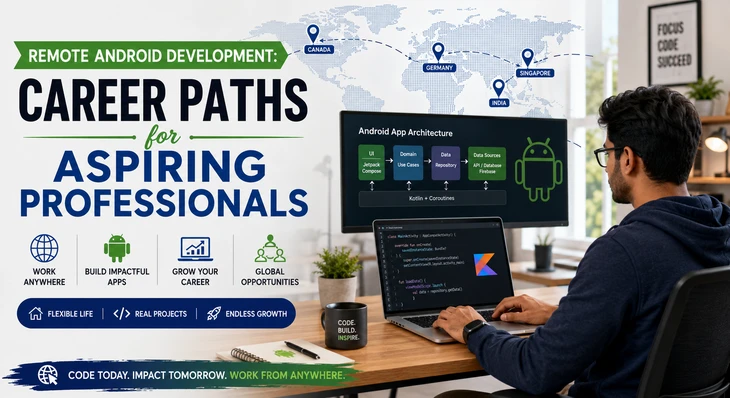
Remote Android Development: Career Paths for Aspiring Professionals
A few years ago, most Android developers had to move to major tech cities to find strong career opportunities. That is no longer the case. Today, companies hire remote Android developers from around the world, including smaller cities and growing tech hubs. A developer can collaborate with a startup in Berlin, a healthcare company in Canada, or an e-commerce brand in Singapore without leaving home. For many professionals, that shift completely changed what a tech career can look like. Some people enter Android development for flexibility. Others are attracted by international projects, remote income opportunities, or the ability to work on products used by thousands of real users every day. Whether you are a college student exploring your first tech career, a software developer planning a transition, or someone looking for location-independent work, Android development remains one of the most promising career paths in the remote tech industry. This guide explores the different career paths in remote Android development, the skills employers expect, how to get started, and practical ways to build a successful long-term career.Why So Many Developers Are Moving Into Remote Android Roles
Think about how often people use mobile apps during a normal day. Food delivery, online shopping, banking, booking appointments, streaming content, and messaging all happen through smartphones. A massive share of those experiences runs on Android. That is exactly why businesses continue investing heavily in Android app development. Companies know users expect fast, reliable, and smooth mobile experiences. At the same time, remote work changed the hiring process. Instead of searching only within local cities, businesses started hiring developers from different countries and time zones. That shift created a huge rise in remote Android app developer jobs across industries such as:- E-commerce
- Healthcare
- Fintech
- Education technology
- Gaming
- Logistics
- Media and entertainment
- SaaS platforms
- Startups building MVPs
- Mid-sized tech companies
- Global enterprises
- Mobile app agencies
- Product-based companies
- Freelance marketplaces
Skills That Matter in Remote Android Development
Before exploring career paths, it is important to understand the skills that employers and clients typically look for.Core Android Development Skills
A strong foundation in Android app development is essential. Most remote Android developer positions expect experience with:- Kotlin programming language
- Java for legacy projects
- Android Studio
- Jetpack libraries
- REST APIs
- Firebase
- SQLite or Room Database
- Git and GitHub
- Material Design principles
UI and UX Understanding
Remote Android developers often work independently. Because of this, companies value developers who understand user experience and mobile interface design. You do not need to become a professional designer, but understanding:- Responsive layouts
- Accessibility
- Navigation flow
- User behavior
- Mobile performance optimization
Remote Collaboration Skills
Coding skills are important, but remote work also depends heavily on communication and consistency. Remote teams depend heavily on communication and accountability. Employers often prioritize developers who can:- Communicate clearly in Slack or meetings
- Manage deadlines independently
- Write clean documentation
- Collaborate across time zones
- Solve problems without constant supervision
Remote Android Development Career Paths
One of the reasons many developers stay in mobile development long-term is flexibility. Some prefer stable full-time jobs, while others enjoy freelancing, consulting, or leadership roles. Here are some of the most common and rewarding remote Android developer career paths.Junior Remote Android Developer
Most Android developers do not begin by building massive apps. The starting phase is usually more practical and less glamorous. Junior developers often spend time fixing UI issues, updating layouts, testing app behavior, and supporting senior engineers during feature releases. While the work may appear small at first, it teaches how production-level Android apps actually work. Startups especially hire junior remote Android developers because smaller teams often need adaptable people who are willing to learn quickly. This is the starting point for many aspiring developers. Junior Android developers usually work under senior engineers while learning real-world workflows and improving coding skills. Typical responsibilities include:- Fixing bugs
- Building UI screens
- Integrating APIs
- Writing reusable code
- Testing app features
What Helps Beginners Stand Out
If you are new to Android development, focus on:- Building 3–5 portfolio projects
- Learning Kotlin deeply
- Uploading apps to GitHub
- Understanding app architecture basics
- Practicing coding challenges
Freelance Android App Developer
Freelancing appeals to developers who want more control over their schedules and projects. Instead of working for one company full-time, freelance Android developers work with multiple clients on short-term or long-term projects. This path is ideal for developers who:- Want flexible schedules
- Enjoy variety in projects
- Prefer independent work
- Want global clients
- Plan to build their own agency later
Real-World Example
A freelance Android developer in India may work with:- A startup in the United States
- A fitness brand in Europe
- A local business launching its first mobile app
Challenges of Freelancing
Freelancing also requires business skills such as:- Client communication
- Pricing projects
- Managing invoices
- Handling revisions
- Marketing your services
Remote Android Software Engineer
For developers who prefer stable employment over freelancing, this is often the most practical long-term path. Remote Android software engineers usually work full-time for a company while contributing to large-scale mobile applications. Their work may include:- Building app architecture
- Optimizing app performance
- Collaborating with backend teams
- Implementing security features
- Writing scalable code
- Maintaining production apps
- Stable salary
- Employee benefits
- Career growth
- International exposure
- Access to experienced engineering teams
Android Team Lead or Engineering Manager
Some developers eventually discover they enjoy mentoring and project coordination as much as coding. That is usually where leadership roles begin. Remote Android team leads often manage communication between developers, designers, testers, and product managers. They help teams stay organized while ensuring mobile releases move smoothly. As developers gain experience, they often move into leadership roles. Remote Android team leads guide development teams while balancing technical and management responsibilities. Common responsibilities include:- Reviewing code
- Mentoring junior developers
- Planning project timelines
- Coordinating releases
- Communicating with stakeholders
- Improving development processes
Android DevOps and Mobile CI/CD Specialist
Releasing Android apps manually becomes difficult as products grow. That is why automation tools have become such an important part of modern mobile development. Developers who understand DevOps tools and CI/CD pipelines can specialize in improving app deployment and testing workflows. This career path focuses on:- Automated app builds
- Testing pipelines
- Release management
- Cloud integration
- Performance monitoring
- GitHub Actions
- Jenkins
- Firebase App Distribution
- Bitrise
- CircleCI
Cross-Platform Mobile Developer
Many Android developers eventually expand into cross-platform development. Instead of building apps only for Android, cross-platform developers use frameworks like:- Flutter
- React Native
- Kotlin Multiplatform
Android Security Specialist
Security matters more now than it did a few years ago. People store banking information, passwords, personal photos, and private conversations inside mobile apps, so businesses pay much closer attention to app security. Android security specialists focus on protecting applications and user data. Their work may involve:- Securing APIs
- Implementing authentication systems
- Preventing data leaks
- Detecting vulnerabilities
- Encrypting sensitive information
Best Ways to Learn Android Development for Remote Jobs
A common question beginners ask is whether a computer science degree is required to become an Android developer. The short answer is no. While degrees can help, many successful remote Android developers are self-taught.Practical Learning Roadmap
Most developers learn faster when they spend less time collecting tutorials and more time building things.Step 1: Learn Programming Basics
Start with:- Kotlin fundamentals
- Variables and functions
- Object-oriented programming
- Data structures
- Problem-solving
Step 2: Build Android Apps
Create simple projects such as:- To-do list apps
- Weather apps
- Expense trackers
- Chat applications
- Notes apps
Step 3: Learn Real-World Architecture
Understand concepts like:- MVVM architecture
- Dependency injection
- Repository pattern
- Clean architecture
Step 4: Publish Your Work
Showcase projects through:- GitHub repositories
- Personal portfolio websites
- LinkedIn posts
- Play Store releases
How to Find Remote Android Developer Jobs
A lot of beginners think that learning Android development alone will automatically lead to job offers. In reality, visibility matters just as much as technical ability. Developers who actively share projects, contribute online, and maintain strong portfolios often attract opportunities faster than those who stay invisible. Landing remote Android developer jobs usually takes more than randomly sending applications. The developers who are usually noticed are those who consistently showcase their work and stay active in developer communities.Build a Strong Portfolio
Your portfolio should clearly demonstrate:- App functionality
- Clean code structure
- UI quality
- Problem-solving ability
- Real project experience
Optimize Your LinkedIn Profile
Recruiters frequently search LinkedIn for remote Android developers. A strong profile should include:- Android-specific keywords
- Technical skills
- Portfolio links
- Certifications
- Project highlights
- Clear work preferences
Join Developer Communities
Online communities help developers discover opportunities and build industry connections. Popular communities include:- GitHub
- Stack Overflow
- Reddit developer groups
- Discord tech communities
- Android developer forums
Common Challenges in Remote Android Development
Remote work sounds exciting, but it also comes with practical challenges developers should prepare for. Understanding these early can help aspiring developers prepare effectively.Time Zone Differences
Working with international teams may require adjusting schedules. Clear communication and organized workflows help reduce delays.Isolation and Burnout
Remote work can feel exciting at first, but spending long hours alone eventually becomes tiring for some developers. Without healthy routines, work and personal life can start blending together. Even simple habits like scheduled breaks, adequate sleep, and regular screen breaks can improve focus and reduce burnout. Some remote developers struggle with work-life balance. Creating structured routines and dedicated workspaces can improve productivity and mental focus.Communication Gaps
Without face-to-face interaction, misunderstandings can happen more easily. Strong written communication and regular updates become extremely important.Staying Updated
Android development evolves rapidly. New tools, APIs, frameworks, and best practices appear frequently. Developers who stop learning for extended periods often struggle to keep up with the rapidly changing Android ecosystem.Future Trends in Remote Android Development
Android development keeps evolving, which is one reason the field stays exciting for long-term professionals. New frameworks, AI integrations, and connected devices continue changing how mobile apps are built and used. The future of Android development looks promising. Several trends are shaping the industry:AI-Powered Mobile Apps
Businesses increasingly integrate AI features into Android apps, including:- Chatbots
- Recommendation systems
- Voice assistants
- Image recognition
- Predictive analytics
Wearable and IoT Applications
Android development now extends beyond smartphones. Smartwatches, TVs, automotive systems, and IoT devices create new opportunities for specialized developers.Kotlin Multiplatform Growth
Kotlin Multiplatform is gaining attention because it allows developers to share business logic across platforms while maintaining native performance. This trend may influence future remote mobile development careers.Increased Global Hiring
Companies continue expanding remote hiring strategies. This means talented developers from countries around the world can compete for international opportunities without relocation.Tips for Long-Term Career Growth
Long-term growth in Android development usually comes from steady improvement rather than overnight success. Here are practical ways to grow steadily over time:Keep Building Projects
Personal projects help developers experiment with new technologies and strengthen portfolios.Learn System Design
Senior developers are expected to understand scalable app architecture and backend integration.Improve Communication Skills
Clear communication helps developers collaborate effectively and move into leadership roles.Contribute to Open Source
Open-source contributions demonstrate initiative and technical ability. They also help developers connect with experienced engineers worldwide.Specialize Strategically
Specializations like:- Mobile security
- Performance optimization
- Cross-platform development
- DevOps automation
- AI integration