📚 Table of Contents
- Understanding the Role of an API Integration Specialist
- Why Remote API Integration Jobs Are Growing Worldwide
- Businesses Use More SaaS Platforms Than Ever
- Remote Work Has Become Normal
- Automation Is a Business Priority
- Essential Skills for API Integration Specialists
- Strong Understanding of REST APIs
- Experience With Automation Platforms
- Basic Coding Knowledge
- API Authentication and Security
- Communication Skills
- How to Start a Career in API Integration
- Learn API Basics First
- Practice Real Integrations
- Build a Portfolio
- Earn Industry Certifications
- Start With Freelance Projects
- Industries Hiring Remote API Integration Specialists
- SaaS Companies
- E-Commerce Businesses
- Healthcare Technology
- Financial Technology
- A Practical Example of Career Growth
- Challenges in Remote API Integration Careers
- Managing Different Time Zones
- Troubleshooting Complex Issues
- Keeping Up With Technology Changes
- How to Stand Out in the Remote Job Market
- Develop a Niche Specialization
- Highlight Business Results
- Improve Remote Communication
- Build an Online Presence
- Future Demand for API Integration Specialists
- Frequently Asked Questions
- Is API integration a good remote career option?
- Do API integration specialists need coding skills?
- Which industries hire API integration specialists the most?
- Can beginners learn API integration without a degree?
- What tools should beginners learn first?
- Are remote API integration jobs in demand?
- Conclusion
API Integration Specialists: Building a Remote Career With Global Firms
Remote careers in tech are no longer limited to software developers or cybersecurity experts. Over the past few years, another role has quietly become one of the most valuable positions for companies building digital products and automated systems — the API integration specialist. Businesses today run on connected platforms. A company might use one tool for customer support, another for sales, a separate platform for payments, and multiple apps for marketing or operations. If those systems fail to communicate properly, productivity slows down quickly. That’s where API integration specialists step in. These professionals help software applications exchange information smoothly, enabling businesses to automate processes, reduce manual work, and improve overall efficiency. Since companies now hire talent globally, many of these opportunities are fully remote. For professionals looking for a flexible technology career with long-term demand, remote API integration jobs offer a practical and rewarding path. Some people enter the field through software development, while others start with automation tools like Zapier or Make. Either way, companies across industries are actively seeking specialists who can streamline workflows and integrate business systems. In this guide, we’ll break down what API integration specialists actually do, why global firms are investing in remote hiring, what skills matter most, and how professionals can build a successful career in this growing industry.Understanding the Role of an API Integration Specialist
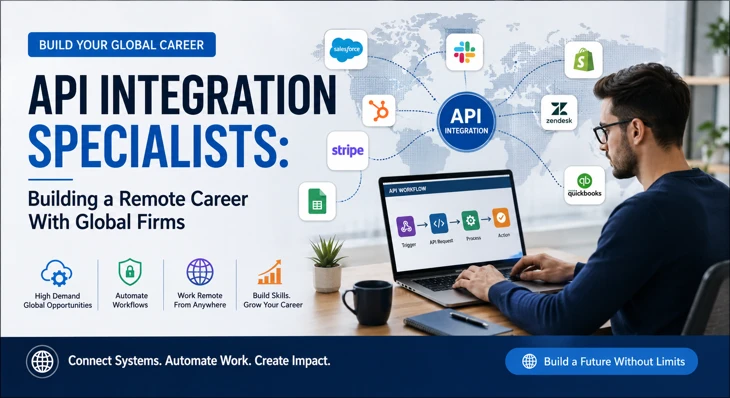
An API integration specialist helps software systems communicate with each other. APIs, also known as Application Programming Interfaces, allow applications to exchange data and perform actions automatically. Think about a business that uses one platform for online sales and another for customer management. Instead of manually transferring information between systems, APIs automate the process. For example:- Customer orders from Shopify can automatically sync to a CRM
- Payment notifications can trigger invoice generation
- Marketing platforms can pull customer data in real time
- Internal systems can share operational updates instantly
- Connecting third-party platforms
- Building automated workflows
- Troubleshooting integration issues
- Managing API authentication
- Testing data transfers
- Monitoring system performance
- Writing technical documentation
Why Remote API Integration Jobs Are Growing Worldwide
The increasing demand for software automation has made API expertise more valuable than ever. Businesses depend on digital tools for nearly every part of their operations. However, disconnected systems create inefficiencies, duplicate work, and poor customer experiences. Companies need professionals who can bridge those gaps. Several trends are driving the growth of remote API integration careers.Businesses Use More SaaS Platforms Than Ever
Most modern companies rely on cloud-based software. A single organization may use separate tools for:- Accounting
- Customer support
- Project management
- Marketing automation
- Human resources
- Inventory management
- Sales tracking
- HubSpot
- Salesforce
- Stripe
- Slack
- Shopify
- QuickBooks
- Asana
- Zendesk
Remote Work Has Become Normal
A few years ago, many companies hesitated to hire remote technical professionals. Today, distributed teams are common across the tech industry. Organizations now use collaboration platforms such as:- Zoom
- Microsoft Teams
- Slack
- Jira
- Notion
Automation Is a Business Priority
Businesses are under pressure to improve efficiency while reducing operational costs. API integrations help companies automate repetitive tasks, minimize manual errors, and speed up workflows. For example, an automated integration can:- Route customer leads instantly
- Update inventory in real time
- Send payment confirmations automatically
- Sync employee records between systems
Essential Skills for API Integration Specialists
Success in API integration depends on more than technical knowledge alone. The strongest professionals usually combine problem-solving ability with practical communication and workflow management skills. Below are some of the most important skills companies look for when hiring remote API integration specialists.Strong Understanding of REST APIs
Most modern software applications rely on REST APIs. Professionals working in integrations should feel comfortable with:- API requests and responses
- JSON formatting
- API endpoints
- HTTP methods
- Response codes
- Error handling
Experience With Automation Platforms
Many businesses now prefer low-code or no-code automation systems because they save time and reduce development costs. Platforms commonly used include:- Zapier
- Make
- Workato
- Tray.io
- Microsoft Power Automate
Basic Coding Knowledge
Although some integrations can be built without coding, programming knowledge still provides a major advantage. Languages frequently used include:- Python
- JavaScript
- PHP
- Node.js
API Authentication and Security
Businesses care deeply about security, especially when APIs handle customer information, financial records, or internal business data. API integration specialists should understand:- OAuth authentication
- Access tokens
- API keys
- Permission management
- Security best practices
- Basic encryption concepts
Communication Skills
Technical skills alone are not enough for remote work. API integration specialists often communicate with:- Developers
- Product managers
- Clients
- Operations teams
- Marketing departments
How to Start a Career in API Integration
Breaking into API integration does not always require a computer science degree. Many professionals enter the field through self-learning, freelancing, or practical experimentation.Learn API Basics First
Start with the fundamentals. Focus on understanding:- How APIs work
- JSON structures
- Webhooks
- Authentication methods
- API testing tools
- Request and response handling
Practice Real Integrations
The best way to improve is through practical projects. Simple practice ideas include:- Connecting Google Sheets with Slack
- Syncing website forms with CRMs
- Building automated email notifications
- Creating order tracking workflows
Build a Portfolio
A portfolio is one of the strongest tools for landing remote API integration jobs. Include:- Workflow screenshots
- Integration case studies
- Automation examples
- Technical explanations
- Project outcomes
Earn Industry Certifications
Certifications can improve credibility and help recruiters identify qualified candidates. Useful certifications include:- Zapier certifications
- AWS certifications
- Postman API certifications
- Salesforce integration certifications
- Microsoft Power Platform certifications
Start With Freelance Projects
Freelancing is one of the easiest ways to gain experience. Small businesses often need help with:- CRM integrations
- Payment gateway setup
- Marketing automation
- Customer data syncing
- Workflow optimization
Industries Hiring Remote API Integration Specialists
API integration specialists are needed in many sectors. Some industries are growing particularly fast due to digital transformation.SaaS Companies
Software-as-a-service companies rely heavily on integrations. Customers expect SaaS products to connect seamlessly with other business tools. For example, companies may need integrations between:- CRMs
- Email marketing tools
- Analytics platforms
- Support systems
- Payment gateways
E-Commerce Businesses
Online stores depend on automation to manage operations efficiently. Integrations help businesses handle:- Inventory updates
- Payment processing
- Customer communication
- Shipping systems
- Accounting workflows
Healthcare Technology
Healthcare organizations use APIs to connect patient records, appointment systems, billing tools, and insurance platforms. Because healthcare data is sensitive, companies value specialists who understand security and compliance requirements.Financial Technology
Fintech companies rely heavily on APIs. Examples include:- Banking integrations
- Payment processing systems
- Fraud detection tools
- Expense management apps
- Investment platforms
A Practical Example of Career Growth
A common path into API integration starts with small automation projects. For example, someone may begin by helping local businesses automate repetitive tasks using Zapier. At first, the work might involve fairly simple workflows such as:- Sending order alerts to Slack
- Updating spreadsheets automatically
- Syncing customer leads into a CRM
- Triggering email notifications after purchases
Challenges in Remote API Integration Careers
Although the career offers flexibility and strong earning potential, it also comes with challenges.Managing Different Time Zones
Remote professionals often work with global teams. This may require attending meetings outside traditional working hours or coordinating deployments across multiple regions. Strong scheduling and communication habits become essential.Troubleshooting Complex Issues
Integration problems can sometimes be difficult to identify. A small error in authentication or formatting may disrupt an entire workflow. Successful specialists learn how to:- Read API logs
- Analyze error messages
- Test integrations carefully
- Document troubleshooting processes
Keeping Up With Technology Changes
Software platforms constantly evolve. API updates, authentication changes, and new automation tools require continuous learning. Professionals who stay up to date are more likely to remain competitive.How to Stand Out in the Remote Job Market
Remote opportunities attract applicants from around the world. Here are effective ways to improve your chances of getting hired.Develop a Niche Specialization
Specialists with focused expertise often attract better opportunities. Popular niches include:- Shopify integrations
- Salesforce automation
- Healthcare systems
- Marketing automation
- Fintech APIs
Highlight Business Results
Employers care about outcomes. Instead of only listing tools you know, explain the impact of your work. For example:- Reduced manual processing time
- Automated customer onboarding
- Improved data accuracy
- Streamlined reporting workflows
Improve Remote Communication
Many companies prioritize communication skills when hiring remote workers. Professionals who communicate clearly often outperform technically skilled candidates with poor collaboration habits. Strong communication includes:- Writing clear updates
- Explaining technical concepts simply
- Responding professionally
- Maintaining organized documentation
Build an Online Presence
Networking can create valuable career opportunities. Professionals can connect with others through:- Developer communities
- Slack groups
- Reddit discussions
- Online forums
Future Demand for API Integration Specialists
The future outlook for API integration specialists remains highly positive. As businesses continue investing in automation, cloud software, and AI-powered tools, integrations will become even more important. Emerging technologies such as:- Artificial intelligence
- Internet of Things
- Embedded finance
- Cloud-native applications
- Low-code development platforms